When does supply chain intelligence in Southeast Asia improve sourcing decisions?
In Southeast Asia, supply chain intelligence improves sourcing decisions when it changes a team’s posture from reactive buying to structured evaluation. That sounds obvious, but in practice many sourcing decisions still rely too heavily on quoted price, a factory visit, or a long-standing trading relationship. Those signals matter, yet they are not enough in a region where manufacturing capacity is expanding quickly, logistics conditions can shift by corridor and season, and compliance expectations increasingly vary by destination market.
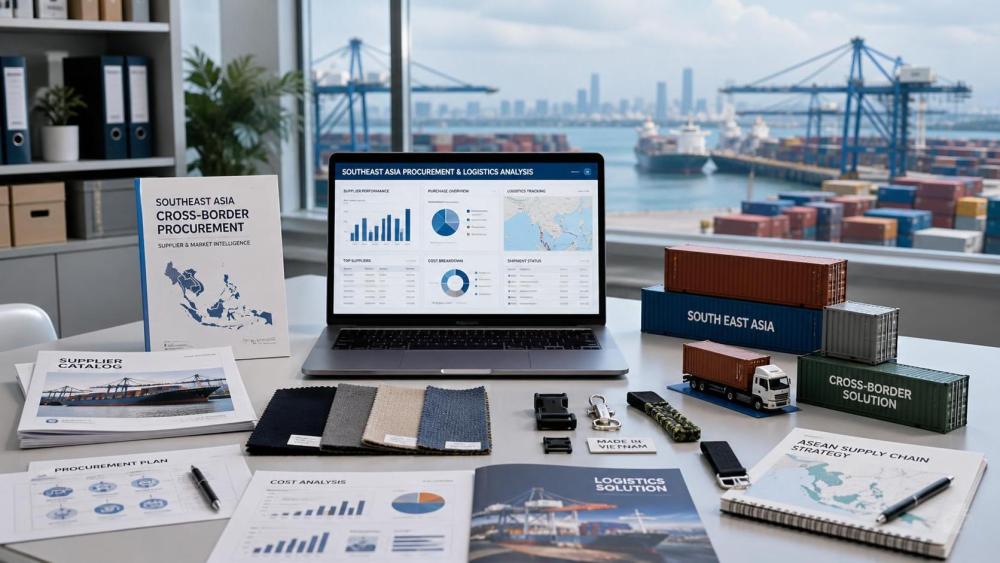
This is why supply chain intelligence Southeast Asia becomes useful at very specific decision points: when a company is qualifying new suppliers, rebalancing country exposure, responding to freight instability, validating cost changes, or checking whether a supplier can keep up with evolving standards. For business evaluators, the value is not in “more information” by itself. It is in getting the right visibility before a sourcing choice becomes expensive to reverse.
The moment intelligence starts to matter is usually earlier than teams expect
A common sourcing mistake is to bring intelligence in too late, after a shortlist has already formed around price and apparent capacity. By then, the team is often validating a preferred option rather than testing it. In Southeast Asia, that can create blind spots around subcontracting layers, raw material origin, inland transport bottlenecks, customs lead-time variability, and exposure to utility disruption or labor concentration.
Good intelligence is most effective before the request-for-quotation stage and again just before award. In the first phase, it helps define where to source and what kind of supplier profile is realistic. In the second, it helps challenge assumptions: Is the quoted lead time credible for that port pair? Is the supplier’s export track record consistent? Has there been a regulatory or tax change that could affect landed cost? Has demand in adjacent sectors tightened capacity?
That distinction matters because sourcing is not one decision. It is a chain of decisions, each with different information requirements.
Where Southeast Asia creates both opportunity and noise
Southeast Asia is attractive because it offers manufacturing depth across multiple categories, from electronics and industrial components to packaging, processed materials, textiles, and assembly operations. But regional diversity is exactly what makes intelligence necessary. Cost structures, industrial clusters, export readiness, infrastructure quality, and regulatory maturity differ significantly between countries and even between provinces.
A supplier in one market may be competitive on unit cost but weak on documentation discipline. Another may have reliable production but depend on congested feeder routes. A third may appear compliant in presentation materials while relying on upstream inputs that are difficult to trace. None of these issues are visible from a simple quotation sheet.
This is where regional intelligence does real work. Instead of treating Southeast Asia as a single sourcing block, it breaks the region into practical sourcing variables: industrial specialization, export corridor stability, customs friction, energy sensitivity, exposure to policy change, and supplier ecosystem depth.
Five sourcing situations where intelligence clearly improves decisions
The first is supplier qualification. A supplier may meet technical specifications on paper, but sourcing teams still need to understand its operating context. Is the company part of a mature industrial cluster with backup vendors and logistics options, or is it operating in a thin local ecosystem where one disruption can stop output? Intelligence helps separate isolated factories from resilient supply nodes.
The second is cost validation. In volatile markets, price changes can reflect real movement in energy, freight, raw materials, or currency. They can also reflect negotiation posture. Market intelligence gives evaluators a way to test whether a price movement is structural, seasonal, or supplier-specific.
The third is lead-time assessment. A quoted production lead time often ignores port dwell, inland transfer, transshipment dependency, or customs variability. For low-margin or time-sensitive sourcing, those details matter as much as factory cycle time.
The fourth is compliance screening. This includes product standards, labeling, environmental documentation, origin declarations, and buyer-specific audit expectations. The exact requirements depend on sector and destination market, so they usually need project-level confirmation. Still, intelligence helps identify where compliance risk is likely to sit: at the final assembler, at the material source, or in the export documentation chain.
The fifth is dual-sourcing or regional diversification. Many companies are not leaving one country for another; they are trying to spread exposure. That only works if decision-makers understand whether the second source is genuinely independent or quietly tied to the same upstream inputs, shipping lanes, or contract manufacturers.
What business evaluators should actually look for
Useful supply chain intelligence is rarely a single report. It is a combination of market, supplier, logistics, and standards-based signals that can be checked against the actual sourcing brief.
The point is not to build an academic model around every purchase. It is to know which variables are likely to break the sourcing plan and which ones are manageable through contract terms, safety stock, or alternate routing.
Why fragmented signals lead to bad decisions
Many teams already have data. They have freight quotes, supplier presentations, trade fair impressions, third-party audits, and internal scorecards. The problem is that these inputs are often disconnected. A supplier may score well commercially while logistics data suggests unstable fulfillment. A country may look attractive strategically while product-specific compliance requirements make the move less practical.
What improves sourcing is not more dashboards. It is synthesis. That is one reason decision-support platforms such as GTIIN have found a role in cross-border procurement discussions. Their value is not just in publishing updates on export trends or industrial developments. It is in connecting macro signals with operational sourcing choices: how changing freight benchmarks affect landed cost, how regional industrial shifts alter supplier depth, or how standards and policy changes shape future supplier viability.
GTIIN’s emphasis on global trade intelligence, sourcing guidance, export trend tracking, and supply chain resilience analysis reflects a useful way to think about Southeast Asia. Not as a static low-cost region, but as a moving system in which cost, compliance, physical fulfillment, and geopolitical pressure interact.
A practical threshold: when intelligence justifies the effort
Not every purchase needs deep regional mapping. The effort usually pays off when one or more of the following is true:
The item is operationally critical; switching suppliers later would disrupt production; the order value is meaningful; the product has demanding certification or traceability requirements; the sourcing market is changing quickly; or the business is entering a new Southeast Asian country without established local knowledge.
It also becomes worthwhile when teams are trying to explain a sourcing decision internally. Business evaluators are often expected to justify not just who was selected, but why another apparently cheaper or faster option was rejected. Intelligence creates an audit trail for that reasoning.
Common mistakes when applying regional intelligence
One mistake is treating country-level insight as supplier-level proof. A strong national export story does not confirm that a specific supplier can deliver consistently. Another is overreacting to headlines. Regional disruptions matter, but their effect depends on product type, location, route, and contract structure.
There is also a tendency to confuse data freshness with usefulness. Real-time updates are valuable only if they are decision-relevant. A weekly freight movement means little if the larger issue is whether the supplier’s upstream material source is unstable.
And perhaps the most expensive mistake: using intelligence to confirm a preselected answer. The best sourcing teams use it to test assumptions, not decorate them.
What a stronger next step looks like
If a sourcing team is assessing Southeast Asia, the next step is rarely “collect more market news.” It is to define the actual decision at hand and map the few intelligence inputs that could materially change it. That may mean checking supplier ecosystem depth, freight corridor reliability, customs latency, standards exposure, or raw material dependency. The right mix depends on the category.
When that process is done well, supply chain intelligence Southeast Asia stops being a background research function and becomes part of sourcing control. It helps teams reject attractive but fragile options, defend balanced supplier choices, and build procurement strategies that can survive real operating conditions rather than ideal ones.
For organizations working across multiple industrial sectors, that usually requires more than occasional market reading. It requires disciplined, cross-checked interpretation of supplier signals, trade flows, logistics patterns, and standards developments. That is exactly the gap serious trade intelligence frameworks are meant to close. Before committing to the next supplier or country move, it is worth confirming which assumptions are verified, which are inferred, and which still depend on project-specific technical, compliance, or delivery validation.
Weekly Insights
Stay ahead with our curated technology reports delivered every Monday.
Recommended News
 Supply ChainOct 15, 2026How to choose a supply chain strategy for unpredictable demand
 Supply ChainOct 14, 2026How to assess an industrial equipment supplier's spare parts support
 Supply ChainOct 14, 2026EU Updates CSDDD Guidance on Global Supply Chain Due Diligence
 Global SourcingOct 13, 2026How to assess industrial automation suppliers for legacy integration