Shanghai Port Relief Signals New EU Cargo Shift
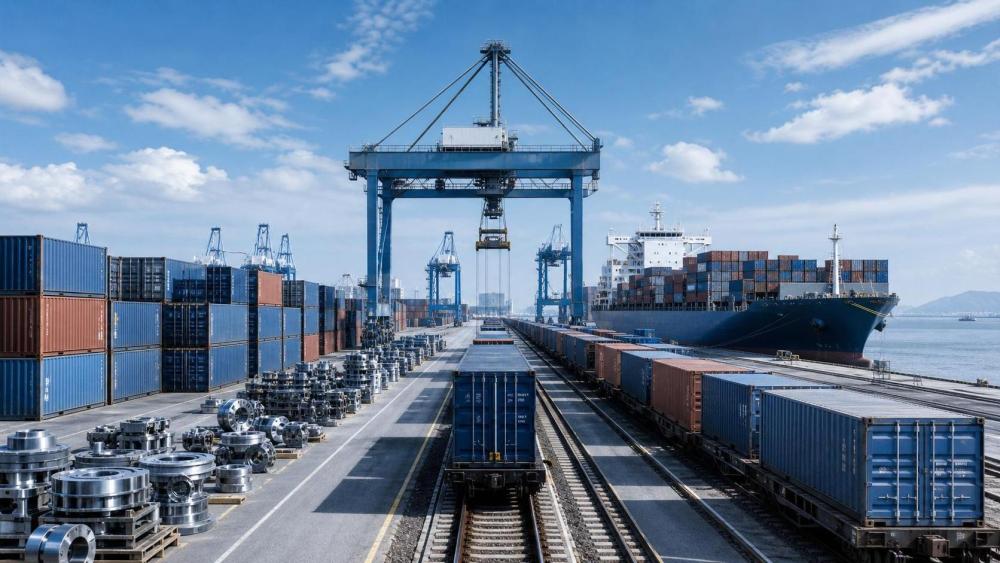
On July 1, 2026, Shanghai International Port Group (SIPG) introduced a 15% freight subsidy for rail-sea intermodal cargo moving to Rotterdam, Hamburg, and Antwerp. The immediate operational change cited in the update is a 2.3-day reduction in average container dwell time at Shanghai, a development that deserves attention from EU importers sourcing in the Yangtze River Delta, as well as manufacturers, logistics providers, and buyers handling time-sensitive industrial goods and machinery components. For the market, the significance is not only lower congestion pressure, but also the possibility of more predictable delivery planning on Europe-bound routes.
A concrete operating change at Shanghai
According to the information provided, the new measure took effect on July 1, 2026 and applies to rail-sea intermodal shipments from Shanghai to three European destinations: Rotterdam, Hamburg, and Antwerp. SIPG set the subsidy level at 15% for eligible freight movements. The same update states that the measure has reduced average container dwell time by 2.3 days. It also indicates that the improvement supports more predictable lead times for EU importers purchasing from manufacturers in the Yangtze River Delta, particularly in shipments involving industrial products and machinery parts that are sensitive to delivery timing.
Where the effects may be felt first
EU buyers managing delivery-sensitive procurement
From an industry perspective, EU importers are among the most directly affected parties because lead time predictability matters as much as nominal transit cost in many sourcing decisions. The change may influence purchase scheduling, replenishment timing, and supplier coordination, especially where machinery components or industrial goods are tied to installation windows, production plans, or maintenance cycles. What deserves closer attention is whether buyers begin treating Shanghai-linked intermodal options as a more reliable routing choice for these specific cargo profiles.
Yangtze River Delta manufacturers shipping to Europe
Manufacturers supplying EU customers may feel the effect through delivery commitments rather than through factory output itself. Analysis shows that when dwell time falls, the pressure around shipment cutoffs, dispatch timing, and coordination with overseas customers can shift. For exporters of time-sensitive industrial goods and machinery components, the practical business issue is whether improved port-side flow can support tighter delivery promises without increasing execution risk.
Logistics and supply chain service providers
For freight forwarders and other supply chain service providers, the update matters because it changes the operating conditions around a specific port-and-route combination. The most relevant business areas are routing design, customer lead time communication, and shipment planning for Europe-bound cargo. Observably, service providers will need to watch how the subsidy translates into actual booking behavior and whether customers begin favoring rail-sea combinations for shipments that previously required more buffer time.
What companies should watch in the near term
How the subsidy is defined in practice
Companies should pay close attention to official wording and any further rule clarification tied to the 15% freight subsidy. Analysis shows that the business value of the announcement depends not only on the headline rate, but on how eligibility, applicable shipment types, and route execution are defined in practice. Until those details are fully clear, firms should distinguish between the policy signal and the exact operational benefit available to each shipment.
Which cargo categories benefit most
The information provided specifically highlights time-sensitive industrial goods and machinery components. That makes cargo prioritization important for exporters, importers, and logistics teams. What deserves closer attention is whether internal planning teams treat these categories as the first candidates for route adjustment, rather than assuming the same benefit across every product type.
Lead time promises made to European customers
For companies already supplying the EU from the Yangtze River Delta, customer communication should be handled carefully. The reduction in average dwell time points to better predictability, but firms should avoid turning that into unconditional delivery claims before they see sustained execution performance in their own shipment flows. In practical terms, sales, operations, and logistics teams need aligned messaging on what has improved and what still requires monitoring.
Supplier and document coordination around intermodal moves
Businesses using or considering rail-sea intermodal transport should also review whether their supplier coordination, shipment handoff process, and supporting documentation are ready for route adjustments. From an industry perspective, the benefit of a smoother port operation can be diluted if upstream shipment preparation remains inconsistent. The key issue is not broad process reform, but whether current execution can match a tighter and more predictable shipping window.
Why this looks like an operational signal, not a final verdict
Analysis shows that this update is best read as a meaningful operational signal rather than a completed market outcome. The confirmed facts point to a targeted incentive, a measurable reduction in dwell time, and improved lead time predictability for certain Europe-bound cargo flows. What remains open is how durable that improvement proves to be across ongoing shipment volumes and whether market participants adjust their routing decisions in response. For that reason, the development is more appropriate to understand as an active trend worth tracking, not as a definitive reshaping of Europe-bound logistics from Shanghai.
How to read the development now
At this stage, the most balanced reading is that Shanghai's congestion relief, combined with the new intermodal subsidy, has created a potentially useful improvement for EU-bound cargo linked to the Yangtze River Delta. The strongest relevance appears in delivery-sensitive industrial and machinery supply chains, where a 2.3-day reduction in dwell time can matter operationally. Still, the current information supports a measured conclusion: this is a concrete short-term logistics change with possible longer-term implications, and the industry should assess it through actual shipment performance rather than headline interpretation alone.
Basis of this report and what still needs verification
This article is based on the user-provided news title, event date, and event summary concerning SIPG's July 1, 2026 rail-sea intermodal freight subsidy and the related reduction in average container dwell time. For developments of this kind, relevant source categories would typically include official port announcements, company statements, industry association updates, authoritative media reporting, and related operational notices. A specific official source link was not provided in the input, so the underlying details still require continued verification against primary disclosures. The main follow-up points to watch are any further official clarification on subsidy rules and any continued evidence of improved lead time predictability for EU-bound cargo.
Tags
Weekly Insights
Stay ahead with our curated technology reports delivered every Monday.
Recommended News
 Supply ChainOct 15, 2026How to choose a supply chain strategy for unpredictable demand
 Supply ChainOct 14, 2026How to assess an industrial equipment supplier's spare parts support
 Supply ChainOct 14, 2026EU Updates CSDDD Guidance on Global Supply Chain Due Diligence
 Global SourcingOct 13, 2026How to assess industrial automation suppliers for legacy integration