How Bulk Commodity Logistics Data Improves Route Cost Control
How Bulk Commodity Logistics Data Improves Route Cost Control
For finance approvers, route decisions are no longer just operational choices. They directly shape margin, cash flow, and risk exposure.
By turning bulk commodity logistics data into measurable cost signals, companies can compare lanes, forecast disruptions, and control freight spending with greater precision.
This matters most in bulk trade, where a small routing change can alter landed cost, inventory timing, and contract performance.
A finance-led review of bulk commodity logistics data creates a clearer view of true route economics. That view supports faster approvals and stronger cost discipline.
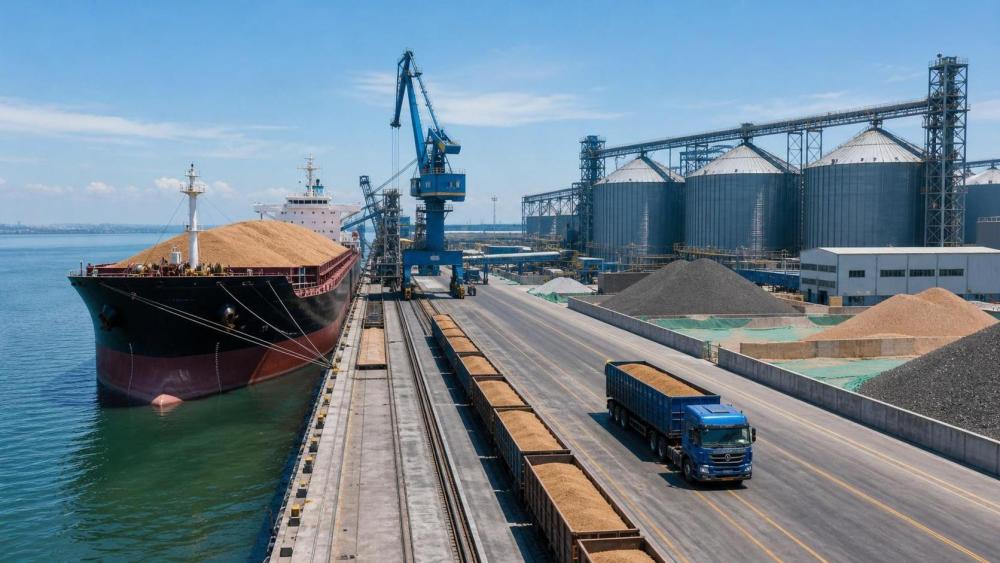
From a GTIIN perspective, the value is not just visibility. It is the ability to connect freight patterns, port behavior, and risk signals to measurable financial outcomes.
Why route cost control now depends on data depth
Bulk commodity flows rarely move through stable conditions for long. Fuel costs shift, port queues expand, weather events interrupt schedules, and customs delays absorb working capital.
In that environment, historical average freight rates are not enough. They show what happened before, but not what a route is likely to cost next month.
Bulk commodity logistics data fills that gap. It combines lane rates, carrier performance, vessel turnaround times, inland transfer costs, and port congestion into decision-ready evidence.
More importantly, it helps isolate the difference between a cheap quote and a low-cost route. Those are often not the same thing.
A lower booking rate may hide demurrage exposure, unstable transit windows, or higher damage risk. Finance teams need a route-level cost picture, not a rate snapshot.
What bulk commodity logistics data should include
Useful bulk commodity logistics data goes beyond shipping invoices. It should connect operational movement with financial impact across the full route.
The most practical data layers include:
- Ocean, rail, barge, and truck rate trends by lane
- Port dwell time and berth congestion patterns
- Customs clearance variability by origin and destination
- Demurrage, detention, and storage charge frequency
- Transshipment risk and handoff delay history
- Commodity handling loss, contamination risk, or moisture exposure
- Seasonal disruption signals, including weather and labor actions
- Carrier reliability and actual transit variance
- Inland logistics cost from port to plant or warehouse
When these variables are tracked together, bulk commodity logistics data becomes a cost-control tool rather than a reporting archive.
That also makes approval discussions easier. Budget owners can see why one route costs more upfront but protects margin over the full shipment cycle.
How data improves route comparison in real buying decisions
In actual procurement, route selection often comes down to tradeoffs. One lane offers lower freight. Another offers better schedule stability. A third reduces inventory risk.
Bulk commodity logistics data allows those tradeoffs to be measured in cost terms. That is where finance reviews become more accurate.
For example, route comparisons should assess:
- Base freight rate per metric ton
- Transit variability and stock buffer requirement
- Likely accessorial charges by port and carrier
- Cash tied up during longer lead times
- Risk-adjusted cost of delays or quality loss
This approach changes the conversation. The cheapest route on paper may become the most expensive once disruption probability is priced in.
That shift is especially relevant for steel, ores, grains, chemicals, cement inputs, and energy-related cargoes, where volume magnifies every small inefficiency.
A simple route cost control model
A practical model starts with landed freight cost, then adds timing and risk factors drawn from bulk commodity logistics data.
Where finance teams gain the most value
The biggest benefit of bulk commodity logistics data is not operational detail alone. It is better control over approval quality.
When route proposals include data-backed cost assumptions, approval decisions become faster and easier to defend during internal reviews.
This strengthens several financial controls at once:
- Budget forecasting improves because route cost inputs are current
- Variance analysis becomes clearer when surcharges are traceable
- Working capital planning benefits from better lead-time visibility
- Supplier and carrier negotiations gain stronger cost evidence
- Risk reserves can be assigned to lanes with proven instability
In other words, bulk commodity logistics data turns route approval into a repeatable financial discipline, not a last-minute exception process.
Common gaps that weaken route cost control
Many companies already collect logistics data, but they still struggle with route cost control. The issue is usually structure, not volume.
The most common gaps are easy to recognize:
- Freight data sits apart from procurement and inventory systems
- Costs are reviewed after shipment, not before approval
- Average lane cost hides seasonal volatility
- Port delay risk is discussed qualitatively, not measured
- Commodity-specific handling risk is ignored in route scoring
These gaps matter because bulk commodity logistics data only creates value when it supports a decision point. Otherwise, it remains descriptive, not actionable.
A better approach is to define route approval thresholds in advance, using cost variance, lead-time tolerance, and disruption exposure as formal triggers.
How GTIIN supports better route decisions
GTIIN helps businesses interpret bulk commodity logistics data within the wider context of global trade, sourcing shifts, and industrial supply chain pressure.
That broader context matters because route cost is rarely driven by transport alone. Regulation, export patterns, energy prices, and regional disruptions all feed into logistics outcomes.
By mapping market trends with route-level signals, GTIIN enables a more realistic view of lane selection, sourcing flexibility, and cost resilience.
This is particularly useful when organizations need to compare alternative origins, evaluate cross-border procurement scenarios, or stress-test bulk shipping strategies under uncertain market conditions.
A practical approval framework for the next route review
A workable framework does not need to be complex. It needs to be consistent, measurable, and tied to business outcomes.
For the next route review, use this sequence:
- Gather recent bulk commodity logistics data for all realistic lanes
- Separate base freight from variable and event-driven charges
- Assign lead-time and delay costs to each route option
- Score commodity handling risk by route and transfer point
- Approve the route with the best risk-adjusted total cost
This method keeps route cost control grounded in evidence. It also reduces the chance of approving a route that looks efficient but performs poorly under stress.
As recent market changes have shown, route decisions can no longer rely on rate sheets alone. Bulk commodity logistics data gives approval teams a more complete picture.
That picture supports better spending control, fewer cost surprises, and stronger supply continuity across cross-border operations.
The next step is straightforward: make bulk commodity logistics data a required input in every major route approval, and turn freight planning into a disciplined source of cost advantage.
Weekly Insights
Stay ahead with our curated technology reports delivered every Monday.
Recommended News
 Supply ChainOct 15, 2026How to choose a supply chain strategy for unpredictable demand
 Supply ChainOct 14, 2026How to assess an industrial equipment supplier's spare parts support
 Supply ChainOct 14, 2026EU Updates CSDDD Guidance on Global Supply Chain Due Diligence
 Global SourcingOct 13, 2026How to assess industrial automation suppliers for legacy integration