
ESG Reporting Standards in 2026: What Global Firms Need to Track
ESG reporting standards are moving from disclosure language to operating logic
As 2026 approaches, ESG reporting standards are becoming harder to treat as a narrow reporting exercise.
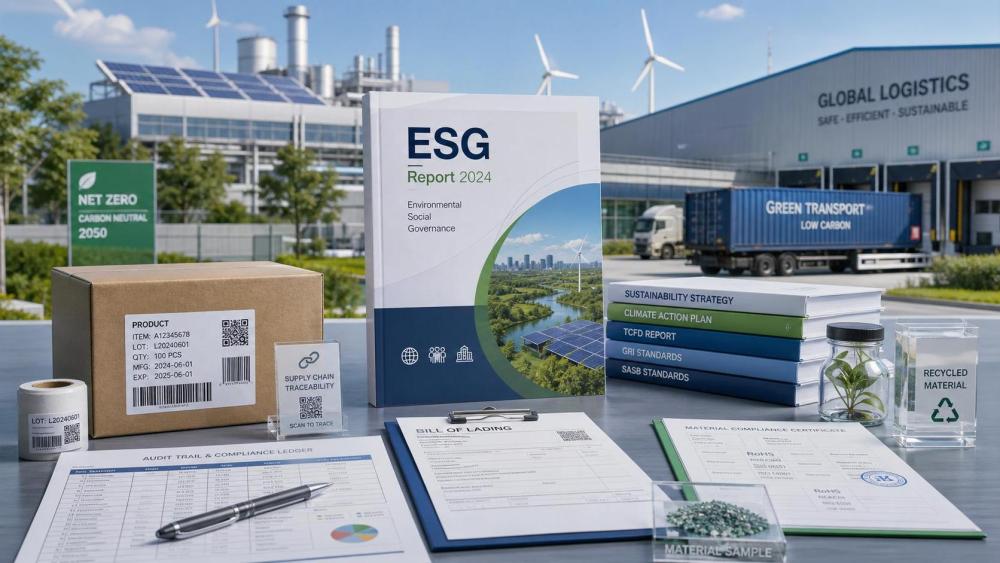
The shift is visible across trade finance, procurement qualification, investor due diligence, and customs-adjacent compliance reviews.
What changed is not only regulation.
The more important change is comparability.
Global firms are now being asked to explain emissions boundaries, labor controls, governance oversight, and supplier traceability in ways that can be checked across jurisdictions.
That raises the bar for internal data discipline.
It also changes how cross-border decisions are made, especially in industrial sectors with long supplier chains and uneven reporting maturity.
From GTIIN’s view of global sourcing and supply chain resilience, the practical question is no longer whether ESG reporting standards matter.
The real question is which signals deserve attention first, and how those signals affect cost, access, and continuity.
Why 2026 looks like an inflection point
Several reporting frameworks are moving toward closer alignment, even if complete uniformity remains unlikely.
ISSB baselines, CSRD implementation, climate disclosure expectations, and supply chain due diligence rules are starting to interact rather than sit separately.
That interaction matters because firms increasingly report once but answer many audiences.
Investors want consistent metrics.
Banks want clearer transition exposure.
Customers want supplier evidence.
Regulators want audit-ready claims.
In recent months, one stronger signal has emerged.
Narrative sustainability statements are losing ground to measurable, decision-useful, and location-specific disclosures.
That is especially relevant for companies exposed to commodities, manufacturing, logistics, and multi-tier supplier structures.
- Scope 3 reporting is becoming more material for supplier selection and customer retention.
- Double materiality is influencing how firms define risk beyond direct financial exposure.
- Assurance expectations are rising, making spreadsheet-only controls increasingly fragile.
- Geographic variance remains, but tolerance for inconsistent definitions is narrowing.
This does not mean every market will enforce ESG reporting standards at the same speed.
It means globally active firms will be pulled toward the stricter end of the spectrum.
The drivers sit deeper than compliance deadlines
A compliance calendar alone does not explain the current momentum.
The stronger drivers come from capital allocation, industrial decarbonization, and supply chain transparency needs.
In practice, ESG reporting standards are being shaped by the collision of market pressure and operational exposure.
GTIIN’s supply chain mapping perspective is useful here because ESG reporting standards increasingly depend on physical flows, not just policy text.
Port congestion, energy mix, smelting methods, packaging materials, and customs lag can all shape reported outcomes.
That makes ESG a data architecture issue as much as a communications issue.
The biggest reporting pressure is spreading across the value chain
The impact is not confined to listed entities or heavily regulated headquarters.
A growing share of pressure is moving outward to contract manufacturers, raw material processors, logistics providers, and cross-border intermediaries.
That is where ESG reporting standards become commercially sensitive.
Many firms still have acceptable policy documents but weak traceability below tier one suppliers.
Others can estimate emissions, yet cannot defend methodology differences across regions.
More noticeably, industrial groups are being pushed to connect entity reporting with product claims, shipment data, and sourcing decisions.
Where the friction usually appears
- Supplier questionnaires produce inconsistent units, boundaries, and update cycles.
- Regional subsidiaries use different reporting assumptions for similar operations.
- Procurement and sustainability teams classify the same supplier risks differently.
- Assurance teams cannot trace a headline metric back to source systems.
These gaps matter because 2026 reporting expectations reward consistency more than polished language.
Firms that can explain assumptions, exclusions, and data lineage will usually hold a stronger position than firms with broader but weaker claims.
What global firms need to track more closely now
Not every metric deserves equal attention.
The useful approach is to focus on indicators that influence regulation, financing, customer qualification, and supply continuity at the same time.
Priority tracking areas
- Materiality definitions: track where financial materiality and impact materiality diverge by market.
- Scope 1, 2, and 3 boundaries: document methodologies, estimation logic, and supplier coverage ratios.
- Energy and process intensity: watch facility-level emissions drivers tied to production methods and local grids.
- Human rights and labor controls: monitor grievance systems, subcontracting exposure, and remediation evidence.
- Governance quality: map board oversight, incentive links, and escalation protocols for ESG risks.
- Product and shipment traceability: connect sustainability claims to bill-of-materials, origin data, and logistics flows.
This is where ESG reporting standards begin to intersect with trade intelligence.
A disclosure framework may look universal on paper, yet actual reporting quality often depends on industry-specific data from energy, freight, metals, chemicals, packaging, and agricultural inputs.
That is why broad policy benchmarking is no longer enough.
More firms need a sector-sensitive view of how reported ESG performance is produced in the real supply chain.
A more practical response starts with comparability, not volume
The common mistake is to respond by collecting more data without fixing structure.
That usually creates reporting fatigue and weakens confidence in the final numbers.
A better response is to improve comparability across legal entities, supplier tiers, and operating regions.
In actual execution, several moves tend to pay off quickly.
- Create one internal glossary for emissions, labor incidents, renewable energy claims, and supplier categories.
- Rank suppliers by reporting relevance, not just spend, using exposure to carbon, labor, and regulatory concentration.
- Link ESG reporting standards to procurement, audit, and trade compliance systems instead of separate manual files.
- Test a limited set of high-consequence metrics before expanding disclosure scope.
- Review country-level differences in assurance readiness and evidence availability.
This approach also supports better market judgment.
When ESG reporting standards tighten further, firms with cleaner internal mapping can respond faster to customer questionnaires, lender reviews, and policy changes.
The next advantage will come from connecting reporting with supply chain decisions
By 2026, the strongest performers will not necessarily be those with the longest sustainability reports.
They will be those that use ESG reporting standards to improve sourcing choices, contract design, and resilience planning.
That means watching where disclosure obligations overlap with industrial reality.
A carbon-intensive input, a high-risk labor corridor, or a fragile logistics node can all reshape reported exposure and future competitiveness.
GTIIN’s broader trade and industry lens suggests that the firms best prepared for this phase will keep three habits in place.
- Track regulatory alignment and divergence by region, not just globally.
- Translate reporting findings into supplier, freight, and materials decisions.
- Build staged response plans instead of waiting for a single perfect framework.
The immediate task is straightforward.
Review the metrics that drive external scrutiny, trace them back to operational sources, and compare where the weakest evidence sits.
That is usually where both reporting risk and strategic opportunity first become visible.
Have questions about this sector analysis, or seeking best practices specific to your niche? Drop us a line below and let the senior consultants at GTIIN assist you.
“We respect your privacy. Your information is strictly confidential.”
Weekly Insights
Stay ahead with our curated technology reports delivered every Monday.
Recommended News
 Supply ChainNov 10, 2026China Extends Pause on 24% Additional Tariff on US Goods by Two Months
 Industry StandardsNov 10, 2026Which imports are subject to EU carbon border compliance?
 Global SourcingNov 09, 2026USTR Extends 178 China Section 301 Tariff Exclusions to January 2027
 Supply ChainNov 09, 2026How can a tariff risk management dashboard track cost exposure?



