Product Conformity Certification: Key Documents and Failure Points
Why does product conformity certification become a project risk so quickly?
Product conformity certification often looks administrative until a shipment is held, a tender is paused, or a market entry date slips.
In cross-border trade, the issue is rarely the certificate alone. The real problem is whether the product, file set, labeling, and test evidence match.
That is why product conformity certification sits between engineering, sourcing, quality, and logistics rather than inside one isolated compliance task.
A delayed approval can affect commissioning plans, customs timing, insurance acceptance, and even contract milestones tied to site delivery.
In practical terms, product conformity certification answers a simple but high-stakes question: can this product legally and safely enter the target market?
The answer depends on technical proof, not assumptions. Similar products, previous exports, or supplier claims do not automatically satisfy current rules.
This matters across industries, from industrial controls and machinery parts to construction materials, cable systems, pressure equipment, and packaged consumer goods.
GTIIN frequently tracks how regulatory updates, freight disruptions, and documentation gaps compound each other inside global supply chains.
The pattern is consistent: early certification planning reduces late-stage rework far more effectively than accelerated testing near shipment.
Which documents usually decide whether product conformity certification moves smoothly?
Most certification failures begin with incomplete technical files rather than catastrophic product defects.
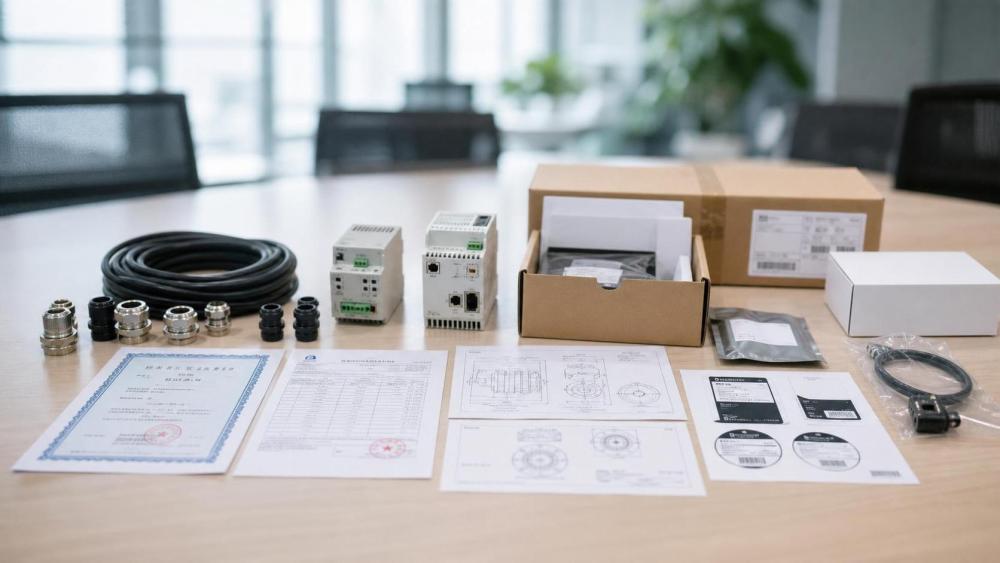
Requirements vary by market and product category, but several documents appear again and again in successful product conformity certification workflows.
- Product specification sheet with model references, ratings, materials, and intended use.
- General arrangement drawings, wiring diagrams, exploded views, or bill of materials where applicable.
- Risk assessment or hazard analysis linked to the relevant directive, regulation, or standard.
- Test reports from accredited laboratories, including dates, standards used, samples tested, and result scope.
- Declaration of Conformity or equivalent legal statement signed by an authorized party.
- Label artwork, product marking details, warning statements, and packaging compliance information.
- Quality control records that show production consistency with the tested sample.
- User manual, installation instructions, maintenance guidance, and language versions required by the destination market.
Need to confirm one point early: the document package must describe the exact shipped configuration, not a general product family.
A common mistake is submitting a valid test report for one variant while exporting another variant with different voltage, enclosure, software, or material composition.
Another issue appears when purchasing teams receive commercial documents faster than engineering evidence. Certification then becomes a file-chasing exercise under deadline pressure.
The more effective approach is to build a document matrix before production release. That matrix should map each required document to owner, version, and approval status.
A quick document check table helps expose weak points early
Where do teams most often fail, even when the product itself is technically sound?
The most expensive failures are usually procedural.
In other words, the product may pass testing, yet product conformity certification still stalls because the evidence chain is weak.
Several failure points show up repeatedly across industrial sourcing and export projects.
- Using the wrong regulatory pathway for the destination market.
- Assuming supplier self-declaration is enough where third-party assessment is required.
- Testing a prototype, then shipping a modified production version.
- Ignoring packaging, labeling, and language obligations.
- Submitting certificates without traceable supporting technical files.
- Overlooking component-level compliance inside assemblies.
More subtle failures also matter. A valid component certificate does not automatically certify the complete equipment assembly.
Likewise, a report acceptable in one jurisdiction may not satisfy a buyer, customs authority, or notified body in another region.
In actual projects, document timing causes as much trouble as document quality. Testing may finish after packaging artwork is finalized, forcing a relabeling cycle.
GTIIN’s supply chain coverage often highlights this connection between compliance sequencing and delivery reliability.
When certification milestones are detached from sourcing and production gates, delays spread outward into freight booking, customs filing, and site installation planning.
How should product conformity certification be judged before supplier nomination or mass production?
The best time to evaluate product conformity certification is before commercial commitment becomes difficult to reverse.
That review does not need to be bureaucratic. It needs to be specific.
A useful screening process asks whether the product, supplier, and destination market line up without hidden compliance assumptions.
Questions worth asking early
- Which regulations and standards apply to the final market, not just the manufacturing country?
- Are current test reports tied to the exact model and latest revision?
- Does the supplier control engineering changes after certification testing?
- Who signs the Declaration of Conformity, and is that legal entity consistent across documents?
- Will importer details, warnings, and manuals meet local market rules?
- What lead time is needed if retesting or recertification becomes necessary?
This is where external trade intelligence becomes useful. Regulatory obligations do not move in isolation from tariff shifts, transport risk, or local enforcement trends.
GTIIN’s cross-border industry analysis is relevant here because certification readiness often depends on broader supply chain signals, not only laboratory outcomes.
For example, a market may tighten surveillance on electrical safety, environmental claims, recycled content statements, or importer recordkeeping.
That changes the practical standard of proof, even when the written regulation appears unchanged.
What does the timeline really look like, and why is it often underestimated?
Many teams budget time for testing but not for clarification cycles.
Yet product conformity certification usually includes more than lab slots. It includes file review, sample preparation, corrective actions, label updates, and internal approvals.
A realistic timeline depends on product complexity, market destination, and whether existing evidence can be reused.
Simple low-risk products may move relatively fast. Complex assemblies, multi-standard products, or items entering tightly regulated markets rarely do.
Underestimation usually comes from three assumptions: the sample will pass first time, the technical file is already complete, and no product changes will occur.
Those assumptions break quickly in live projects.
A more reliable planning method
Build certification into the project schedule as a gated path with contingency, not as a single finish date.
- Freeze the certified configuration before sample submission.
- Set review points for drawings, labels, and manuals.
- Reserve time for nonconformity closure and document revision.
- Link shipment release to certification completion, not supplier promise.
That structure reduces the chance that product conformity certification becomes the final surprise before dispatch.
If a certification problem appears late, what should be fixed first?
Start by separating legal blockers from document housekeeping.
Some issues require retesting or redesign. Others only require corrected declarations, updated markings, or a cleaner technical file.
A practical triage sequence helps.
- Confirm the exact nonconformity and the regulation behind it.
- Check whether the problem affects safety, market access, or only document completeness.
- Trace the affected model, batch, and shipped configuration.
- Decide whether correction, retest, or design change is required.
- Reissue all linked documents consistently after the fix.
The key is consistency. One corrected file does little good if labels, declarations, and manuals still reflect the old version.
Product conformity certification fails late when teams patch one artifact and ignore the rest of the evidence chain.
A more durable response is to capture the root cause: wrong standard selection, weak version control, or poor ownership across the supplier network.
That lesson should feed directly into the next sourcing cycle.
What is the smartest next step when building a more reliable certification process?
Product conformity certification works best when treated as an evidence system, not a final document chase.
The immediate priorities are clear: map the target market rules, verify the exact product version, and align every required file before production release.
It also helps to maintain a living certification register covering standards, test reports, declarations, labels, manual versions, and responsible owners.
For organizations managing multiple countries or product families, that register becomes part of broader supply chain resilience rather than a narrow compliance archive.
This is where market intelligence and standards tracking reinforce each other. GTIIN’s focus on global sourcing, industry standards, and export trends reflects that real-world overlap.
The practical next move is simple: review one active product line against its destination-market requirements, identify missing evidence, and assign closure deadlines before the next shipment window.
That approach turns product conformity certification from a recurring disruption into a manageable project control point.
Weekly Insights
Stay ahead with our curated technology reports delivered every Monday.
Recommended News
 Supply ChainOct 15, 2026How to choose a supply chain strategy for unpredictable demand
 Supply ChainOct 14, 2026How to assess an industrial equipment supplier's spare parts support
 Supply ChainOct 14, 2026EU Updates CSDDD Guidance on Global Supply Chain Due Diligence
 Global SourcingOct 13, 2026How to assess industrial automation suppliers for legacy integration