How multimodal logistics planning reduces disruption risk
How Multimodal Logistics Planning Reduces Disruption Risk
For project managers and engineering leaders, logistics disruption is rarely an isolated transport problem. It quickly becomes a material availability, schedule, budget, and contractual performance problem.
Multimodal logistics planning reduces that exposure by coordinating ocean, rail, air, and road options before a disruption forces urgent decisions under pressure.
The objective is not to use every transport mode for every shipment. It is to create practical, prequalified alternatives for critical materials, equipment, and project dependencies.
For complex engineering projects, resilience depends on knowing which deliveries can move differently, which cannot, and what decisions must be made before delay becomes irreversible.
This article explains how multimodal logistics planning supports disruption risk management, where it produces measurable value, and how project teams can apply it without inflating logistics costs.
Why Single-Mode Logistics Creates Project Vulnerability
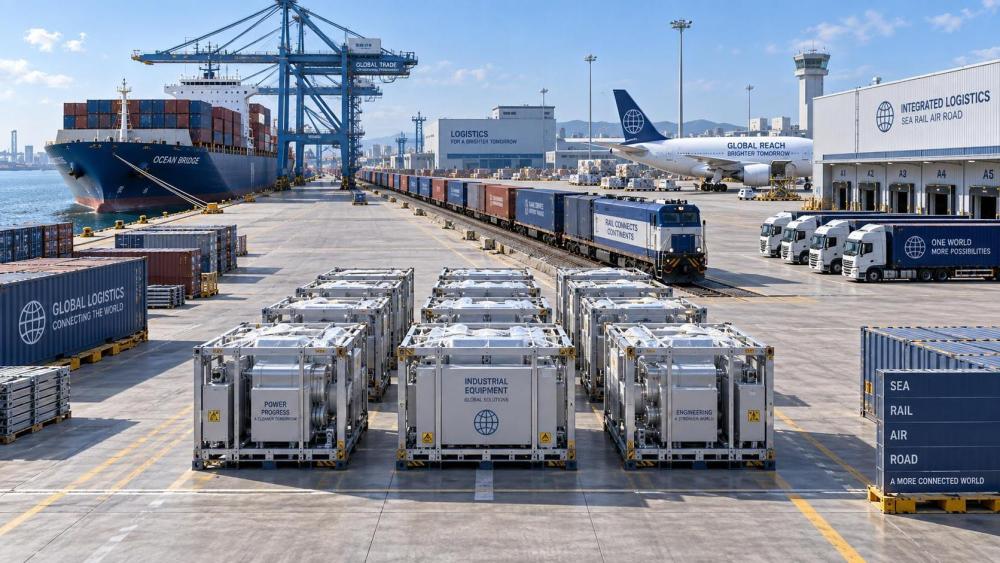
Many projects rely on a preferred route because it is familiar, competitively priced, and historically reliable. That approach becomes fragile when conditions change unexpectedly.
An ocean shipment may be delayed by port congestion, vessel omissions, conflict-related diversions, labor action, weather, or container equipment shortages at the origin.
Rail freight can face capacity limits, border delays, infrastructure disruption, or terminal backlogs. Road transport can be constrained by driver availability, permits, fuel issues, or closures.
Air freight offers speed, but capacity can disappear during peak seasons, emergencies, or passenger network reductions. It also may not suit oversized equipment or hazardous cargo.
A single-mode strategy concentrates risk in one network, one carrier relationship, one transit pattern, and often one customs or transshipment gateway.
For project-critical cargo, the consequence is not simply a late delivery. It may mean idle crews, postponed commissioning, equipment rental extensions, and missed customer milestones.
Multimodal logistics planning addresses this concentration risk by designing transport alternatives around the actual operational importance of each shipment and its delivery deadline.
Start With Material Criticality, Not Transport Preference
Effective planning begins with the project schedule. Teams should identify items whose late arrival would block installation, testing, commissioning, production, or regulatory approval.
Criticality should reflect more than purchase value. A low-cost gasket, control module, fastener, or cable assembly can stop an expensive installation when unavailable.
Project teams can classify cargo into categories such as schedule-critical, production-critical, replaceable, buffer-stock eligible, and noncritical. Each category needs a different transport strategy.
Schedule-critical cargo requires the strongest contingency options, frequent status reviews, and faster escalation thresholds. Noncritical cargo can usually remain on lower-cost standard routes.
Engineering leaders should also assess whether materials are technically substitutable. Proprietary components, certified assemblies, and specialized machinery often have limited replacement options.
For each critical shipment, document the latest acceptable delivery date, required site date, customs lead time, installation sequence, and available float in the schedule.
This transforms multimodal logistics planning from a freight procurement exercise into a structured method for protecting the project’s most sensitive dependencies.
Build Alternate Routes Before a Disruption Occurs
Alternative routing is useful only when it has been assessed in advance. Creating options after a vessel is delayed often produces expensive, incomplete, and impractical choices.
A viable backup route should define the origin pickup point, export gateway, transport modes, transfer terminals, border crossings, destination delivery point, and responsible providers.
For example, a containerized industrial shipment may move by ocean and road under normal conditions, with rail or limited air uplift available for selected urgent components.
Oversized machinery may require a different contingency design. Breakbulk vessels, inland barges, heavy-haul road permits, and crane availability can determine whether rerouting is possible.
Each route should be tested against physical cargo requirements, including dimensions, weight, packaging integrity, temperature limits, dangerous goods rules, and security requirements.
Teams should also evaluate operational handoffs. Every transfer between carrier, terminal, warehouse, customs broker, or trucking provider introduces timing and accountability risk.
The strongest alternative is not always the fastest route. It is the route with confirmed capacity, acceptable compliance exposure, predictable handling, and a realistic delivery outcome.
Use Real-Time Signals to Trigger Contingency Decisions
Multimodal logistics planning works best when route choices are linked to measurable triggers rather than informal judgment or late-stage crisis discussions.
Useful triggers include departure cancellation, port dwell exceeding a threshold, customs documentation rejection, severe weather alerts, border restrictions, or carrier capacity reductions.
Project teams should define who monitors these signals and who has authority to activate a contingency route. Delayed approval often removes the benefit of early warning.
A practical control tower view combines purchase order status, production readiness, booking confirmation, carrier milestones, customs progress, and project schedule impact.
Data quality matters because shipment visibility without decision context creates noise. A delayed arrival estimate is useful only when linked to the project activity it affects.
For high-value programs, teams can establish tiered responses. Minor delays may require monitoring, while major risks trigger rebooking, partial airfreight, inventory repositioning, or sequence changes.
This disciplined escalation model reduces reactive spending because the organization acts when alternatives remain available, rather than after a delivery failure becomes certain.
Balance Resilience Against Freight Cost
Project leaders sometimes resist multimodal planning because they associate resilience exclusively with premium freight, redundant inventory, and higher transport budgets.
That assumption overlooks the cost of disruption. Idle labor, delayed revenue, contractual penalties, emergency sourcing, and extended equipment hire can exceed freight savings rapidly.
The relevant comparison is not standard ocean freight versus airfreight. It is the total cost of a protected delivery plan versus the expected cost of schedule failure.
Not every shipment needs a premium contingency. The correct level of protection depends on criticality, probability of delay, available schedule float, and recovery feasibility.
A blended approach is often effective. Heavy or less urgent portions can travel by economical modes while compact, high-impact components move through faster channels when needed.
Teams should calculate the cost of one day of delay for key project milestones. This gives logistics decisions a business case that senior stakeholders can evaluate clearly.
It also helps procurement avoid a false economy, where the lowest quoted freight rate appears attractive but exposes the program to disproportionate delivery risk.
Integrate Customs, Compliance, and Documentation Planning
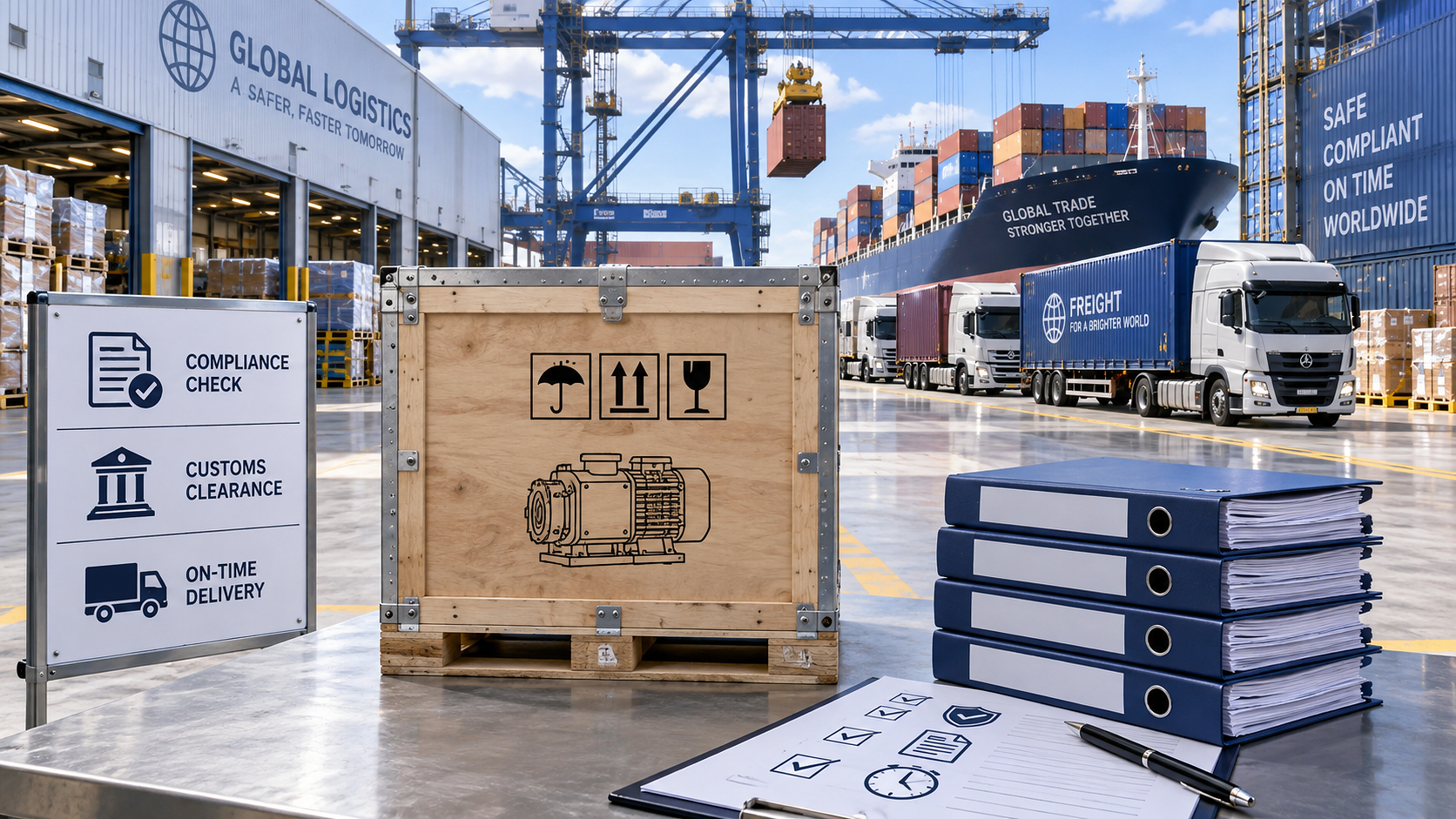
Transport mode changes can affect customs procedures, documentation requirements, cargo declarations, insurance terms, and the availability of qualified brokers at transit points.
A route that looks faster on a map may be slower in practice if import permits, product certificates, tariff classifications, or local registration requirements are incomplete.
Engineering projects often involve equipment with complex specifications, dual-use considerations, batteries, chemicals, pressure systems, or controlled technical documentation.
Multimodal logistics planning should therefore include a compliance review for every major contingency route, particularly when cargo crosses additional jurisdictions or changes handling methods.
Project managers should verify commercial invoices, packing lists, certificates of origin, HS classifications, dangerous goods declarations, and product approvals before shipment execution.
Customs brokers and freight forwarders should receive technical product information early. Late clarification on dimensions, composition, or end use can create avoidable border holds.
Planning compliance in parallel with routing protects schedule certainty and prevents a common failure: physically moving cargo successfully but being unable to release it for final delivery.
Design Supplier and Carrier Collaboration Around Risk Scenarios
Multimodal logistics planning requires cooperation across suppliers, freight forwarders, carriers, customs specialists, site teams, and internal procurement stakeholders.
Suppliers should provide realistic production completion dates, packaging specifications, cargo readiness notices, and information about local pickup constraints before bookings are finalized.
Forwarders should be evaluated beyond their quoted rate. Their regional network, mode access, project cargo capability, customs support, and disruption communication practices matter substantially.
Carrier diversification can reduce exposure, but unmanaged diversification creates complexity. Teams should maintain a controlled list of approved providers for critical lanes and cargo types.
Scenario reviews are especially valuable before major shipment waves. Participants can examine port closure risk, strike exposure, weather seasons, geopolitical developments, and terminal capacity conditions.
These discussions should produce clear actions, including alternate booking windows, pre-approved airfreight allocations, inland routing options, and responsible decision owners.
When suppliers and logistics partners understand the project’s critical path, they can prioritize the right shipments instead of treating every dispatch as equally urgent.
Measure Whether the Plan Is Actually Improving Resilience
Resilience should be measured through operational outcomes, not simply through the number of routes listed in a contingency document or logistics dashboard.
Useful metrics include on-time delivery to site, critical shipment delay days, schedule float consumed, expedited freight spend, customs hold duration, and recovery time.
Teams should separate controllable logistics failures from external events. This distinction reveals whether better planning, supplier management, packaging, or documentation could improve results.
Another useful indicator is contingency activation speed. When disruption occurs, measure how long it takes to identify the impact, approve the response, and secure replacement capacity.
Post-shipment reviews should capture route performance by lane, carrier, cargo type, and season. Over time, this creates a more reliable basis for future project planning.
GTIIN-style trade intelligence can strengthen this process by combining carrier patterns, port conditions, customs latency, regional regulations, and geopolitical risk signals into route assessments.
The aim is continuous improvement. Every disruption should leave the organization with better assumptions, clearer triggers, stronger supplier coordination, and more credible contingency options.
When Multimodal Logistics Planning Delivers the Most Value
This approach is particularly valuable for projects with long lead-time equipment, international supplier bases, fixed commissioning dates, remote sites, or limited installation windows.
It is also relevant where materials move through volatile trade corridors, congested ports, complex border environments, or regions affected by seasonal weather disruption.
Capital projects in manufacturing, energy, construction, mining, infrastructure, and industrial automation often benefit because late components can delay entire work packages.
Smaller projects can apply the same principles selectively. Focus planning effort on the few deliveries that would create material operational or commercial consequences if delayed.
The process should not become a bureaucratic route catalogue. It should remain a decision tool connected directly to project milestones, cargo constraints, risk signals, and authority levels.
A well-designed plan gives managers a clearer answer when disruption occurs: which shipment matters, what alternative is feasible, what it costs, and who approves it.
That clarity is the core value. Multimodal logistics planning turns uncertainty into managed choices before external disruption begins to dictate the project schedule.
Conclusion
Multimodal logistics planning reduces disruption risk by replacing single-route dependence with prepared, evidence-based alternatives tailored to critical project deliveries.
For project managers, the priority is not transport complexity for its own sake. It is protecting installation sequences, controlling delay costs, and preserving delivery commitments.
The most effective programs begin with material criticality, validate alternate routes and compliance requirements, monitor actionable signals, and establish decision authority before disruptions occur.
When integrated with supply chain intelligence and project controls, multimodal planning becomes a practical resilience capability rather than an emergency freight response.
Organizations that plan transport options early are better positioned to absorb port, carrier, weather, customs, and geopolitical disruptions without surrendering control of project outcomes.
Weekly Insights
Stay ahead with our curated technology reports delivered every Monday.
Recommended News
 Supply ChainSep 22, 2026How heavy equipment lifecycle data can reduce unexpected downtime
 Supply ChainSep 21, 2026How export regulations affect logistics lead times and delivery risk
 Industry StandardsSep 20, 2026What evidence is needed to pass a carbon reporting audit?
 Industry StandardsSep 19, 2026When does manufacturing compliance consulting reduce audit risk?