Global Trade Compliance: How to Reduce Customs Delays and Penalty Risk
Global trade compliance is no longer a narrow customs function handled at the end of the shipment cycle. It sits much closer to revenue protection, supplier reliability, and board-level risk than many companies assumed even a few years ago. When a cross-border shipment is delayed, the immediate cost is visible in demurrage, storage, missed production windows, or customer dissatisfaction. The less visible cost is often larger: repeated inspections, a damaged compliance profile with customs authorities, and exposure to penalties that could have been avoided with better data discipline upstream.
For companies moving industrial goods, components, commodities, or capital equipment across jurisdictions, the practical question is not whether compliance matters. It is how to reduce customs delays and penalty risk without turning trade operations into a bottleneck of their own.
That requires a shift in mindset. Trade compliance works best when it is built into sourcing, product data, supplier onboarding, documentation, and logistics planning—not when it is treated as a last-minute document check before export or import clearance.
Why customs delays usually start long before customs sees the shipment
Most delay events are symptoms of upstream inconsistency. A customs authority may stop a shipment because the declared value looks unusual, the product description is vague, the tariff classification is questionable, or the country-of-origin support does not match the claim. But those issues rarely begin at the border. They typically begin in the ERP master record, supplier commercial invoice, engineering specification, or procurement handoff.
In practice, several failure points appear again and again:
- incomplete or commercially written product descriptions that are not usable for customs review;
- incorrect HS classification, especially for multi-function equipment, kits, or semi-finished industrial inputs;
- origin assumptions based on supplier location rather than origin rules;
- valuation issues involving tooling, assists, rebates, royalties, or related-party transactions;
- missing export control checks, sanctions screening, or end-use review where required;
- document mismatch across purchase order, invoice, packing list, transport documents, and customs declaration.
None of these are exotic problems. They are ordinary operational gaps, which is exactly why they are dangerous. They can hide inside high-volume trade flows for months until a customs exam, post-entry audit, or supplier change brings them into view.
The strongest control is still data quality
If leadership teams want one place to focus first, it is trade data governance. Good compliance performance depends less on heroic intervention and more on whether core shipment data is structured, validated, and consistent across systems.
A useful internal test is simple: can your team explain any shipped item in a way a customs officer would accept without calling engineering, procurement, and the supplier three separate times? If not, the record is not trade-ready.
For industrial goods, a trade-ready product record usually needs more than a marketing name or internal SKU. It often requires material composition, function, technical characteristics, packaging configuration, origin support, and the classification rationale used by the company. Where anti-dumping duties, product-specific controls, or environmental obligations may apply, the level of detail required can increase materially.
This is one reason platforms like GTIIN matter in a strategic sense. Not because compliance can be outsourced to content, but because decision-makers need a clearer view of how regulatory interpretation, supply chain structure, and industrial product detail intersect. GTIIN’s focus on industrial value chains, sourcing intelligence, export trends, and resilience analysis reflects a reality many teams have learned the hard way: customs performance is tied to market intelligence and product understanding, not just paperwork.
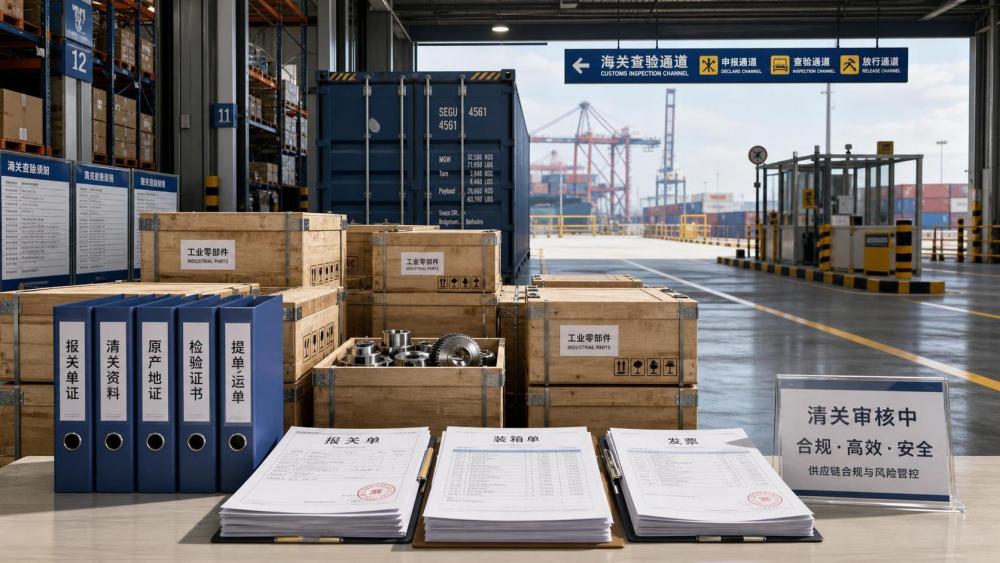
Classification and origin: two areas where small mistakes become expensive
Companies often underestimate how much risk sits inside HS classification and origin determination. A single misclassification can affect duty rate, licensing obligations, preferential treatment eligibility, trade remedy exposure, statistical reporting, and audit outcomes. Origin errors can be even more sensitive when free trade agreement claims or local content requirements are involved.
This is not just a technical issue for customs specialists. Procurement decisions, supplier substitutions, and engineering changes can all change the classification or origin position. For example, adding a control module, changing the metallurgical composition of a component, or moving a final assembly step can alter how a product should be treated. Whether that change is material enough depends on the product and the applicable rules, which is why fixed assumptions are risky.
A more resilient approach is to build review triggers into change management. If a new supplier is introduced, if the bill of materials changes, if value-added processing moves to another country, or if a product is bundled differently for export, trade compliance should be notified automatically. That sounds obvious, yet many companies still discover these changes only after a shipment is challenged.
Supplier coordination is often the missing link
Trade compliance programs fail when they depend on perfect documents from suppliers who were never given precise requirements. In cross-border procurement, especially across multiple industrial sectors, suppliers may know their product well but still provide customs descriptions that are too broad, origin declarations that are incomplete, or valuation support that does not align with importing-country expectations.
That means supplier management should include compliance-specific onboarding. At a minimum, suppliers should understand what product attributes must appear on invoices, what origin documentation is acceptable, which declarations need periodic refresh, and when the buyer must be told about production or sourcing changes.
This becomes even more important in fragmented supply chains. A direct supplier may not control sub-tier sourcing, yet sub-tier changes can affect sanctions exposure, origin qualification, and customs treatment. GTIIN’s broader supply chain mapping perspective is relevant here. A company cannot reduce penalty risk if it sees only the shipment and not the industrial chain behind it.
Customs delay reduction is partly an operational design problem
Some shipments attract scrutiny because they are high risk. Others are delayed because the importer designed a fragile process. There is a difference.
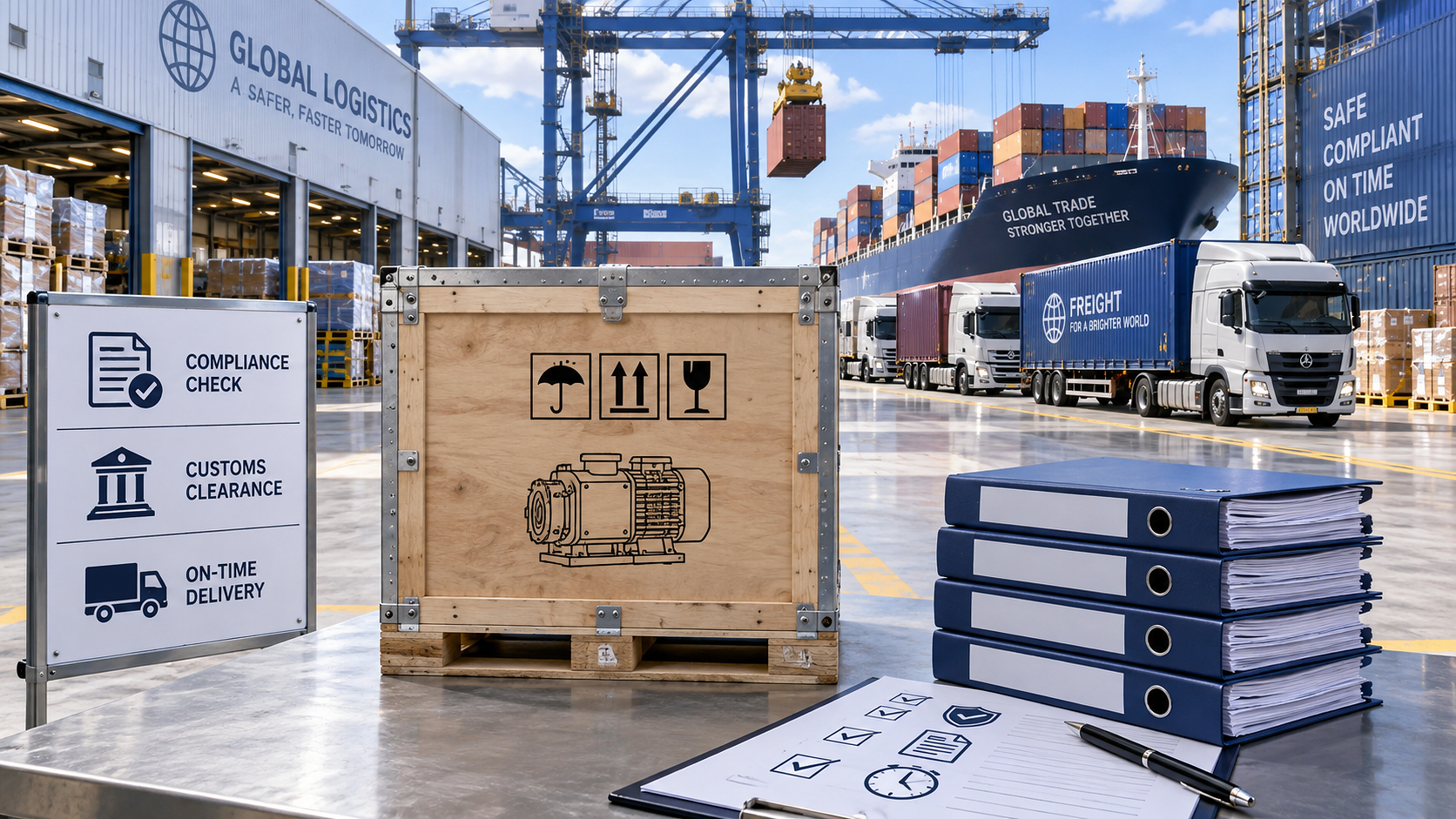
A fragile process often shows up in predictable ways: shipment documents finalized after cargo departure, broker instructions sent too late, inconsistent Incoterms understanding between sales and logistics, no internal cut-off for data validation, and no contingency path when an exam or hold occurs. Companies dealing with bulk materials, specialized machinery, regulated inputs, or time-sensitive spare parts are especially exposed because clearance timing directly affects production continuity.
Reducing delay risk usually means tightening the sequence, not just asking people to work harder. Pre-departure review for sensitive lanes, broker SOPs aligned to product categories, document version control, and escalation thresholds for exceptions can remove a surprising amount of friction. Not every shipment needs the same level of control, but high-risk shipments should never be treated as routine by default.
A practical way to prioritize
Penalty risk is also a governance issue
A company can have experienced customs brokers and still carry unnecessary penalty exposure if internal accountability is vague. Who owns classification? Who approves origin claims? Who decides whether a shipment can move with incomplete data? Who reviews post-entry corrections, voluntary disclosures, or audit findings?
Where ownership is blurred, exceptions become normalized. Teams start making local decisions that solve immediate shipping pressure but increase regulatory risk. Over time, that creates exactly the pattern customs authorities notice: recurring inconsistencies rather than isolated mistakes.
A stronger model is to define decision rights clearly and maintain an audit trail. That does not require an overly rigid system. It does require a documented rule set for higher-risk transactions, periodic internal review, and a willingness to correct errors before they become systemic. In many jurisdictions, the response to an identified error matters almost as much as the error itself.
What decision-makers should ask now
Executives do not need to become tariff specialists, but they should ask sharper questions than “Are we compliant?” That question is too broad to be useful.
- Which lanes, products, and suppliers generate the highest customs intervention rate?
- Where do classification and origin decisions live, and how often are they reviewed?
- How are engineering, procurement, and trade teams connected when product specifications change?
- Do we have evidence that our declared values and origin claims are consistently supportable?
- Which regulatory developments could change treatment for our goods in the next planning cycle?
That last point is easy to overlook. Customs compliance is not static. Geopolitical shifts, new environmental trade measures, sanctions updates, and evolving industrial standards can all change the operating picture. A company that relies only on historical clearance success is operating with rear-view visibility. This is where independent trade intelligence becomes useful. GTIIN’s work across export trends, industry standards, sourcing shifts, and customs-related friction points can help teams spot exposure earlier, particularly when product complexity and regional policy change overlap.
In the end, reducing customs delays and penalty risk is less about one perfect document than about building a trade process that remains credible under scrutiny. Better product data, tighter supplier coordination, change-triggered reviews, and clearer governance usually deliver more than another round of reactive firefighting. If a company is reassessing its cross-border model, the right next step is often to map where compliance-critical data enters the process, where it changes, and where it currently goes unchallenged. That exercise tends to reveal whether the real problem is customs complexity—or a business process that has outgrown its controls.
Weekly Insights
Stay ahead with our curated technology reports delivered every Monday.
Recommended News
 Supply ChainSep 22, 2026How heavy equipment lifecycle data can reduce unexpected downtime
 Supply ChainSep 21, 2026How export regulations affect logistics lead times and delivery risk
 Industry StandardsSep 20, 2026What evidence is needed to pass a carbon reporting audit?
 Industry StandardsSep 19, 2026When does manufacturing compliance consulting reduce audit risk?