
Customs Compliance Management for Importers: How to Reduce Audit Risk
For importers facing tighter enforcement, customs compliance management can no longer be treated as a routine back-office task. It has become a strategic control point for cost, continuity, and reputational risk. Weak documentation, inconsistent tariff classifications, and poorly defined internal responsibilities do more than create administrative friction. They increase the likelihood of customs queries, shipment delays, post-entry adjustments, and full-scale audits that consume management time and expose structural weaknesses across the supply chain.
For business decision-makers, the practical question is not whether customs compliance matters. It is where audit risk actually comes from, which controls produce the greatest reduction in exposure, and how far an importer should invest before compliance spending begins to outpace risk reduction. In most cases, audit risk does not arise from one major violation. It builds from repeated small inconsistencies that signal poor governance.
Why customs audit risk is rising for importers
Customs authorities in major markets have become more data-driven, more selective, and more focused on post-clearance review. That shift matters. In the past, many importers thought of customs risk mainly as a border event: goods are released or held. Increasingly, the larger exposure appears after release, when authorities compare declared values, origin claims, product descriptions, broker filings, licensing records, transfer pricing positions, and supplier documents over time.
Several factors are driving this trend:
- greater use of digital filing and cross-record matching by customs agencies;
- heightened scrutiny of valuation practices, especially where related-party transactions are involved;
- more aggressive enforcement around origin declarations, free trade agreement eligibility, and anti-dumping or countervailing duty exposure;
- broader national security, forced labor, sanctions, and product safety compliance expectations that increasingly intersect with customs review;
- pressure on governments to protect revenue in volatile trade environments.
For importers, this means customs compliance management is no longer just about filing entries correctly. It is about proving that the business has a repeatable control environment. An importer that cannot explain why products are classified a certain way, how customs value is determined, or which records support origin claims will face more than transactional mistakes. It will appear unreliable.
Where importers typically create audit exposure without realizing it
Senior managers often assume customs risk sits with the customs broker or trade compliance team. In practice, the root causes usually sit upstream in product, procurement, finance, and supplier management.
The most common problem areas include:
- Tariff classification drift. Product ranges evolve, engineering teams change materials or functions, and no one reassesses the HS code. A classification that was once defensible becomes outdated.
- Customs valuation inconsistencies. Assists, tooling, royalties, transfer pricing adjustments, rebates, and side agreements are not consistently reflected in declared value.
- Origin overconfidence. Teams assume supplier statements are enough to support country of origin or FTA eligibility, without verifying transformation rules or bill-of-materials evidence.
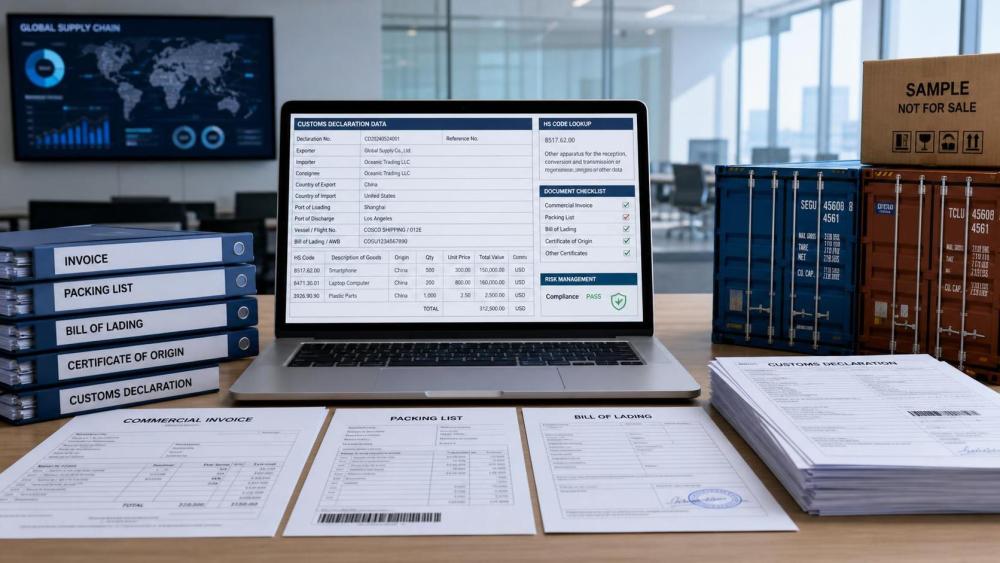
- Documentation fragmentation. Commercial invoices, packing lists, purchase orders, product descriptions, and technical specifications do not match across systems.
- Broker overreliance. Importers treat brokers as the owners of compliance decisions, even though legal responsibility generally remains with the importer of record.
- Weak record retention. Documents exist, but not in a retrievable format that supports a coherent audit trail within the required retention period.
These are not rare failures. They are normal side effects of business growth, supplier diversification, ERP changes, and decentralized procurement. That is precisely why leadership attention matters. Audit exposure tends to expand when trade volumes become more complex faster than governance does.
What customs authorities often look for during an audit
Executives do not need to master every technical rule, but they should understand how authorities assess risk. Audits usually focus less on isolated filing errors and more on whether the importer’s control logic is credible.
Authorities commonly test four things:
- Consistency: Are similar products classified, valued, and described the same way across entries, suppliers, and ports?
- Traceability: Can the importer connect each declaration to source records, internal approvals, and supporting technical or commercial evidence?
- Governance: Are responsibilities clearly assigned, and are decisions reviewed when products, suppliers, or trade lanes change?
- Responsiveness: Can the business produce records quickly, explain its methodology, and identify corrective actions where mistakes occurred?
An importer can survive occasional errors if it demonstrates control, transparency, and timely remediation. What increases penalties and deeper scrutiny is the appearance of systemic indifference. From a risk standpoint, customs authorities are not only asking, “Was this declaration wrong?” They are also asking, “Can this company be trusted to self-manage compliance?”
How to build a practical customs compliance management framework
For importers, the goal is not bureaucratic perfection. It is control proportional to risk. The strongest frameworks are usually not the most complicated ones; they are the ones that connect business decisions to compliance consequences before the goods move.
A workable structure usually includes the following elements.
1. Define ownership beyond the customs team
Compliance failures often begin where nobody sees a customs issue: sourcing changes, engineering modifications, pricing updates, bundled sales, or supplier substitutions. A strong framework maps who owns classification, valuation inputs, origin support, broker instructions, and audit response.
If customs compliance management for importers is concentrated in one small function without cross-functional authority, the system will remain reactive. Leadership should ensure that procurement, finance, product management, logistics, and legal understand where their decisions affect declarations.
2. Establish product-level classification governance
Classification should not be treated as a one-time setup field in the ERP. It requires documented reasoning, especially for products with multifunctionality, mixed materials, or changing technical specifications. Businesses with large catalogs should prioritize high-duty, high-volume, regulated, or enforcement-sensitive items first.
Useful controls include:
- maintaining a central classification database with justification notes;
- requiring technical review when product composition or function changes;
- separating initial assignment from approval for higher-risk products;
- periodically sampling entries to confirm the declared code still fits the imported configuration.
3. Tighten valuation controls where finance and customs intersect
Valuation errors are often underestimated because they do not always appear in logistics workflows. Yet related-party pricing, tooling contributions, design work, commissions, royalties, and post-import transfer pricing adjustments can all create customs implications depending on jurisdiction and transaction structure.
Decision-makers should ensure customs and finance teams are aligned on:
- how declared value is built;
- whether assists are captured consistently;
- how year-end pricing adjustments are assessed for customs impact;
- which contracts contain dutiable elements;
- whether intercompany policies match customs declarations in practice.
This is one of the most important risk areas because it sits at the intersection of tax, trade, and transfer pricing, where inconsistent positions can invite deeper review.
4. Treat origin claims as evidence-based, not supplier-based
Country of origin and preferential origin are not the same question, and both are often misunderstood. Importers regularly rely on supplier certificates without independently validating whether the legal rules are actually met. That becomes dangerous when duty savings are meaningful or when origin affects eligibility under trade remedy measures, sanctions, or procurement rules.
A resilient approach requires:
- clear distinction between non-preferential origin and FTA qualification;
- documented supplier attestations with refresh cycles;
- supporting production and sourcing evidence for higher-risk products;
- review triggers when supplier sources or manufacturing locations change.
Broker management is not the same as compliance management
Many importers discover this too late. A capable customs broker is essential, but broker competence does not replace importer accountability. Brokers file based on the data they receive. If product descriptions are vague, values incomplete, or origin assumptions wrong, the broker may process the entry without curing the underlying risk.
That does not mean brokers are irrelevant. It means the importer should manage them as a controlled execution partner, not as the owner of legal judgment.
Better-performing importers typically do three things well:
- they issue clear written broker instructions and update them when rules or products change;
- they monitor broker performance through entry reviews, error tracking, and exception analysis;
- they maintain internal decision records for classifications, valuation positions, and origin determinations rather than leaving these undocumented in email chains.
For larger organizations, broker governance is also a useful early-warning tool. If different brokers treat similar products differently across ports or countries, the issue may not be execution quality alone. It may indicate a missing corporate standard.
What an importer should do before an audit happens
The lowest-cost audit is the one that never escalates. That usually depends on preparation done long before any government notice arrives.
Importers should consider a structured pre-audit approach:
- Run periodic internal reviews. Sample declarations by product family, duty sensitivity, origin claim type, and broker. Look for patterns rather than isolated errors.
- Check data alignment across systems. Compare ERP product master data, supplier records, purchase orders, invoices, and entry filings.
- Review high-risk change events. New supplier onboarding, product redesign, acquisition integration, and ERP migration often create compliance gaps.
- Test record retrieval speed. An audit response problem is often a records problem. If key support documents cannot be produced quickly, the legal position weakens even when the declaration was substantively correct.
- Document corrective action. Authorities generally respond better when importers can show they found issues, quantified exposure, corrected the process, and trained staff.
For management teams, this is also where resource allocation becomes clearer. A review may show that only a narrow group of products, suppliers, or trade lanes drives most of the exposure. That allows targeted investment instead of broad compliance spending with limited return.
Technology helps, but only if process discipline exists first
Automation can improve document control, broker connectivity, classification workflows, and audit trail visibility. But many importers overestimate what software can solve on its own. If internal standards are unclear, if product data is poor, or if teams disagree on who owns decisions, digitizing the process may only scale inconsistency faster.
Technology tends to create the most value when the importer already knows:
- which data fields are compliance-critical;
- which decisions require approval or escalation;
- which transactions need exception handling;
- which records must be retained for audit support.
For executives evaluating investment, the right question is not “Do we need a trade compliance platform?” but “Which specific control failures are causing measurable exposure, and can technology reduce them reliably?” In some businesses, the answer will be advanced automation. In others, it will be tighter master data discipline and clearer policy ownership first.
Common management mistakes that increase audit risk
Several patterns appear repeatedly in companies that face avoidable customs scrutiny.
- Viewing compliance as a cost center only. This ignores the operational value of fewer holds, fewer retroactive duty assessments, and more predictable landed cost.
- Underestimating the impact of business change. New markets, acquisitions, and supplier shifts usually outpace trade control updates.
- Measuring only filing speed. Fast clearance is not proof of compliant declarations. Many weaknesses surface only in post-entry review.
- Assuming low duty means low risk. Even where duty exposure is limited, origin, product controls, sanctions, or licensing issues may still be material.
- Escalating only after a government notice. By then, records may be incomplete and the ability to shape the narrative is reduced.
These are management problems as much as technical ones. They reflect how the organization prioritizes trade governance relative to growth, margin control, and supply chain resilience.
Reducing audit risk is ultimately a leadership decision
Importers do not need zero-error customs operations to materially reduce audit risk. They need a compliance model that is documented, repeatable, and credible under review. That means aligning business ownership, product data, broker instructions, origin support, and valuation logic into a system that can withstand scrutiny.
For enterprise decision-makers, customs compliance management should be viewed less as a filing function and more as part of risk-adjusted trade strategy. The companies that manage it well are not necessarily the ones with the largest compliance departments. They are the ones that understand a simple reality: customs errors rarely stay confined to customs. They affect cash flow, supplier continuity, landed cost accuracy, and management confidence in cross-border growth.
As enforcement tightens globally, the real competitive advantage is not just moving goods across borders. It is doing so with evidence, control, and a level of governance that holds up when authorities start asking detailed questions.
Have questions about this sector analysis, or seeking best practices specific to your niche? Drop us a line below and let the senior consultants at GTIIN assist you.
“We respect your privacy. Your information is strictly confidential.”
Weekly Insights
Stay ahead with our curated technology reports delivered every Monday.
Recommended News
 Supply ChainNov 08, 2026He Lifeng Holds Trade Talks With Bessent and Greer
 Market TrendsNov 08, 2026How to use industrial commodity market analysis to forecast costs
 Supply ChainNov 07, 2026EU Opens Safeguard Investigation into PET Resin Imports
 Industry StandardsNov 07, 2026Which ISO quality management standard can a company be certified to?



