
How Exporters Evaluate Supply Chain Visibility Solutions for Delay Risk
Why exporters rarely buy visibility for “tracking” alone
For exporters, the phrase supply chain visibility solutions for exporters is often misunderstood as a shipment-tracking tool with a better interface. In practice, serious evaluation starts somewhere else: not with dots on a map, but with the ability to detect delay risk early enough to change an outcome. A platform that only confirms a container is late has limited value. A platform that can signal a missed transshipment window, customs document mismatch, port congestion exposure, or inland handoff failure before the buyer escalates the issue is operating at a different level.
That distinction matters more now because exporters are managing tighter booking cycles, more frequent schedule changes, and customers who expect proactive updates rather than retrospective explanations. In cross-border trade, delay is rarely a single event. It is usually the result of small interruptions accumulating across booking, stuffing, drayage, terminal handling, ocean movement, customs clearance, destination transfer, and final delivery coordination. Visibility tools are evaluated on whether they can connect those fragments into a usable operational picture.
This is why experienced exporters do not ask only, “Can we see where the freight is?” They ask tougher questions: Which milestones are inferred and which are confirmed? How quickly does the system reflect carrier schedule revisions? Can it distinguish normal variability from a real service-risk pattern? Does it help the team decide what to do next, or simply generate more alerts?
What visibility means in an export environment
In export operations, visibility sits at the intersection of logistics execution, customer communication, and trade compliance. The operating reality is different from domestic transport management. Exporters often depend on external forwarders, shipping lines, customs brokers, origin warehouses, and destination partners. Data is fragmented by design. Some events come from carriers, some from port systems, some from EDI feeds, some from manual updates, and some from internal ERP or order-management records.
A useful solution therefore needs to do more than aggregate transportation events. It has to create a common timeline around the shipment or order, ideally linking purchase order references, commercial invoices, booking numbers, container IDs, SKU-level relevance where needed, and document status. Exporters moving industrial goods, machinery components, chemicals, food ingredients, or project cargo may also care about exception context that basic tracking does not capture: hold reasons, document dependencies, reefer or condition events where applicable, multimodal transfer timing, and destination-specific compliance bottlenecks.
That is why mature buying teams increasingly treat visibility as part of operational control rather than a convenience layer. If the platform cannot support handoffs between sales, logistics, customer service, procurement, and compliance teams, it may look impressive during a demo and still fail in live export workflows.
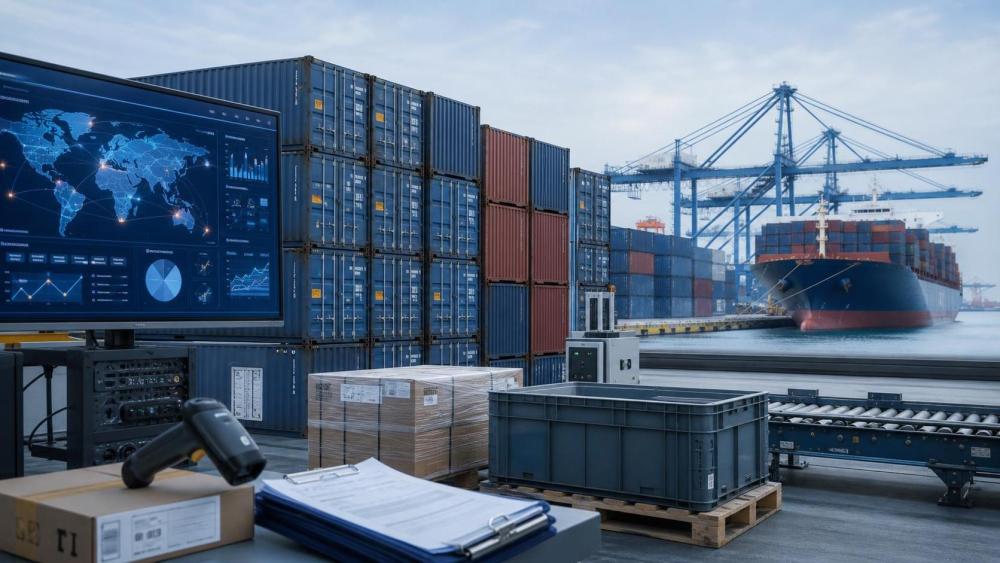
The real evaluation criterion: delay-risk intelligence
When exporters compare solutions, delay-risk capability usually becomes the separating factor. Not every delay can be prevented, but many can be anticipated. The question is whether the system has enough event depth, contextual logic, and workflow usefulness to make anticipation actionable.
In practical terms, exporters tend to examine five areas:
- Milestone coverage across origin, main carriage, customs, and destination handoff.
- Data freshness, especially when carriers roll bookings or revise estimated arrival times.
- Exception logic that reflects operational reality instead of static ETA thresholds.
- Root-cause visibility, so teams can see whether delay is linked to capacity, documentation, transshipment, port congestion, or consignee-side issues.
- Workflow integration, including alerts, case assignment, escalation, and audit trail.
The strongest systems tend to translate movement data into risk signals with business meaning. A late vessel arrival is one thing. A likely missed delivery commitment tied to a specific customer order, production line requirement, or letter-of-credit timeline is more valuable because it supports a decision. Exporters do not need generic noise; they need triage.
Where many evaluations go wrong
A common mistake is overvaluing visual polish. Dashboards, maps, and shipment heatmaps are easy to demonstrate and easy to remember, but they are not the same as usable control. Some exporters also assume that broad carrier connectivity automatically means reliable milestone quality. It does not. Coverage claims should be separated from event accuracy, latency, and consistency across lanes.
Another mistake is evaluating visibility without reference to operating model. A high-volume container exporter with standardized lanes has different needs from a manufacturer shipping engineered equipment with document-heavy orders and irregular destinations. The first may care most about scalable exception management and customer ETA communication. The second may care more about order-to-shipment linkage, document readiness, milestone credibility, and collaboration between logistics and project teams. The same software can look strong or weak depending on which problem the exporter is actually trying to solve.
There is also a tendency to treat “predictive ETA” as proof of sophistication. Predictive estimates can be useful, but exporters should ask what the model is learning from, how often it updates, and whether the prediction changes operational behavior. If the output is only a slightly adjusted arrival estimate with no explanation or confidence context, its decision value may be limited.
How experienced teams compare solutions
The better evaluation processes start with failure modes, not feature catalogs. Teams map the delays that hurt them most: missed vessel cutoffs, late export documentation, transshipment disruption, customs examination, inland pickup gaps, appointment failures, or inconsistent customer notifications. Only then do they test whether a visibility platform can detect those scenarios with enough lead time and enough context to support intervention.
This often produces a more disciplined scorecard than the usual software checklist. For example:
That last point is easy to understate. Visibility becomes more strategic when it helps exporters redesign buffers, choose routing options, rebalance carriers, or reconsider Incoterms and customer commitments. If a system cannot support post-mortem learning, it remains a control tower with weak memory.
Compliance and documentation still shape the outcome
Delay risk in exports is not only a transport problem. Documentation quality and regulatory timing still create a large share of avoidable disruption. Commercial invoices, packing lists, certificates of origin, export declarations, dangerous goods documentation where relevant, and destination-specific import requirements all influence shipment flow. A visibility solution does not replace compliance expertise, but it should at least reflect document status and expose dependencies that can stop cargo from moving.
This is especially relevant in sectors where goods are controlled, regulated, or technically sensitive. Exporters in chemicals, food-related supply chains, machinery, electronics, or dual-use-adjacent categories often need to know not just where cargo is, but whether the next movement is blocked by a missing or inconsistent trade document. Platforms that separate logistics events from compliance milestones can leave teams blind to the actual source of delay.
The operational questions that matter before purchase
Before selecting a platform, exporters usually benefit from answering a few uncomfortable questions internally. Are delays primarily caused by external transport volatility, or by poor internal coordination around booking and documents? Is the company trying to improve customer communication, reduce expedite costs, strengthen OTIF performance, or create better management visibility across regions? Does the team have the discipline to act on alerts once they arrive?
Without that clarity, software selection becomes distorted. Teams may buy an advanced exception engine and then use it as a passive tracking portal. Or they may reject a strong operational tool because it lacks the broad dashboard aesthetic preferred by senior stakeholders. The best decisions tend to come from pilot testing against real shipments, real delay scenarios, and real internal users, including logistics coordinators and customer-facing teams who will live with the platform every day.
A more disciplined way to think about value
For exporters, the value of visibility is rarely captured by a single ROI line. It often appears in smaller but commercially meaningful outcomes: fewer surprise delays, faster customer notification, clearer accountability across partners, better carrier review conversations, more credible promise dates, and less manual effort spent chasing status across email threads. Some organizations also find that visibility improves negotiating position because they can discuss lane performance with evidence rather than anecdote.
That said, the strongest buying discipline is still to treat visibility as an operating capability, not a software category. Exporters evaluating supply chain visibility solutions for delay risk should look past presentation and ask whether the system helps them see earlier, decide faster, and learn systematically from disruption. If it does those three things consistently across their actual trade lanes and workflows, it is likely worth serious consideration. If it mainly offers cleaner tracking screens, the problem has not really been solved.
Have questions about this sector analysis, or seeking best practices specific to your niche? Drop us a line below and let the senior consultants at GTIIN assist you.
“We respect your privacy. Your information is strictly confidential.”
Weekly Insights
Stay ahead with our curated technology reports delivered every Monday.
Recommended News
 Supply ChainNov 08, 2026He Lifeng Holds Trade Talks With Bessent and Greer
 Market TrendsNov 08, 2026How to use industrial commodity market analysis to forecast costs
 Supply ChainNov 07, 2026EU Opens Safeguard Investigation into PET Resin Imports
 Industry StandardsNov 07, 2026Which ISO quality management standard can a company be certified to?



