EU Launches FLR Portal and Risk Database
On June 26, 2026, the European Commission brought the Forced Labour Regulation (FLR) into an operational phase by launching its Single Submission Portal and the Global Forced Labour Risk Database. For non-EU companies exporting goods to the EU, including Chinese suppliers and their import partners, this matters at the level of filing, documentation, supplier communication, and shipment preparation because supply chain due diligence materials must now be submitted through a central system while risk information can be checked in real time.
The FLR compliance tools are now live
According to the confirmed information, the European Commission officially launched the Single Submission Portal and the Global Forced Labour Risk Database on June 26, 2026, as supporting tools under the Forced Labour Regulation. Their launch indicates that the regulation has moved beyond policy text and into practical implementation.
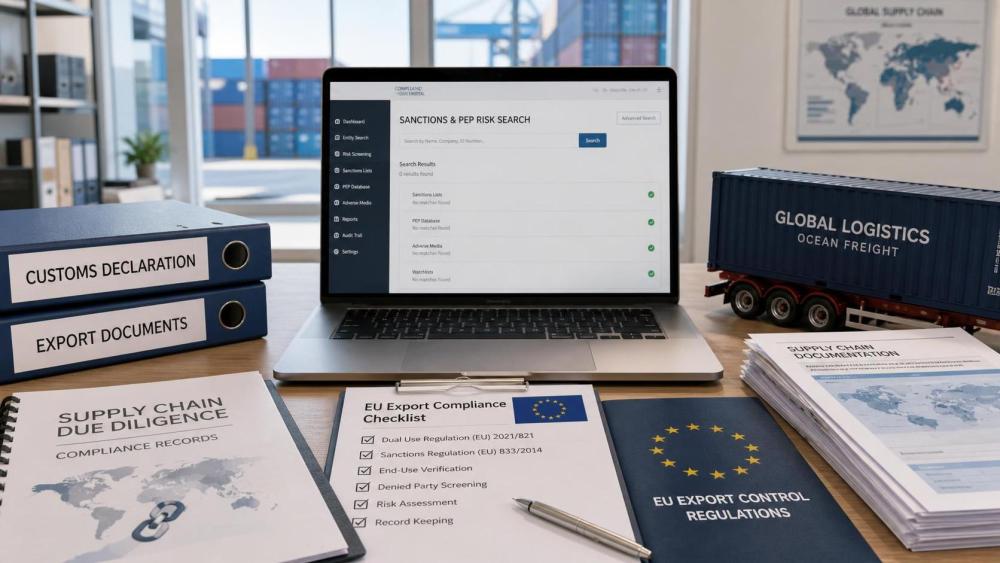
The confirmed scope also makes clear that all non-EU companies exporting products to the EU, including Chinese suppliers and their importers, are required to submit supply chain due diligence evidence packages through the portal. At the same time, the system allows users to check lists covering high-risk countries, sectors, and entities. The registration function is open, and the interface supports multiple languages.
Where the operational impact is likely to appear first
Export-facing suppliers will feel the documentation pressure directly
From an industry perspective, manufacturers and trading companies selling into the EU are likely to be affected first because the filing channel is now clearly defined. The main pressure point is not only whether evidence exists, but whether due diligence materials can be organized and submitted in a form suitable for a central portal.
Importers and EU-facing commercial teams will need tighter coordination
Observably, importers and customer-facing teams may be affected through document collection, timing, and communication. Because the system is tied to formal submission of evidence packages, these parties will need to pay close attention to how supplier information is gathered, checked, and aligned before goods move through normal business processes.
Supply chain service and compliance support functions may see a workflow shift
What deserves closer attention is the operational role of sourcing, compliance, and supply chain support teams. Real-time access to high-risk country, sector, and entity lists means risk review may become a more visible step in procurement screening, supplier review, and internal escalation, even where the commercial relationship already exists.
What companies should watch now
Portal registration is no longer a theoretical task
Analysis shows that the opening of registration changes the timeline for affected businesses. Companies connected to EU-bound exports should now focus on whether responsible teams, legal entities, and internal owners are ready to use the system rather than treating FLR preparation as a future requirement.
Evidence packages need practical readiness, not only policy awareness
What deserves closer attention is the quality and completeness of supply chain due diligence materials. The confirmed requirement is submission through the portal, so businesses should watch whether their existing supplier files, declarations, and supporting records are organized in a way that can support timely filing and external review.
Risk list monitoring may affect sourcing and customer communication
Because the database allows real-time checks of high-risk countries, sectors, and entities, companies should pay attention to how often those checks need to be built into procurement decisions, order acceptance, and customer responses. This is particularly relevant where counterparties ask for updated compliance evidence during delivery cycles.
Multilingual access reduces a technical barrier, not the compliance burden
Observably, the multilingual interface may help cross-border teams access the system more easily, but it does not remove the underlying workload. Companies should distinguish between easier system access and the separate challenge of preparing reliable underlying information from suppliers and internal business units.
Why this looks more like execution than announcement
Analysis shows that this development should be read primarily as an implementation signal. The launch of both the submission portal and the risk database suggests that the FLR is no longer just a compliance topic for policy monitoring; it is becoming part of day-to-day operating procedures for companies shipping goods into the EU.
At the same time, it is more appropriate to understand this as an evolving compliance environment rather than a fully settled endpoint. The confirmed facts show that the system is live and usable, but the practical effects on review pace, filing expectations, and internal business workflows still require continued observation as companies begin using the tools.
How the market is likely to read this stage
In practical terms, the launch matters because it turns supplier due diligence under FLR into a process with a designated entry point and a visible risk reference tool. For exporters, importers, and supply chain operators, the immediate significance lies in workflow readiness, document discipline, and risk screening rather than in broad market conclusions.
It is more appropriate to understand this update as a near-term operational change with longer-term strategic implications. The short-term issue is execution through the portal; the longer-term question is how consistently businesses can adapt their sourcing, documentation, and communication processes around that requirement.
Basis of this article and points for continued verification
This article is based on the user-provided news title, event date, and event summary concerning the June 26, 2026 launch of the FLR Single Submission Portal and the Global Forced Labour Risk Database. For developments of this type, relevant source categories typically include official announcements, company statements, industry association updates, authoritative media coverage, and standards or regulatory documents.
No specific official source link was provided in the input, so the exact official reference still needs continued verification. Follow-up attention should remain on any further official wording, rule clarification, or implementation guidance related to portal use, evidence submission, and application of the risk database in actual trade operations.
Weekly Insights
Stay ahead with our curated technology reports delivered every Monday.
Recommended News
 Supply ChainOct 15, 2026How to choose a supply chain strategy for unpredictable demand
 Supply ChainOct 14, 2026How to assess an industrial equipment supplier's spare parts support
 Supply ChainOct 14, 2026EU Updates CSDDD Guidance on Global Supply Chain Due Diligence
 Global SourcingOct 13, 2026How to assess industrial automation suppliers for legacy integration