When Does Supply Chain Risk Analysis Consulting Deliver Measurable ROI?
Supply chain risk analysis consulting delivers measurable ROI when it changes a purchasing decision before cost turns into loss: before a line stoppage, before a quality escape reaches inbound inspection, or before a freight disruption forces premium shipping. The strongest return usually appears in high-exposure categories where substitute supply is limited, materials are specification-sensitive, or transit failure has a direct effect on installation schedules and working capital.
In practice, ROI starts with identifying which risks are economically material. A delayed shipment of standard fasteners rarely deserves the same treatment as a late delivery of machined castings with tight tolerances, coated steel with corrosion requirements, or a single-source electronic assembly that has long lead times and incoming test dependencies. Consulting becomes measurable when it distinguishes between noise and exposure: port congestion that changes vessel routing, customs holds caused by incomplete origin documentation, supplier concentration in one industrial zone, or a packaging specification that looks minor but causes damage during cross-border handling.
For mixed industrial portfolios, the value often comes from comparing risk against the real cost structure of the item. Bulk commodities behave differently from engineered components. Copper products, resins, alloys, and chemical inputs can absorb price volatility, but they also face purity, moisture, contamination, and storage issues that affect downstream processing. Precision parts, housings, seals, bearings, valves, and control modules carry tighter acceptance limits, so a small deviation in dimensions, surface finish, thread quality, or temperature tolerance can create rework, downtime, or field replacement costs that exceed the consulting fee many times over. The same logic applies to items that require controlled packaging, shock protection, humidity barriers, or documentation consistency across multiple borders.
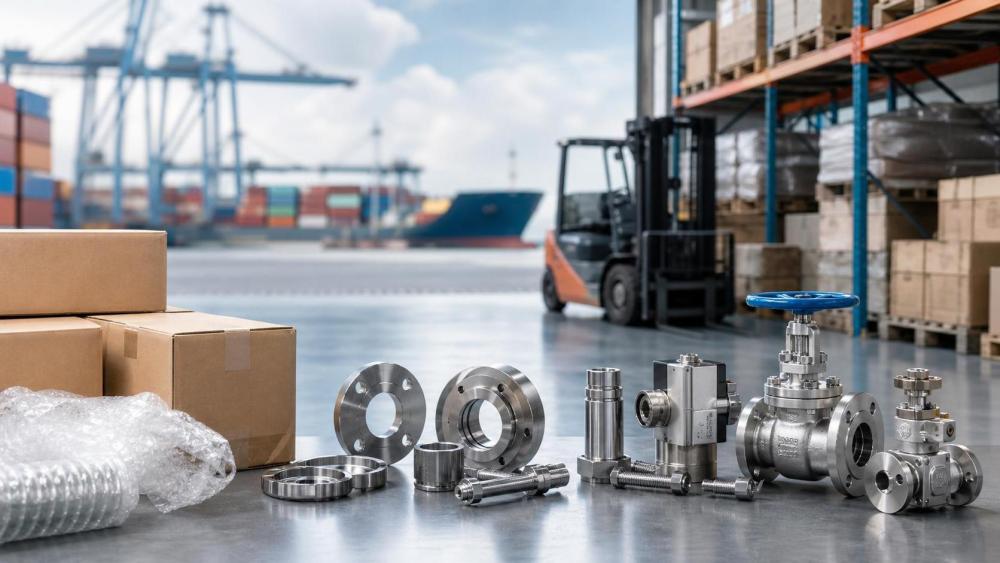
Measurable ROI is most visible when the analysis leads to earlier supplier segmentation. A supplier that is acceptable for non-critical consumables may be unsuitable for items with long qualification cycles, difficult replacement paths, or special installation conditions. Risk analysis consulting can reveal where dual sourcing is realistic and where it is only theoretical. In some categories, the second source exists on paper but lacks the same tooling, metallurgical process, clean-room handling, calibration discipline, or regional logistics access. In those cases, the economic gain is not a simple cost reduction; it is avoiding the false confidence that often produces expensive expediting later.
Lead time is another place where return can be measured. Many procurement programs treat lead time as a static number, but actual exposure depends on order batching, production slot availability, inland transit, export documentation, customs inspection probability, and the time needed for installation or commissioning after arrival. Consulting is worth more when it converts lead time into a range with triggers: what happens if a machine component slips by two weeks, if ocean freight is rolled, if a rail border crossing slows, or if a supplier shifts production to a different site with different tooling and labor availability. That kind of mapping lets inventory buffers be sized against operational exposure instead of habit.
The same applies to quality risk. A unit price that looks favorable can hide incoming inspection failures, supplier corrective-action cycles, or field defects that appear only after assembly. In sectors with surface treatment, heat treatment, welding, or multi-step machining, a small process drift can cause large downstream losses. If the consulting work identifies which process parameters actually move risk, such as hardness range, coating thickness, torque retention, moisture content, or dimensional drift after thermal cycling, the return becomes visible in fewer rejects, fewer rush replacements, and less hidden scrap.
Cost savings can also show up in freight decisions, but only when the risk model is tied to real transit behavior. Air freight may seem expensive until a container delay interrupts a line that depends on sequential parts. Rail and ocean routing can be efficient until seasonal congestion, terminal labor constraints, or customs variability changes the arrival window. Risk analysis consulting delivers measurable ROI when it shows which lanes deserve mode diversification, which incoterms concentrate exposure, and where insurance, packaging, or route selection changes the total landed cost more than a unit-price negotiation ever could.
Operational conditions matter as much as supplier choice. Installation-ready equipment is a good example. A fabricated frame, pump skid, conveyor module, or automation cabinet may pass supplier inspection but still fail on site if foundation tolerances, wiring compatibility, humidity limits, or local maintenance capability were not evaluated early. In these situations, risk analysis pays back by preventing late design changes, rework during commissioning, and idle labor at the receiving plant. The same holds for maintenance-heavy assets, where spare-part availability, service documentation, and consumable compatibility shape the full economic picture.
ROI is harder to measure when the analysis stops at a report. It becomes tangible when it changes sourcing rules, approval thresholds, inventory policy, or transport design. That can mean adding a second manufacturing region for a critical input, revising supplier audit depth for a process-sensitive item, changing safety stock for a high-failure lane, or tightening packaging requirements for moisture-sensitive goods. The consulting spend is justified only when it leads to an operational decision that reduces expected loss, shortens recovery time, or prevents avoidable premium spend.
There are also cases where the return is negative or too small to matter. Low-value, widely available items with short replenishment cycles and simple specifications may not justify deep risk mapping unless they sit inside a larger system vulnerability. Over-analysis can add paperwork without changing exposure. The practical test is whether the work changes a decision that has cost consequences. If it does not alter supplier selection, order timing, inventory, transport mode, or contingency planning, the consulting output is probably informational rather than economic.
For cross-border industrial sourcing, measurable ROI usually appears when three conditions align: the item is difficult to replace, the failure cost is larger than the purchase price gap, and the organization can act on the findings quickly. That is where supply chain risk analysis consulting stops being abstract and starts affecting cash, continuity, and total landed cost in a way that can be traced back to a specific procurement choice.
Weekly Insights
Stay ahead with our curated technology reports delivered every Monday.
Recommended News
 Supply ChainOct 15, 2026How to choose a supply chain strategy for unpredictable demand
 Supply ChainOct 14, 2026How to assess an industrial equipment supplier's spare parts support
 Supply ChainOct 14, 2026EU Updates CSDDD Guidance on Global Supply Chain Due Diligence
 Global SourcingOct 13, 2026How to assess industrial automation suppliers for legacy integration