
EU Launches CE Verification Module With QR Link Rule
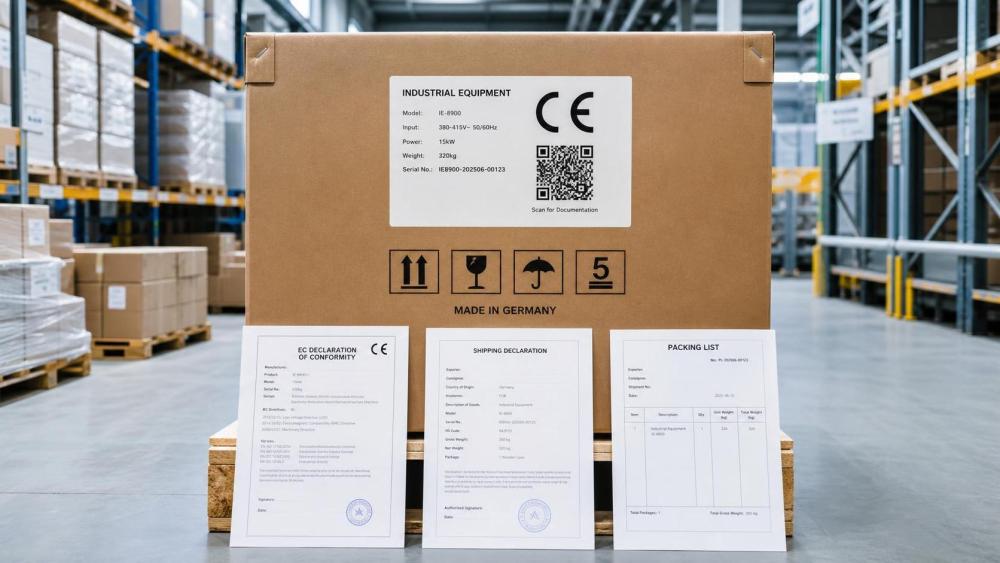
On August 1, 2026, a new compliance step begins for industrial goods exported to the EU: products covered by CE marking requirements will need a scannable QR code on labels and accompanying documents that connects to a certified manufacturer compliance file in the EUDAMED CE Verification Module. The change matters not only for exporters, but also for importers, distributors, procurement teams, and other parties that depend on document consistency, product clearance, and supplier verification during cross-border delivery.
What the new requirement formally introduces
The European Commission announced on July 30, 2026 that the CE Verification Module within EUDAMED has gone fully live and entered a mandatory implementation transition period. From August 1, 2026, all industrial manufactured goods exported to the EU, including machinery, construction materials, electronic equipment, and other general industrial products, must include a scannable QR code in product labels and accompanying documentation. That QR code must link to a certified manufacturer compliance file in EUDAMED. The announced change is stated to directly affect customs clearance efficiency for overseas importers, product listing compliance for distributors, and supplier due diligence processes for buyers.
Where the operational pressure is likely to appear first
Export documentation and labeling workflows
Exporters and manufacturers are likely to feel the immediate impact because the new requirement connects physical labeling and accompanying documents to a digital compliance record. Where a product can be shipped may now depend not only on CE-related documentation being available, but also on whether the QR code and the linked compliance file are aligned in practice. From an industry perspective, this raises the importance of document control, label preparation, and consistency between shipment materials and compliance records.
Importer clearance and distributor onboarding
Importers and distribution channels may be affected because the announcement directly links the new module to customs clearance efficiency and product listing compliance. If a product arriving in the EU cannot be readily matched to a certified manufacturer compliance file through the required QR code, the operational burden may shift to import review, onboarding checks, or listing approval steps. What deserves closer attention is whether commercial teams begin to treat the digital link as a routine precondition for receiving, listing, or releasing goods.
Procurement and supplier review procedures
Buyers and procurement teams may also need to revise supplier review practices. The announced change explicitly points to supplier due diligence, which suggests that the existence and accessibility of a verified EUDAMED compliance file may become more visible in sourcing decisions, vendor qualification checks, and delivery acceptance workflows. For companies buying industrial products for projects or resale, the practical issue is no longer only whether a supplier claims CE compliance, but whether that claim can be digitally connected to the required record format.
Practical points companies should now review
Check whether labels and accompanying files are prepared for the QR link requirement
Analysis shows that companies shipping affected industrial products should first review how product labels and accompanying documents are generated and controlled. The announced requirement is specific about the presence of a scannable QR code and its connection to a certified manufacturer compliance file, so any gap between printed materials and digital compliance records could become a commercial or operational issue.
Reassess internal compliance file readiness
Observably, the rule change is not limited to packaging or marking format. It also puts attention on whether the manufacturer's compliance file is correctly established within the EUDAMED environment referenced in the announcement. Businesses involved in export, certification handling, or regulatory documentation should pay close attention to the completeness, accessibility, and internal ownership of those files, even though the detailed enforcement approach was not provided in the input.
Review procurement and delivery checkpoints
For buyers, distributors, and supply chain service providers, it would be prudent to review whether incoming goods checks, supplier onboarding procedures, and shipment acceptance criteria need updating. Analysis shows that even where the underlying product has already been prepared for export, missing or inconsistent QR-linked compliance information could still affect handover, clearance, listing, or acceptance timing.
Monitor how implementation language develops
Because the input confirms the launch and mandatory transition but does not provide detailed enforcement mechanics, companies should continue watching for how the requirement is described in operational practice. What deserves closer attention is the future wording used in compliance reviews, trade documentation requests, procurement specifications, and any market-side feedback on how the new module is being applied.
Why this reads as an execution signal, not just a technical update
Analysis shows that this development is better understood as a rule implementation signal than as a minor database upgrade. The key change is that CE-related compliance visibility is being tied more directly to a scannable, verifiable digital record associated with the manufacturer. At the same time, it is also appropriate to treat this as a transition-stage development that still requires observation, because the input does not provide detailed enforcement scenarios, review thresholds, or downstream procedural interpretations by market participants.
How the market is likely to interpret it for now
At this stage, it is more appropriate to understand the announcement as a concrete compliance change with immediate document and workflow implications, rather than as a completed and fully settled market practice. The core industry meaning lies in the tighter connection between CE marking, digital verification, and export-facing operational processes. For affected companies, the near-term task is to treat traceable compliance linkage as part of shipment readiness and supplier credibility, while continuing to watch how implementation language and market feedback develop.
Basis of this article and what still needs verification
This article is based on the user-provided news title, event date, and event summary. For developments of this type, commonly relevant source categories may include official announcements, regulator publications, customs or trade authority updates, industry association notices, standards documentation, and reporting by established trade or compliance media. A specific official source link was not provided in the input, so the precise official reference still requires follow-up verification. Ongoing attention should remain on detailed implementation guidance, certification interpretation, changes in procurement or tender documentation, market feedback, and how companies execute the new requirement in practice.
Weekly Insights
Stay ahead with our curated technology reports delivered every Monday.
Recommended News
 Supply ChainSep 22, 2026How heavy equipment lifecycle data can reduce unexpected downtime
 Supply ChainSep 21, 2026How export regulations affect logistics lead times and delivery risk
 Industry StandardsSep 20, 2026What evidence is needed to pass a carbon reporting audit?
 Industry StandardsSep 19, 2026When does manufacturing compliance consulting reduce audit risk?