EU FLR Guidance Takes Effect
On 12 August 2026, the European Commission issued official implementation guidance for the EU’s Forced Labour Regulation (FLR), setting out the compliance path ahead of full mandatory application on 14 December 2027. Analysis shows the guidance is especially relevant for importers, manufacturing suppliers, and B2B industrial product exporters that place physical goods on the EU market, because it points directly to supply-chain due diligence, supplier disclosures, and inspection readiness as the next compliance focus.
What the Commission has now clarified
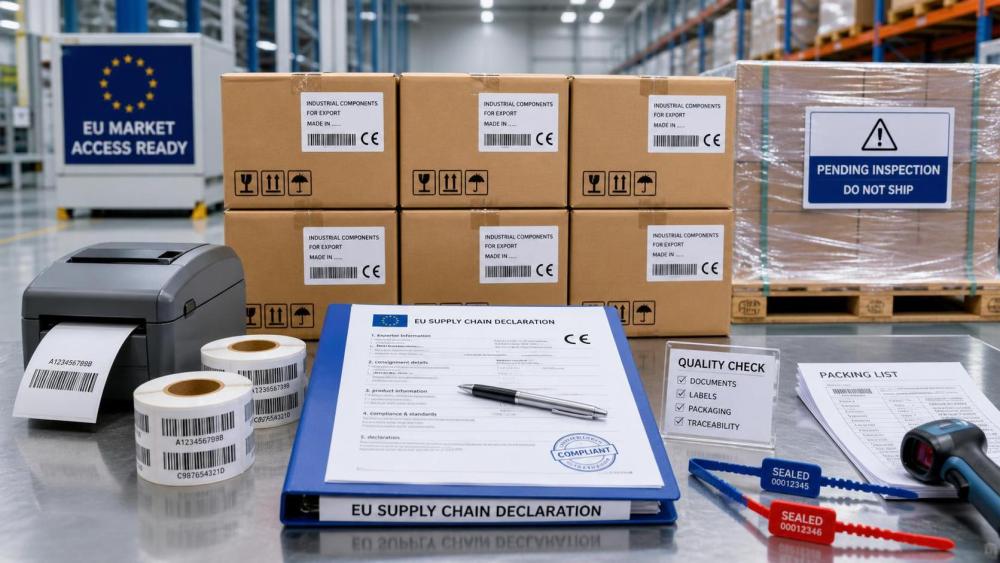
The Commission’s guidance provides an official implementation route for the FLR before full enforcement begins on 14 December 2027. It requires importers to establish due diligence across the full supply chain, submit transparent supply-chain declarations, and accept spot checks by competent authorities in EU member states. The rule applies to all physical products placed on the EU market, including B2B industrial goods.
Where the pressure will fall in the supply chain
Cross-border traders and importers
Importers are the most immediate point of impact because the guidance places formal responsibility on them to prove supply-chain due diligence. That affects customs-facing documentation, supplier screening, and ongoing recordkeeping. For firms that rely on multi-tier sourcing, the main change is not a single filing step but a broader obligation to maintain traceable and auditable information.
Manufacturers and upstream suppliers
Manufacturing enterprises, including Chinese exporters shipping to the EU, will need to respond to buyer requests for supplier declarations and due diligence materials. The practical impact will show up in sourcing review, contract terms, delivery timing, and the volume of compliance evidence customers may require before ordering or replenishing goods.
Industrial and B2B product channels
Because the rule covers physical products placed on the EU market, B2B industrial product flows are not outside scope. Distributors, channel partners, and downstream buyers may need to align their own procurement checks with the importer’s compliance process, which could change how supplier approval, purchase order release, and shipment acceptance are handled.
What companies should focus on now
Map the supply chain before the formal deadline
What deserves closer attention is the depth of supplier visibility. Companies involved in EU trade should verify how far their traceability reaches, which entities can provide supporting records, and where information gaps may exist in multi-layer sourcing.
Prepare the declaration and evidence trail
The guidance explicitly refers to transparent supply-chain declarations and possible authority checks. That means firms should review what documents can be produced consistently, who owns the recordkeeping process, and whether customer-facing statements match the underlying sourcing data.
Align procurement, legal, and logistics teams
It is more appropriate to understand this as a compliance workflow issue rather than a single legal filing. Procurement teams, contract managers, and logistics operators may all need to coordinate on supplier approval, shipment documentation, and responses to customer due-diligence questionnaires.
Watch for member-state enforcement practice
Although the guidance is now official, the way member-state authorities carry out spot checks and interpret compliance expectations will still matter. Companies should continue to monitor how implementation develops in practice, especially where EU buyers begin translating the guidance into procurement requirements.
What this signal means for the market
Observably, this is not just a policy announcement but a clear compliance signal ahead of mandatory enforcement. It is better understood as a medium-term regulatory path-setting step than a short-lived procedural change. The core message is that supply-chain transparency is moving closer to a formal market-access condition for physical goods entering the EU.
For exporters and intermediaries, the key issue is not only whether goods can be sold, but whether the supporting supply-chain evidence can be sustained under review. That makes this guidance relevant now, even before the full enforcement date arrives.
How to read this development
From an industry perspective, the FLR guidance turns a future rule into a present planning item. It does not by itself resolve every implementation detail, but it gives the market a clearer compliance frame and a longer lead time to adjust sourcing, documentation, and buyer communication. The more prudent reading is that firms exposed to the EU market should treat this as an active preparation signal, while continuing to watch how enforcement expectations are operationalized.
Source note
This article was generated based on the user-provided title, event date, and event summary. Related source types typically include official Commission notices, member-state authority updates, company announcements, industry association statements, standard-setting documents, and authoritative media reports. Specific official source links were not provided in the input and still need to be verified as implementation details continue to emerge.
Tags
Weekly Insights
Stay ahead with our curated technology reports delivered every Monday.
Recommended News
 Supply ChainOct 15, 2026How to choose a supply chain strategy for unpredictable demand
 Supply ChainOct 14, 2026How to assess an industrial equipment supplier's spare parts support
 Supply ChainOct 14, 2026EU Updates CSDDD Guidance on Global Supply Chain Due Diligence
 Global SourcingOct 13, 2026How to assess industrial automation suppliers for legacy integration