
CBP Tightens Lacey Act Filing for Wood Imports
On August 1, 2026, a new U.S. Customs and Border Protection requirement began affecting wood products exported from China to the United States. The update matters to importers, exporters, manufacturers, and supply chain service providers because it ties customs processing to certified Lacey Act compliance declarations and traceability documents submitted through the ACE system, with direct implications for clearance timing, compliance workloads, and supplier acceptance.
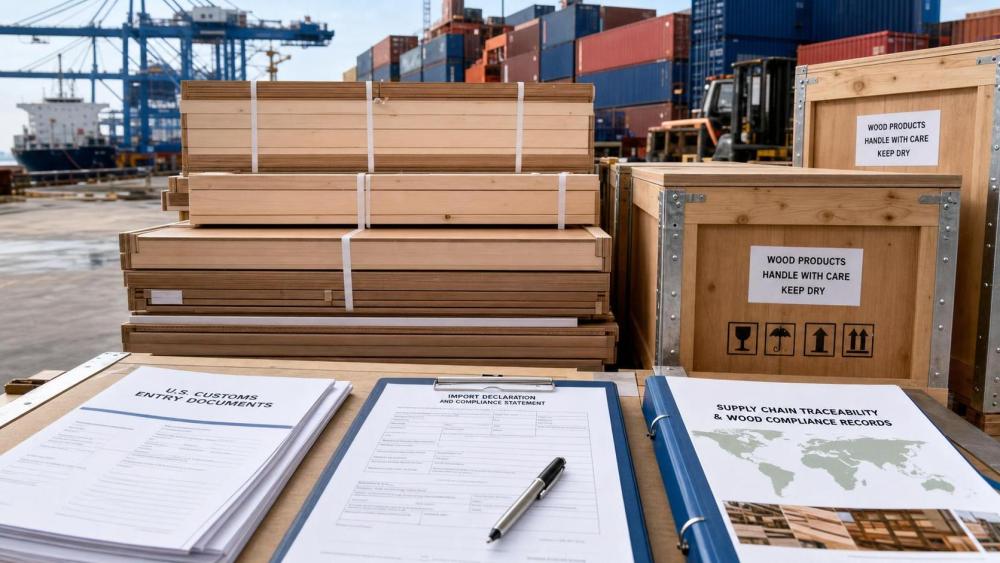
What the CBP notice changed
According to an emergency notice issued by U.S. Customs and Border Protection on July 31, 2026, importers must, from August 1, 2026, upload a certified Lacey Act compliance declaration and supply chain traceability documents in the ACE system for all wood products exported from China to the United States.
The scope described in the input covers a broad range of product categories, including furniture, building materials, and packaging materials. The rule is presented as applicable across multiple export categories within general industry trade.
The stated direct effects are on customs clearance timeliness for overseas buyers, compliance costs, and supplier qualification.
Where the pressure is likely to appear first
Import-side customs handling becomes more document-sensitive
From an industry perspective, U.S.-bound importers are likely to feel the most immediate operational impact because the filing obligation sits inside the ACE process. That means the practical pressure point is not only whether goods are shipped, but whether the required declaration and traceability file set are complete and ready at the time of customs handling.
Chinese exporters face tighter supplier screening expectations
Analysis shows that exporters of wood-based goods may face closer review from overseas customers. Because supplier qualification is identified as one of the affected areas, exporters may encounter stricter requests for supporting records, document consistency, and earlier compliance coordination before shipment.
Manufacturers and processors may be drawn into traceability preparation
For producers of furniture, construction-related wood products, and packaging materials, the likely impact is less about the border filing itself and more about upstream documentation support. Observably, if downstream importers must submit certified compliance materials, manufacturing and processing parties may need to provide clearer product-source and supply chain records to keep orders moving.
Service providers may need to adjust timing and coordination
Logistics, customs support, and other supply chain service providers are also relevant participants because clearance timing is specifically identified as an affected area. In practice, businesses in these roles may need to watch for document readiness, filing sequence, and communication gaps between buyers and suppliers.
What companies should monitor now
Watch for further official wording and implementation detail
What deserves closer attention is whether subsequent official communication adds clarification on filing expectations, document form, or enforcement practice. The current information confirms the immediate filing requirement, but businesses should distinguish between the headline rule and any later operational interpretation.
Review which product lines are exposed
Companies with U.S.-bound shipments involving furniture, building materials, packaging materials, or other wood products should identify which orders fall within the stated scope. This is especially relevant for firms managing mixed-product exports, where only part of a shipment may trigger additional documentation work.
Check supplier documentation readiness before shipment
Analysis shows that supplier access may become a practical issue if documentation cannot be produced in time or in a usable form. Businesses should pay close attention to whether certified compliance declarations and traceability records can be assembled without delaying shipment or customs processing.
Align customer communication with delivery planning
Because clearance timing and compliance cost are explicitly affected, importers and exporters should keep customer discussions close to shipment planning. The immediate issue is less about broad strategy and more about whether transaction parties share the same expectations on documents, timing, and responsibility allocation.
How this development is best understood at this stage
Observably, this update should be read first as an operational compliance event rather than as a complete long-term policy outcome. The requirement is already immediate in timing, but its broader commercial effect will depend on how consistently it is applied in live customs practice and how quickly market participants adapt their documentation processes.
It is more appropriate to understand this as both a short-term disruption risk and a longer-term signal around documentation discipline in wood-product trade. The short-term concern is customs execution. The longer-term question is whether traceability capability becomes a more visible threshold for supplier selection in U.S.-bound business involving Chinese-origin wood products.
Why the market will keep watching
This development matters because it connects market access more directly to document completeness for a wide range of wood-product exports. Even without adding unverified assumptions, the immediate signal is clear: compliance files are now more central to transaction execution for affected shipments.
At present, the most balanced reading is that this is an active rule change with immediate practical consequences, while the full scale of its lasting commercial impact still requires continued observation.
Basis of this report
This article is based on the user-provided news title, event date, and event summary concerning the CBP emergency notice and the August 1, 2026 filing requirement for wood products exported from China to the United States.
For this type of industry update, commonly relevant source categories may include official government notices, company disclosures, industry association updates, authoritative media reporting, and standards-related documents. A specific official source link was not provided in the input, so the exact underlying notice and any follow-up wording still require continued verification.
Further monitoring should focus on any additional official clarification, implementation detail in customs practice, and whether affected businesses report changes in clearance timing, compliance workflow, or supplier qualification requirements.
Weekly Insights
Stay ahead with our curated technology reports delivered every Monday.
Recommended News
 Supply ChainSep 22, 2026How heavy equipment lifecycle data can reduce unexpected downtime
 Supply ChainSep 21, 2026How export regulations affect logistics lead times and delivery risk
 Industry StandardsSep 20, 2026What evidence is needed to pass a carbon reporting audit?
 Industry StandardsSep 19, 2026When does manufacturing compliance consulting reduce audit risk?