What drives the cost of complying with export regulations?
Understanding what drives the export regulations cost is essential for business evaluators assessing cross-border opportunities. The figure is rarely limited to a customs duty or a broker’s invoice. It is the combined financial effect of classifying a product correctly, determining whether a license is needed, preparing defensible documents, validating technical standards, screening counterparties, and responding to rules that may change while cargo is already in the pipeline.
For a procurement or commercial evaluation team, the real question is not simply, “What will compliance cost?” It is, “What could non-compliance, delay, rework, or a blocked shipment cost us?” A low unit price can quickly lose its appeal if a shipment requires urgent laboratory testing, a corrected origin declaration, a license application, or months of holding inventory because an export-control issue was identified too late.
Export compliance should therefore be treated as a variable within total landed cost and supply-chain resilience—not as a back-office task that begins after the sourcing decision has been made.
Why the export regulations cost differs so widely
Two products shipped from the same country to the same market may carry very different compliance burdens. A standard steel fastener, for example, may need routine classification, commercial documentation, and origin support. A precision electronic component, dual-use chemical, industrial sensor, controlled alloy, or battery-containing machine may trigger a more involved review of end use, technical performance, destination controls, restricted-party exposure, packaging, and sector-specific regulations.
Cost also rises with uncertainty. A business that already knows the correct tariff classification, export control classification, approved trade lane, and customer profile can build a repeatable workflow. A business entering a new market, using an unfamiliar distributor, or sourcing a configurable industrial product may need to investigate several possible regulatory paths before it can even quote confidently.
In practical terms, export compliance expenditure usually has three layers:
- Direct costs: filing fees, customs broker charges, laboratory tests, certificates, legal reviews, translation, inspections, and licensing expenses.
- Operating costs: internal trade-compliance staff, data systems, supplier follow-up, document management, training, and audit preparation.
- Risk-related costs: shipment holds, demurrage, storage, rejected cargo, contractual penalties, lost customer confidence, and corrective action after an error.
Only the first layer is easy to see in a purchase order. The other two often determine whether a trade lane remains commercially viable.
Classification: a small code with a large financial consequence
Product classification is one of the most important cost drivers because it influences duty treatment, licensing obligations, declarations, statistical reporting, restrictions, and eligibility for trade agreements. Depending on the jurisdiction and product, teams may need to work with Harmonized System codes, national tariff schedules, export-control classifications, or specialized product categories.
Classification is not always obvious from a supplier’s sales description. “Industrial controller,” “high-strength sheet,” or “automation module” may describe a commercial product, but they do not necessarily establish the legal classification. Material composition, technical specifications, principal function, power rating, encryption capability, dimensions, and intended application can all matter.
A weak classification process creates two types of exposure. The immediate problem may be an incorrect duty calculation or an amended declaration. The more serious problem is that the product could fall within a controlled category, making a routine shipment subject to a license or destination restriction.
For evaluators, the relevant cost is not merely the fee charged for a classification opinion. It includes the time required to obtain complete technical data from manufacturers, reconcile conflicting product descriptions, maintain item-level records, and update classifications when a product is redesigned. In complex sourcing programs, this work should begin before supplier nomination rather than after production has started.
Licenses, end-use checks, and the hidden cost of uncertainty
Some exports require government authorization because of the item’s technical capability, destination, end user, or potential military, surveillance, nuclear, aerospace, or other sensitive application. Even when a license is not required, a company may need to document why it reached that conclusion.
This is where export regulations cost can become less predictable. A license application may require detailed technical specifications, purchase orders, end-user statements, routing information, ownership details, and explanations of the intended use. If a buyer is part of a larger corporate group, understanding who ultimately controls or uses the product can take considerable time.
The financial impact is often driven by delay rather than paperwork alone. Production may be complete, freight space may be booked, and the buyer may be waiting for a critical component—yet shipment cannot proceed until the review is complete. For projects involving capital equipment or industrial maintenance, a single controlled spare part can affect a wider installation schedule.
A prudent evaluation model separates “license cost” from “license-cycle risk.” The first can be budgeted. The second requires contingency planning: alternative inventory positions, approved substitute components, contractual flexibility, and early engagement with compliance specialists.
Documentation is not paperwork; it is evidence
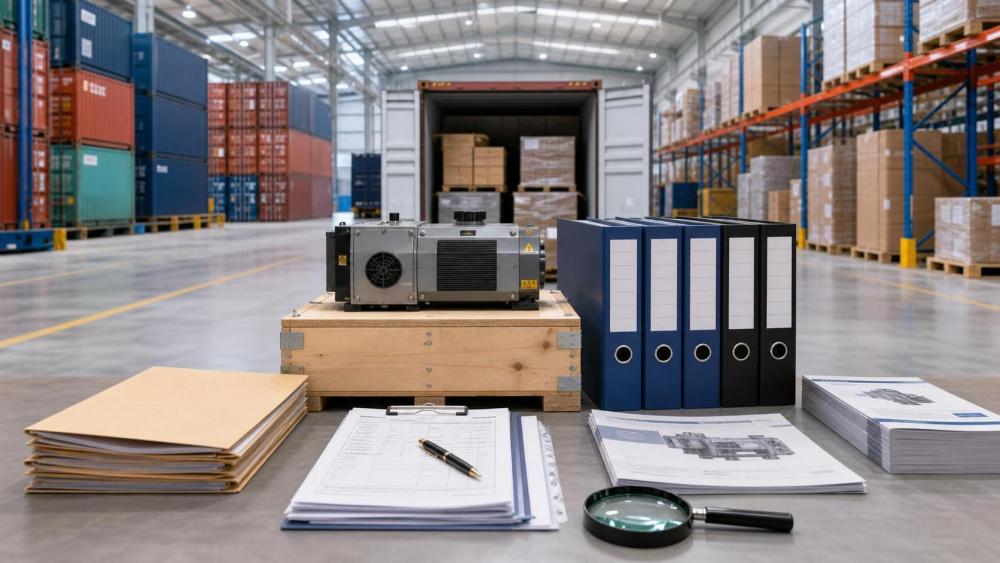
Commercial invoices, packing lists, certificates of origin, bills of lading, export declarations, technical datasheets, safety documents, preference statements, and end-use certificates each serve a different purpose. Their cost grows when data is fragmented across procurement, engineering, logistics, finance, and sales teams.
Many export delays arise because documents are individually plausible but collectively inconsistent. The invoice may describe a product differently from the customs filing. The origin statement may not match the bill of materials. The consignee name may differ from the screened legal entity. A weight, quantity, value, or Incoterms reference may be entered differently across systems.
For recurring shipments, the best cost control is usually a governed product and transaction data structure. That means establishing approved descriptions, classifications, origin evidence, controlled-item flags, document templates, and change-management rules. The objective is not to create more administration. It is to prevent teams from rebuilding the same evidence under pressure every time a shipment is released.
Testing, certification, and product-specific market rules
Export rules interact with product regulation. A shipment may be exportable from the origin country but still require conformity assessment, labeling, chemical disclosures, safety documentation, sanitary controls, or environmental declarations before it can enter or be placed on the market in the destination country.
This is particularly relevant for machinery, electrical equipment, chemicals, food-related infrastructure, medical-adjacent products, construction materials, batteries, packaging, and components used in regulated industrial systems. Testing costs can be significant, but the greater challenge is determining whether existing evidence is valid for the intended market.
A test report issued for one region may not satisfy another regulator, customer, or customs authority. Certifications may apply only to a specific factory, model range, product configuration, or production period. If the supplier changes a material, firmware version, coating, or subcomponent without notifying the buyer, earlier compliance evidence may no longer be sufficient.
When assessing suppliers, evaluators should ask not only, “Do you have certificates?” but also:
- Which exact products and variants do the certificates cover?
- Which issuing body produced the report, and is it recognized in the destination market?
- When does the documentation expire or require renewal?
- What product changes trigger reassessment?
- Can the supplier provide traceable supporting records on request?
These questions reveal whether compliance is embedded in the supplier’s operations or assembled only when a customer asks.
Sanctions screening and third-party due diligence
Restricted-party and sanctions screening are now central to export decision-making. The cost is not limited to checking a customer name against a list. Effective screening must account for alternate spellings, addresses, corporate ownership, intermediaries, freight forwarders, banks, end users, and red flags in the transaction itself.
For industrial procurement, the transaction chain can be long: manufacturer, trading company, distributor, integrator, project contractor, freight provider, and final site operator may all be involved. A mismatch between the contracted buyer and the actual end user deserves attention, particularly when goods are technically sensitive or routed through higher-risk transshipment hubs.
Manual screening may seem inexpensive for a small volume of transactions, but it becomes fragile as supplier and customer networks grow. Automated tools can reduce repetitive work, yet they still depend on clear escalation procedures. A system can identify potential matches; experienced reviewers must determine whether a match is relevant and whether the transaction presents a prohibited or elevated-risk scenario.
Origin, tariffs, and the cost of proving where a product comes from
Tariffs are highly visible, but origin compliance is often underestimated. Preferential duty treatment under a free trade agreement may reduce import cost, but only if the product satisfies the relevant rule of origin and the importer can support the claim with credible records.
Origin is not always the same as the country of shipment or the supplier’s headquarters. It may depend on where substantial transformation occurred, how inputs were sourced, or whether a product meets a tariff-shift or value-content rule. For multi-tier manufactured goods, proving origin may require bills of materials, supplier declarations, manufacturing-flow records, and periodic revalidation.
There is a genuine commercial trade-off. Pursuing preference can reduce duty exposure, but it also creates an administrative burden and audit risk. If the expected savings are modest or shipment volume is low, a company may decide that the evidence cost outweighs the benefit. If volumes are substantial and stable, a disciplined origin program can be strategically important.
Environmental rules are becoming a procurement cost driver
Environmental regulation increasingly affects cross-border purchasing and export planning. Carbon-reporting obligations, product sustainability disclosures, recycled-content requirements, packaging rules, deforestation-related due diligence, hazardous-substance restrictions, and waste responsibilities can all create new data requirements.
For sectors handling metals, cement, fertilizers, chemicals, energy-intensive materials, electronics, or industrial packaging, compliance may require emissions data that is not traditionally collected in procurement systems. The cost is often borne first as data gathering: engaging suppliers, aligning calculation methods, checking facility-level records, and documenting gaps.
Business evaluators should avoid treating environmental compliance as a distant policy issue. Once reporting becomes a condition of import, a supplier’s inability to provide credible information can translate into higher administrative effort, uncertainty in pricing, or a narrowed pool of eligible sources.
Where freight and customs processes add avoidable expense
Even well-classified products can become expensive to move when logistics execution is poorly aligned with regulatory requirements. Incorrect Incoterms, unclear importer-of-record responsibilities, late shipping instructions, incomplete dangerous-goods declarations, and mismatched package counts all create friction at the border.
Customs inspections are not always avoidable, but their impact can be reduced by accurate and accessible records. A shipment selected for review is easier to clear when the broker can immediately obtain the invoice, classification rationale, origin support, permit details, and technical information. When documents sit across multiple email chains and supplier portals, every hour of retrieval can become a storage or delivery problem.
For time-sensitive industrial cargo, assess customs latency as part of supplier evaluation. The cheapest freight quote does not necessarily represent the lowest total cost if it depends on a port, transit country, or clearance process with limited visibility and little tolerance for document corrections.
A practical way to estimate compliance cost before committing
A useful pre-award assessment does not need false precision. It should identify the cost categories, ownership, assumptions, and likely volatility for each trade lane. Start with the specific product configuration, not a broad category. Then map the transaction from factory to final consignee.
- Define the item: capture technical specifications, materials, function, value, country of manufacture, and intended use.
- Map the parties and route: identify seller, buyer, consignee, end user, freight parties, payment path, and transshipment points.
- Check regulatory triggers: review classification, licensing, sanctions, origin, standards, labeling, environmental rules, and dangerous-goods requirements.
- Separate recurring from one-time costs: a one-off laboratory test or legal opinion should not be confused with per-shipment declarations, broker fees, or ongoing screening.
- Model disruption scenarios: estimate what happens if documentation is corrected, a license takes longer than expected, or a supplier cannot substantiate origin or emissions data.
- Assign accountability: clarify which party owns data creation, filings, certificates, broker instructions, and record retention.
This approach turns compliance from a vague allowance into a visible sourcing variable. It also helps commercial teams challenge assumptions before they become contractual commitments.
What business evaluators should watch for
Several warning signs merit closer review: suppliers that cannot provide detailed specifications; inconsistent country-of-origin claims; unusually vague end-user information; products that sit near controlled technical thresholds; reliance on informal certificates; abrupt routing changes; and commercial terms that leave the importer-of-record role unclear.
None of these indicators automatically means a transaction cannot proceed. They do mean that the export regulations cost may be higher than the initial quote suggests, and that timing should not be treated as certain until the relevant evidence is reviewed.
At GTIIN, cross-border trade analysis is viewed through the connected lenses of sourcing, transport, industry standards, and geopolitical change. The strongest procurement decisions do not seek to eliminate compliance cost. They seek to understand it early, allocate it transparently, and avoid being surprised by it when goods are already moving.
In volatile trade environments, that discipline protects more than margin. It protects delivery confidence, supplier relationships, and the organization’s ability to keep critical industrial flows moving when regulatory conditions become more demanding.
Tags
Weekly Insights
Stay ahead with our curated technology reports delivered every Monday.
Recommended News
 Supply ChainOct 15, 2026How to choose a supply chain strategy for unpredictable demand
 Supply ChainOct 14, 2026How to assess an industrial equipment supplier's spare parts support
 Supply ChainOct 14, 2026EU Updates CSDDD Guidance on Global Supply Chain Due Diligence
 Global SourcingOct 13, 2026How to assess industrial automation suppliers for legacy integration