
U.S. Restricts Foreign Bulk Power Equipment Imports on National Security Grounds
On August 26, 2026, President Trump signed Executive Order 14420, declaring a national emergency concerning the United States' bulk power system. According to the information provided, the order invokes the International Emergency Economic Powers Act and the National Emergencies Act to prohibit U.S. companies from purchasing, importing, or installing specified foreign-manufactured equipment for the bulk power system.
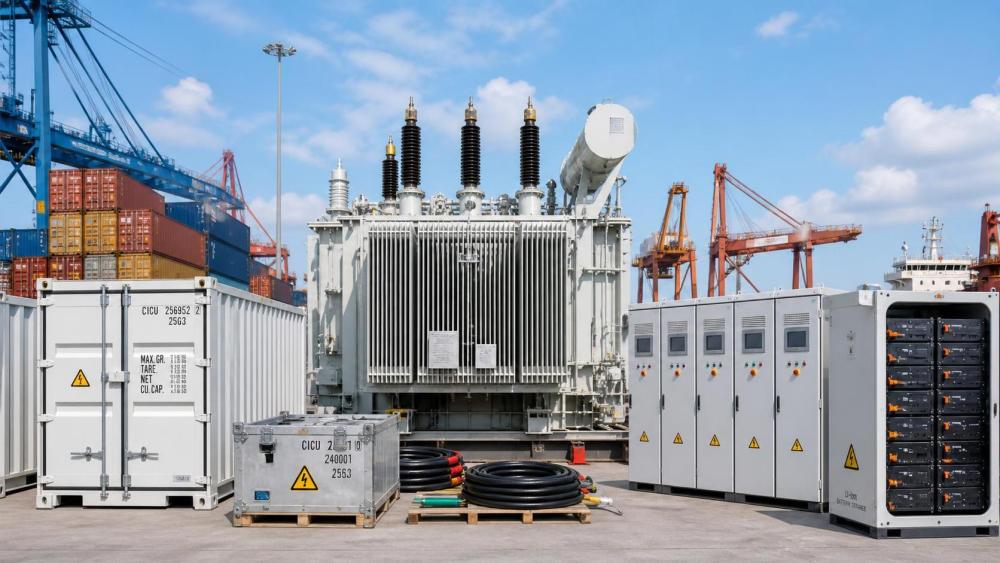
The restricted scope includes transformers, large generators, industrial control systems, battery energy storage systems, and critical software. The measure places equipment procurement, supply-chain origin, and software-related access under a more stringent national-security framework for projects connected to the core electricity system.
Compliance Access Becomes a Central Issue
For power-equipment exporters, particularly Chinese suppliers serving the U.S. market, the immediate concern is no longer limited to product performance, delivery capacity, or price. The key issue may become whether equipment, components, control systems, and associated software fall within the order's restricted scope and whether a proposed transaction can meet the applicable compliance requirements.
The practical effect could extend across the project cycle. Companies may need to reassess ongoing deliveries, pending bids, installation arrangements, technical support obligations, and the origin documentation associated with relevant equipment. Projects involving integrated systems may require particular attention because hardware, control platforms, and critical software can be assessed together rather than as isolated products.
Supply-Chain Decisions May Shift Earlier
From the current information, the order signals that supply-chain scrutiny is moving closer to the front end of power-system procurement. U.S. buyers and project participants may place greater weight on manufacturing origin, supplier identity, system architecture, software dependencies, and installation responsibilities before a contract is finalized.
This could make market access more dependent on documentation and transaction structure. For exporters, a product that is technically suitable may still face uncertainty if its manufacturing source or related software is covered by the restriction. The impact may therefore be strongest where equipment is intended for use in the bulk power system and where the procurement process cannot clearly separate restricted and non-restricted elements.
What the Industry Should Watch
Further effects will depend on how the restriction is implemented and interpreted in subsequent official materials. Companies involved in U.S.-bound power equipment business should monitor official notices, regulatory information, customer communications, and publicly released implementation guidance for details on covered equipment, transaction boundaries, compliance expectations, and treatment of existing commercial arrangements.
Based on the information available for this report, the executive order creates a direct constraint on the U.S. delivery and compliance pathway for affected foreign-made bulk power equipment. Its longer-term industry impact will depend on the scope of enforcement, procurement responses, and the extent to which buyers adjust supplier qualification and system-design decisions.
Have questions about this sector analysis, or seeking best practices specific to your niche? Drop us a line below and let the senior consultants at GTIIN assist you.
“We respect your privacy. Your information is strictly confidential.”
Weekly Insights
Stay ahead with our curated technology reports delivered every Monday.
Recommended News
 Supply ChainNov 10, 2026China Extends Pause on 24% Additional Tariff on US Goods by Two Months
 Industry StandardsNov 10, 2026Which imports are subject to EU carbon border compliance?
 Global SourcingNov 09, 2026USTR Extends 178 China Section 301 Tariff Exclusions to January 2027
 Supply ChainNov 09, 2026How can a tariff risk management dashboard track cost exposure?



