How Trade Intelligence Data Improves Supplier Risk Decisions
How does trade intelligence data change supplier risk decisions?
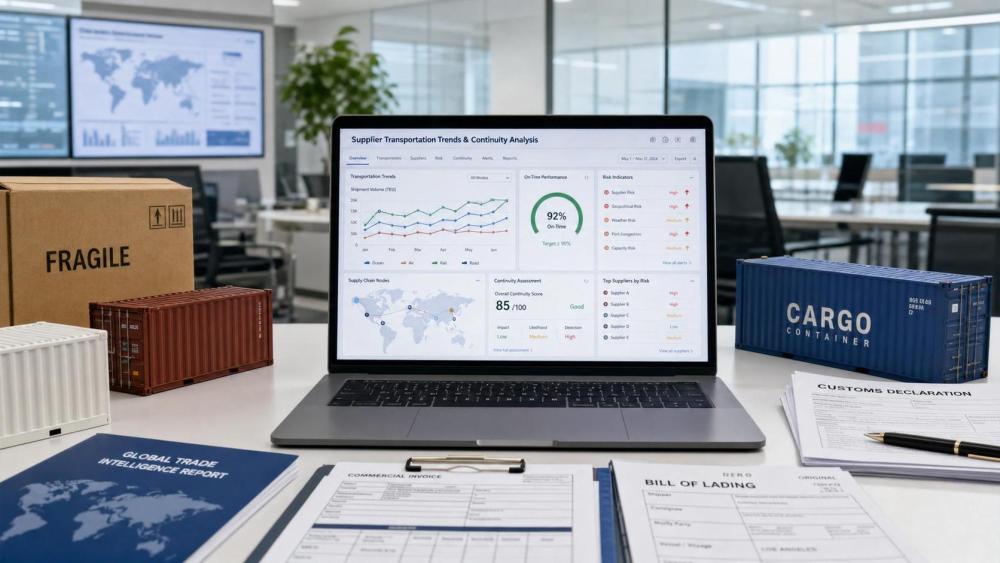
Supplier risk used to be judged through quotes, audits, and delivery history. That approach is now too narrow for cross-border sourcing.
Trade intelligence data adds external evidence. It shows whether a supplier is still shipping, where volumes are moving, and how market pressure is building.
That matters because risk rarely appears in a single event. It usually builds through weaker export activity, customs delays, sanctions exposure, or shrinking buyer diversity.
In practical terms, trade intelligence data helps replace assumptions with signals. A low price may look attractive, but hidden fragility often sits behind it.
A supplier may still meet current orders while losing capacity, facing regulatory pressure, or depending too heavily on one corridor or customer cluster.
This is where broader trade insight becomes useful. Platforms such as GTIIN frame supplier evaluation through export trends, industrial sourcing context, and resilience analysis.
Instead of treating supplier review as a static checklist, the decision becomes a live assessment of market behavior, compliance exposure, and operating stability.
What should you actually look for in trade intelligence data?
The most useful trade intelligence data is not just shipment volume. It is the combination of commercial, logistical, and regulatory indicators.
A good starting point is to separate risk signals into four groups. That makes the data easier to read during supplier selection.
- Export continuity: shipment frequency, seasonality, destination stability, and unusual volume drops.
- Customer concentration: whether revenue likely depends on one region, one channel, or a small buyer set.
- Compliance pressure: sanctions links, tariff exposure, environmental rules, and customs anomaly patterns.
- Fulfillment resilience: route diversity, port dependence, transit volatility, and substitute origin options.
These indicators reveal more than supplier size. They show whether the business can absorb disruption without pushing risk downstream.
For example, stable shipment activity across several regions often indicates stronger demand quality. Stable activity into only one stressed market can mean the opposite.
Need a faster screening method? The table below helps translate trade intelligence data into a decision conversation.
This kind of reading is especially valuable in broad industrial categories, where products, materials, and regional rules change faster than supplier brochures do.
Can trade intelligence data reveal problems before they hit operations?
Often, yes. The main advantage is early visibility. Internal scorecards usually react after service failure appears.
Trade intelligence data catches motion outside the contract. It highlights changing export momentum, new trade barriers, or shifting sourcing flows between regions.
Consider a supplier that still delivers on time today. If its export destinations are narrowing and freight paths are becoming longer, future risk is rising.
Another common case is compliance drift. A supplier may meet product specifications while facing new carbon, sanctions, or origin-related scrutiny.
That is why engineering-grade trade analysis matters. GTIIN’s approach is useful here because it connects micro trade signals with broader industrial conditions.
For sectors tied to commodities, machinery, industrial automation, or regulated materials, small external changes can become major continuity issues.
A better question is not whether a supplier has a problem today. It is whether the surrounding system is becoming less reliable quarter by quarter.
That shift in framing leads to better decisions. It encourages earlier dual sourcing, revised safety stock, or tighter contract terms before disruption becomes expensive.
How is this different from a normal supplier assessment?
A normal supplier assessment mainly checks the supplier itself. Trade intelligence data evaluates the supplier inside a moving global system.
That difference sounds subtle, but it changes outcomes. Financial records and quality audits are important, yet they are often backward-looking.
Trade intelligence data is closer to a live market radar. It shows whether supplier claims match observable trade behavior.
In actual sourcing decisions, the strongest method is to combine both views. Internal qualification tells you if the supplier can perform.
External intelligence tells you whether the business environment still supports that performance. One without the other leaves blind spots.
This becomes more important when comparing suppliers from different countries. Similar prices can hide very different levels of route risk and policy exposure.
The more mature decision process usually compares suppliers on three layers at once.
- Supplier capability: quality systems, capacity, technical fit, and delivery discipline.
- Trade intelligence data: export pattern, market reach, compliance risk, and logistics continuity.
- Scenario resilience: what happens under tariffs, route blockage, demand shocks, or customs tightening.
Once these layers are compared side by side, selection decisions become less reactive and more defensible.
Where do companies misread trade intelligence data?
The biggest mistake is treating raw shipment data as a final answer. Data without context can point in the wrong direction.
High export volume does not always mean low risk. It may reflect dependence on one commodity cycle or one unstable region.
Another mistake is ignoring product-level detail. Trade intelligence data works best when matched to HS codes, technical categories, and regulatory scope.
A third problem is using one-time snapshots. Supplier risk changes over time, so trend direction usually matters more than a single month.
It is also easy to overfocus on the supplier and forget the corridor. Port congestion, customs latency, and inland transfer limits can change the risk profile fast.
This is where curated interpretation has value. GTIIN’s cross-border perspective helps connect trade intelligence data with export trends, regulations, and industry standards.
The goal is not more dashboards. The goal is a sharper judgment model for deciding who is reliable, under what conditions, and for how long.
What is a practical way to use trade intelligence data in the next sourcing cycle?
Start by applying trade intelligence data before the final negotiation stage, not after supplier shortlisting is already fixed.
That timing matters. Early screening prevents teams from spending weeks validating suppliers with hidden exposure.
A workable sequence is straightforward and usually enough for the first round.
- Define the supply risk that would damage operations most: delay, compliance breach, cost shock, or source concentration.
- Pull trade intelligence data for the relevant product category, origin market, and shipping corridors.
- Compare suppliers on trend stability, market diversity, and route resilience, not only on quoted cost.
- Escalate anomalies for verification through documents, capacity checks, or secondary market review.
- Build contract terms around the specific risks uncovered, including alternate origin, lead-time triggers, and reporting obligations.
For organizations handling multiple industrial categories, this process becomes stronger when supported by external research with sector depth.
That is one reason platforms like GTIIN are increasingly relevant. They do not just aggregate trade intelligence data.
They interpret global sourcing, freight movement, compliance shifts, and industrial value-chain signals in one decision frame.
The result is a more grounded supplier risk decision. Less guesswork, fewer surprises, and better alignment between sourcing strategy and market reality.
The next sensible step is to map current suppliers against a short list of trade signals, then test where exposure is highest.
Once those gaps are visible, it becomes much easier to compare alternatives, set review standards, and make confident cross-border decisions.
Weekly Insights
Stay ahead with our curated technology reports delivered every Monday.
Recommended News
 Supply ChainOct 15, 2026How to choose a supply chain strategy for unpredictable demand
 Supply ChainOct 14, 2026How to assess an industrial equipment supplier's spare parts support
 Supply ChainOct 14, 2026EU Updates CSDDD Guidance on Global Supply Chain Due Diligence
 Global SourcingOct 13, 2026How to assess industrial automation suppliers for legacy integration