Commodity Logistics Services: Cost Drivers and Service Benchmarks
Commodity Logistics Services: Cost Drivers and Service Benchmarks
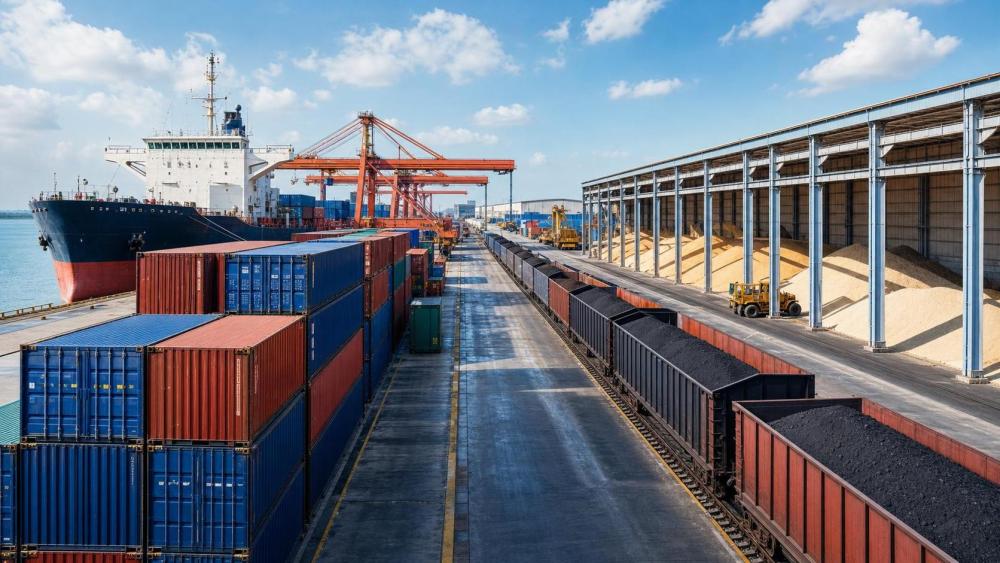
For finance-led supply chain reviews, commodity logistics services influence far more than freight movement.
They shape landed cost, inventory timing, claims exposure, and the reliability of supplier commitments across borders.
That is why provider comparison should move beyond headline freight rates.
A lower quoted rate can still produce a higher total cost when dwell time, demurrage, damage, or customs delay start to accumulate.
In practical terms, commodity logistics services should be evaluated as a cost-control and risk-management function.
The most useful benchmark is not the cheapest shipment.
It is the most predictable delivered outcome against budget, service level, and working capital targets.
Why Cost Visibility Matters in Commodity Logistics Services
Commodity flows are exposed to volatile fuel prices, port congestion, regulatory shifts, and seasonal capacity swings.
These variables hit bulk materials especially hard because shipment size magnifies every operational inefficiency.
From a finance perspective, weak logistics control usually appears in three places.
- Budget variance caused by unstable accessorial charges.
- Higher safety stock caused by unreliable transit performance.
- Margin erosion from claims, spoilage, quality loss, or detention fees.
This also means logistics provider selection should be linked to sourcing strategy.
If procurement is consolidating suppliers or changing origins, service benchmarks must be recalibrated at the same time.
GTIIN’s cross-border trade research repeatedly shows one pattern.
Companies that treat commodity logistics services as a strategic category usually approve spending with more confidence and less exception handling.
The Main Cost Drivers Behind Total Logistics Spend
The biggest mistake in logistics cost review is focusing only on base freight.
For commodity logistics services, the full cost stack is wider and more sensitive to execution discipline.
1. Transport Mode and Lane Complexity
Ocean, rail, barge, truck, and multimodal combinations carry very different cost profiles.
Long inland drayage or fragmented handoffs often add more cost than line-haul changes.
2. Commodity Handling Requirements
Dry bulk, liquid bulk, temperature-sensitive materials, and hazardous cargo require different equipment and controls.
Loading speed, contamination risk, segregation rules, and cleaning standards all affect cost.
3. Port and Terminal Efficiency
Terminal congestion drives storage fees, vessel waiting time, and container or equipment detention.
A provider with local terminal relationships can materially reduce these hidden charges.
4. Customs and Compliance Friction
Incorrect documentation creates costly delays across customs, quarantine, and inspection channels.
For cross-border commodity logistics services, compliance execution is a direct financial issue, not a back-office detail.
5. Inventory Carrying Cost
Slower or inconsistent transit forces higher buffer inventory.
That ties up cash and reduces the value of any lower freight rate secured on paper.
6. Claims, Shrinkage, and Damage
Losses from moisture, leakage, contamination, breakage, or weight variance can quietly distort landed cost.
This is often where premium commodity logistics services justify a higher quoted rate.
Service Benchmarks That Actually Matter
Not every KPI deserves equal weight.
For provider selection, the most useful commodity logistics services benchmarks combine operational reliability with financial relevance.
These metrics give a clearer view than broad marketing claims.
They also help standardize approval decisions across procurement, operations, and finance.
How to Compare Providers Without Missing Hidden Risk
In real sourcing cycles, two providers may look similar on price but perform very differently under pressure.
A stronger evaluation model should test how each provider manages cost volatility and service exceptions.
- Request lane-specific pricing, not only blended averages.
- Separate base freight from surcharges, storage, detention, and documentation fees.
- Review seasonal capacity plans and peak-period contingency options.
- Ask for claims data, exception logs, and root-cause actions.
- Check local execution strength at ports, warehouses, and customs interfaces.
- Confirm digital visibility, milestone reporting, and invoice transparency.
This approach is especially important for commodity logistics services supporting multi-country procurement programs.
The larger the network, the more small execution failures turn into material financial leakage.
A Practical Approval Framework for Cost and Service Balance
A useful approval framework should connect operational evidence to financial impact.
That keeps commodity logistics services decisions disciplined and easier to defend internally.
Step One: Define the Real Cost Baseline
Start with delivered cost per ton or per shipment, not line-haul rate alone.
Include carrying cost, chargebacks, claims, and average exception spend.
Step Two: Weight Service Metrics by Financial Exposure
For high-value or production-critical commodities, transit reliability may deserve more weight than rate savings.
For stable, lower-risk lanes, cost efficiency can carry more influence.
Step Three: Stress-Test the Provider
Ask how the provider performs during port strikes, customs inspections, weather delays, or abrupt sourcing changes.
Resilient commodity logistics services show process ownership when conditions deteriorate.
Step Four: Build Review Cadence Into the Contract
Quarterly scorecards, surcharge review clauses, and escalation paths prevent performance drift after onboarding.
That is often the difference between an acceptable quote and a durable logistics partnership.
What Strong Commodity Logistics Services Look Like in Practice
The strongest providers are usually not defined by one capability.
They combine stable execution, cost visibility, compliance discipline, and credible exception management.
For finance-led approvals, that combination matters because it supports cleaner forecasting and fewer unplanned approvals.
It also improves confidence when procurement teams expand into new origins or renegotiate supply contracts.
In the current trade environment, commodity logistics services should be reviewed with the same rigor as supplier selection itself.
A disciplined benchmark model helps identify where a low rate is truly efficient and where it is simply masking downstream cost.
That is the practical path to better landed cost control, stronger supply continuity, and more reliable cross-border decision-making.
Weekly Insights
Stay ahead with our curated technology reports delivered every Monday.
Recommended News
 Supply ChainOct 15, 2026How to choose a supply chain strategy for unpredictable demand
 Supply ChainOct 14, 2026How to assess an industrial equipment supplier's spare parts support
 Supply ChainOct 14, 2026EU Updates CSDDD Guidance on Global Supply Chain Due Diligence
 Global SourcingOct 13, 2026How to assess industrial automation suppliers for legacy integration