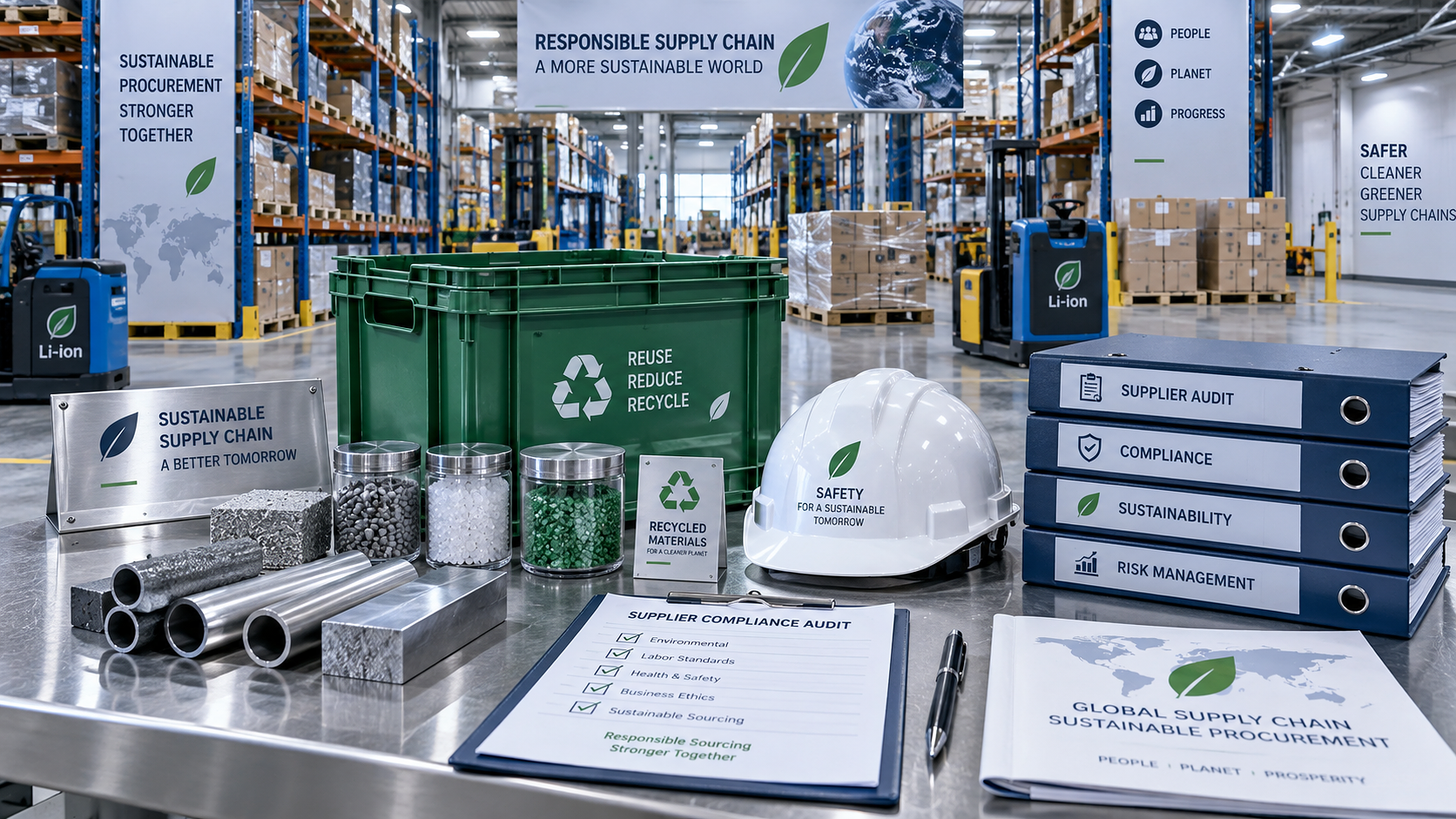
ESG Compliance Requirements: Key Standards and Reporting Gaps
ESG compliance requirements now sit much closer to core operational control than many companies expected a few years ago.
Across industrial trade, supplier qualification, plant safety, and cross-border procurement, environmental, social, and governance data is being treated as evidence, not narrative.
That shift matters because reporting gaps can affect audits, customer approvals, financing terms, and even market access.
For operations tied to global sourcing, the practical question is no longer whether ESG matters, but how to interpret standards consistently and prove control at site and supply-chain level.
Why ESG compliance has become an operational issue
The compliance burden is rising from several directions at once.
Regulators want more reliable disclosure. Investors want comparability. Major buyers want traceability beyond first-tier suppliers. Internal risk teams want fewer surprises.
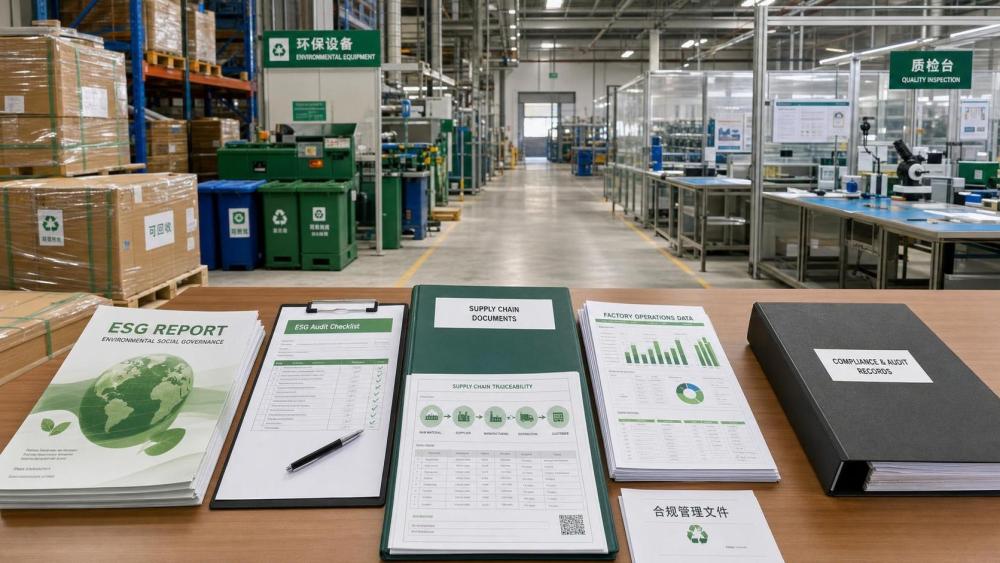
In industrial settings, this pressure reaches quality files, incident logs, emissions records, labor controls, waste handling, and supplier onboarding.
What used to be split across EHS, quality assurance, procurement, and legal departments is increasingly assessed as one control environment.
That is especially visible in cross-border networks tracked by GTIIN, where reporting expectations now influence sourcing resilience and export readiness alongside cost and lead time.
What ESG compliance requirements actually cover
At a basic level, ESG compliance requirements are the policies, metrics, records, and governance controls used to show responsible business conduct.
The “E” usually includes energy use, greenhouse gas emissions, waste, water, pollution control, and resource efficiency.
The “S” often covers labor conditions, health and safety, grievance channels, training, diversity, community impacts, and human rights due diligence.
The “G” focuses on oversight, ethics, anti-corruption, board accountability, internal controls, and documentation quality.
In practice, the hardest part is not listing these topics.
The real challenge is connecting policy statements with measurable evidence from operations, suppliers, and logistics partners.
The main standards shaping disclosure and verification
No single framework defines all ESG compliance requirements across every industry or jurisdiction.
Still, several standards shape how companies collect and report data.
The overlap between these frameworks creates confusion.
Yet the overlap also reveals a pattern: stronger traceability, more board-level accountability, and less tolerance for unsupported claims.
Where reporting gaps usually appear
Many ESG reports look complete at headline level while remaining weak in audit terms.
The most common reporting gaps are usually operational rather than conceptual.
Fragmented source data
Energy, safety, labor, and supplier records often sit in separate systems with different owners and definitions.
This weakens consistency when data is consolidated for disclosure.
Metrics without calculation discipline
Companies may publish injury rates or emissions totals without clear boundaries, methodologies, or change logs.
That creates comparability problems from one reporting cycle to the next.
Supplier blind spots
A frequent weakness in ESG compliance requirements is limited visibility below tier one suppliers.
For industrial buyers, that is often where labor, raw material, and environmental risks become harder to verify.
Policy and practice drift
Corporate policies may read well, while site procedures, contractor controls, or incident response routines tell a different story.
Auditors usually detect this gap quickly.
Why this matters in industrial trade and sourcing
In bulk commodities, manufacturing inputs, and engineered products, ESG compliance requirements influence decisions before goods even move.
A site with weak waste documentation or unresolved safety incidents may trigger deeper review, delayed approval, or contract conditions.
Export-facing businesses also face rising pressure from destination markets with stricter disclosure rules.
That means ESG performance is no longer only a reputational matter. It can affect qualification, shipment continuity, and long-term supplier credibility.
GTIIN’s cross-sector tracking shows the same pattern across metals, chemicals, machinery, packaging, food systems, and industrial components.
The sectors differ, but the compliance logic is converging around better data lineage and more reliable proof.
Practical checks for stronger compliance performance
A workable response starts with control quality, not presentation quality.
Several checks help test whether ESG compliance requirements are genuinely embedded.
- Confirm reporting boundaries for entities, sites, contractors, and joint operations.
- Document metric definitions and calculation methods in one controlled source.
- Tie incident records, corrective actions, and management review notes to reported safety claims.
- Check whether supplier questionnaires are supported by evidence, not self-declaration alone.
- Review missing data, estimation methods, and assumptions before reporting deadlines.
- Align ESG controls with internal audit, quality systems, and procurement approval processes.
These steps are not glamorous, but they reduce the gap between sustainability messaging and operational reality.
How to read standards without overcomplicating them
One common mistake is treating every framework as a separate project.
A better approach is to identify common control themes across ESG compliance requirements.
Those themes usually include governance ownership, data quality, traceable methodologies, documented risk assessment, and evidence of corrective action.
From there, reporting can be mapped to the specific standard that matters most in a given market or customer relationship.
This is particularly useful in multi-region supply chains, where one site may face customer codes, ISO audits, local permits, and investor-driven disclosure requests at the same time.
A sensible next step
The most useful next move is often a gap review that starts from evidence already produced inside the business.
Look at permits, training logs, incident files, utility records, supplier assessments, and management review minutes before building new reporting layers.
That exercise usually reveals whether ESG compliance requirements are supported by controls, or only by intention.
For organizations operating across borders, it also helps to compare site-level evidence against the disclosure rules of destination markets and key customers.
When that comparison is grounded in trade intelligence and sector-specific benchmarks, decisions become clearer, reporting improves, and compliance work becomes more resilient under scrutiny.
Weekly Insights
Stay ahead with our curated technology reports delivered every Monday.
Recommended News
 Supply ChainOct 15, 2026How to choose a supply chain strategy for unpredictable demand
 Supply ChainOct 14, 2026How to assess an industrial equipment supplier's spare parts support
 Supply ChainOct 14, 2026EU Updates CSDDD Guidance on Global Supply Chain Due Diligence
 Global SourcingOct 13, 2026How to assess industrial automation suppliers for legacy integration