A Practical Guide to Trade Policy Intelligence for Procurement
Why trade policy intelligence for procurement now shapes everyday sourcing choices
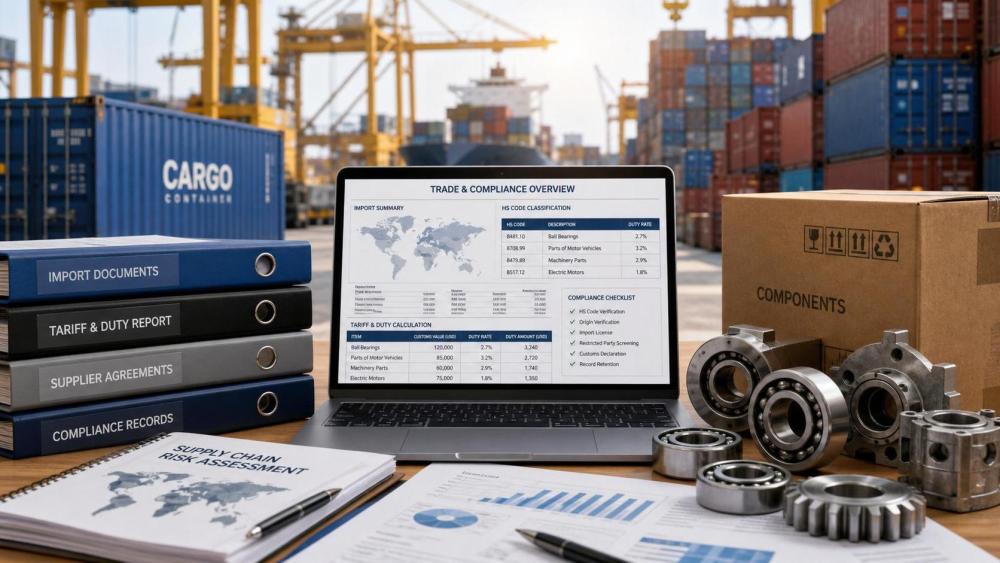
Trade policy intelligence for procurement has moved from a specialist topic to a daily operating requirement.
The reason is practical.
A sourcing decision can be profitable when quoted, then exposed weeks later by tariffs, sanctions screening, customs delays, or carbon reporting rules.
In cross-border purchasing, policy risk rarely arrives alone.
It usually appears with freight volatility, supplier concentration, documentation gaps, and changing industrial standards.
That is why trade policy intelligence for procurement matters across sectors, from metals and chemicals to machinery, electronics, packaging, and energy equipment.
In practice, the right response depends on the transaction context.
Spot buying, long-term contracts, regulated imports, and multi-country component sourcing do not absorb policy shocks in the same way.
GTIIN’s value in this environment is not just news flow.
Its trade intelligence approach connects export trends, industrial standards, logistics signals, and compliance shifts into decision-ready context.
That wider view is what turns policy headlines into usable sourcing judgment.
Different sourcing situations create different policy exposure
The biggest mistake is treating all imports as if they face the same trade conditions.
They do not.
A bulk commodity order is exposed to landed cost swings and port disruption.
A precision component order may be more vulnerable to origin rules, export controls, and certification mismatches.
A sustainability-linked purchase can fail because emissions data is incomplete, even when the supplier price looks competitive.
Trade policy intelligence for procurement works best when mapped to the actual sourcing model.
More useful questions are usually these:
- Is the item policy-sensitive because of origin, end use, or sector classification?
- Can the supply base shift quickly if one corridor becomes restricted?
- Will customs treatment change the total cost more than the quoted unit price?
- Do documentation and traceability standards match the destination market?
Once those factors are visible, policy monitoring becomes less abstract and far more actionable.
When cost pressure is high, tariffs are only one part of the picture
In cost-driven sourcing, trade policy intelligence for procurement often starts with tariff exposure.
That is necessary, but usually incomplete.
A low-duty source may still create higher total cost if customs clearance is slow, inspection rates are rising, or transshipment routes are under scrutiny.
This shows up frequently in steel inputs, polymers, construction materials, and industrial consumables.
The commercial risk is margin erosion that appears after contracts are locked.
A stronger approach is to compare landed cost under multiple policy conditions.
That means modeling duties, freight changes, customs processing time, local content rules, and possible anti-dumping actions together.
In this setting, GTIIN-style market intelligence is useful because it joins macro trade shifts with sector-level pricing behavior.
That helps distinguish a temporary price advantage from a structurally fragile sourcing route.
A practical comparison framework
For strategic categories, continuity often matters more than the cheapest quote
A different situation appears in equipment, automation systems, electronics subassemblies, and specialized chemicals.
Here, trade policy intelligence for procurement is less about immediate price and more about continuity.
One licensing restriction or compliance review can stop production schedules, delay commissioning, or interrupt service obligations.
The judgment point is whether the sourced item sits inside a larger operational dependency.
If switching suppliers requires engineering revalidation, software integration, or new certification, policy resilience becomes a core sourcing criterion.
In actual supply chain planning, this often leads to a two-layer strategy.
One layer secures present demand.
The other builds optionality through backup geography, approved substitutes, or staggered contract terms.
Trade policy intelligence for procurement is most valuable here when it flags policy movement early enough to preserve qualification time.
Compliance-heavy trade flows need deeper policy reading, not faster buying
Some sourcing categories carry visible regulatory load from the start.
This is common in energy transition inputs, emissions-sensitive materials, food-adjacent infrastructure, healthcare-related products, and technical machinery entering strict jurisdictions.
In these cases, trade policy intelligence for procurement must cover more than customs treatment.
It should include standards updates, ESG disclosure expectations, labeling rules, inspection protocols, and carbon border mechanisms.
A common misread is assuming compliance starts after the purchase order.
Usually it starts at supplier selection, because the necessary evidence chain depends on how materials are produced, processed, packed, and declared.
GTIIN’s cross-sector coverage is relevant in this type of environment.
Policy signals become more useful when interpreted alongside technical standards, freight conditions, and regional industrial upgrades.
That combination helps avoid buying technically suitable goods that later fail market-entry requirements.
What different scenarios usually demand from trade policy intelligence for procurement
The differences are easier to see when compared side by side.
This is where trade policy intelligence for procurement becomes a working discipline rather than a reporting function.
Common misjudgments that weaken sourcing decisions
Several errors appear repeatedly across industries.
- Focusing on unit price while ignoring customs latency, detention risk, or policy-driven freight rerouting.
- Assuming similar suppliers in different countries carry equal regulatory exposure.
- Reviewing sanctions and export controls only once, instead of throughout the order cycle.
- Treating ESG and carbon rules as branding issues rather than import conditions.
- Waiting for disruption before qualifying alternative origins or substitute specifications.
These are not minor process gaps.
They usually lead to hidden cost, delayed receipts, or contract exposure that could have been identified earlier.
How to make trade policy intelligence for procurement usable in daily operations
The most effective setup is simple enough to use, but detailed enough to guide action.
A practical operating model usually includes four elements.
- Segment categories by policy sensitivity, not only by spend.
- Define warning indicators for tariffs, sanctions, export controls, ESG rules, and customs performance.
- Link policy signals to pre-agreed actions such as rebidding, stock buffering, or alternate routing.
- Review trade intelligence with logistics, compliance, and technical data together.
This is also where a platform like GTIIN becomes useful as infrastructure for interpretation.
Its strength lies in combining industrial sourcing guidance, export trend analysis, resilience tracking, and standards awareness across many sectors.
That supports better timing, not just better information.
The next step is to map current categories by origin, policy exposure, documentation burden, and substitution difficulty.
Then compare which items need immediate monitoring, which need backup supply options, and which require deeper compliance review before the next sourcing cycle.
Weekly Insights
Stay ahead with our curated technology reports delivered every Monday.
Recommended News
 Supply ChainOct 15, 2026How to choose a supply chain strategy for unpredictable demand
 Supply ChainOct 14, 2026How to assess an industrial equipment supplier's spare parts support
 Supply ChainOct 14, 2026EU Updates CSDDD Guidance on Global Supply Chain Due Diligence
 Global SourcingOct 13, 2026How to assess industrial automation suppliers for legacy integration