CBP Starts FAST Track for Verified Chinese Exporters
On July 9, 2026, U.S. Customs and Border Protection launched a pilot called FAST Track for qualified Chinese industrial exporters, introducing priority release, a 50% lower inspection rate, and faster tariff pre-ruling handling for eligible shipments. The update deserves close attention from manufacturers, exporters, import-side procurement teams, and supply chain service providers because it directly touches customs efficiency, documentation readiness, and delivery planning for machinery, electronic components, and building materials moving through U.S. East and West Coast ports under FOB and CIF terms.
What the pilot currently covers
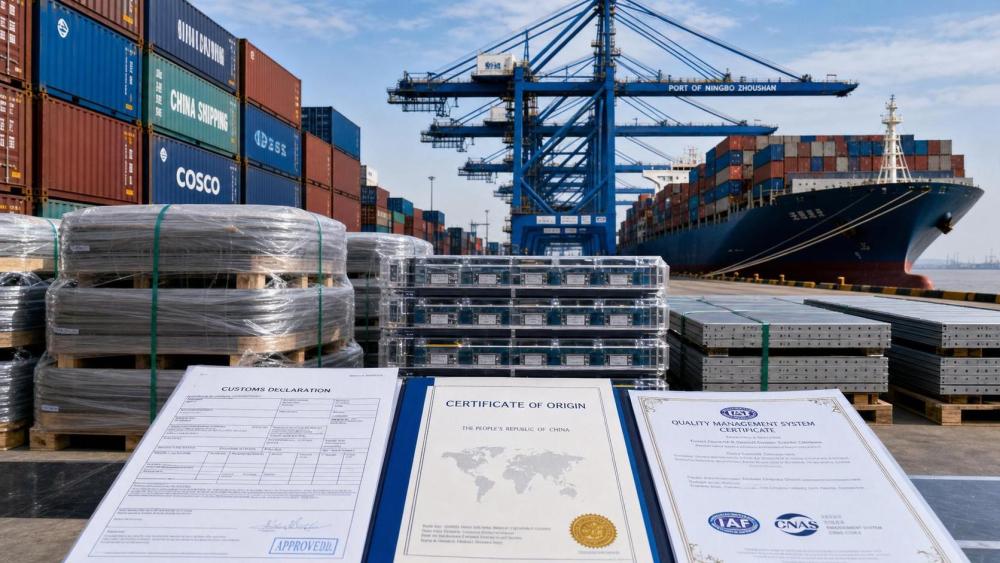
Confirmed information indicates that the FAST Track pilot was launched by U.S. CBP on July 9, 2026. The program is aimed at Chinese industrial goods exporters that hold both ISO 9001 and ISO 14001 certifications and have had no AEO violation record for 12 consecutive months. The first batch of covered categories includes machinery, electronic components, and building materials. For eligible cargo, the program offers priority customs release, a 50% reduction in inspection rate, and accelerated tariff pre-ruling services. The scope applies to goods shipped under FOB or CIF terms through U.S. East Coast and West Coast ports.
Where the operational impact may appear first
Export manufacturers and trading companies may see compliance become more commercially relevant
From an industry perspective, the immediate effect is likely to be felt by exporters that already operate with formal quality and environmental management systems. For these companies, certification status and AEO compliance history may become more closely tied to shipment execution, customs timing, and customer commitments. What deserves closer attention is whether internal export documentation, product classification files, and shipment records are organized well enough to support consistent use of the pilot conditions.
U.S.-bound buyers and procurement teams may reassess supplier selection criteria
Analysis shows that buyers sourcing machinery, electronic components, or building materials from China may start paying closer attention to whether a supplier appears structurally capable of meeting the stated eligibility thresholds. The potential impact is less about price alone and more about customs predictability, inspection exposure, and delivery scheduling. Procurement teams may therefore watch for signs that supplier qualification could influence lead-time reliability in practice.
Freight forwarders and customs-facing service providers may need tighter shipment screening
For logistics intermediaries and related service providers, the change could affect booking review, document collection, and port routing coordination. Because the pilot is defined around specific certifications, compliance history, product categories, and FOB/CIF cargo through U.S. East and West Coast ports, service providers may need to verify eligibility more carefully before building shipment expectations around priority treatment or reduced inspection likelihood.
What companies should monitor in the near term
Check whether eligibility is supportable at the shipment level
Companies should focus on whether ISO 9001 and ISO 14001 credentials are current and whether the required 12-month AEO compliance record can be clearly demonstrated. In practical terms, the issue is not only possessing qualifications, but also being able to present them consistently in a customs and customer-facing workflow.
Separate policy wording from actual shipment execution
What deserves closer attention is the gap between program language and day-to-day cargo handling. Priority release, lower inspection rates, and faster tariff pre-ruling support are meaningful on paper, but businesses should still monitor how these features translate into booking timelines, clearance preparation, and communication with U.S. counterparties.
Review category exposure and contract terms
Exporters and buyers in machinery, electronic components, and building materials should review which shipments fall within the first covered batch and how FOB or CIF terms affect operational responsibility. This matters for handoff timing, document control, and expectation setting across factories, traders, logistics providers, and overseas customers.
Prepare customer and supplier communications early
For commercial teams, a practical priority is setting balanced expectations. Companies may need clear internal guidance on when a shipment appears eligible, what paperwork supports that view, and how to explain the pilot's potential benefits without presenting them as guaranteed outcomes.
How this should be interpreted at this stage
Observably, this development is more than a routine customs update because it links exporter qualification, compliance continuity, and customs treatment in a targeted way for selected industrial categories. At the same time, it is more appropriate to understand this as a pilot-stage signal rather than a fully settled market outcome. Analysis shows that the announcement points to possible operational advantages for qualified exporters, but the broader commercial effect still depends on how consistently the pilot is applied in real shipment flows.
A measured reading for the market
The main industry significance of this update lies in its direct connection to clearance efficiency for specific China-to-U.S. industrial trade lanes. For now, it is best understood as a near-term operational development with longer-term signaling value: relevant enough for exporters, buyers, and service providers to act on in compliance and planning terms, but still something that requires continued observation before drawing wider conclusions about lasting trade flow changes.
Basis of this article and what still needs verification
This article is based on the user-provided news title, event date, and event summary. For this type of development, commonly relevant source categories may include official notices, company disclosures, industry association updates, authoritative media reporting, and standards-related documents. No specific official source link was provided in the input, so the exact official publication path still needs ongoing verification. Follow-up attention should remain on any later official clarifications, implementation details, scope adjustments, or further statements affecting covered categories, eligibility interpretation, and operational handling.
Weekly Insights
Stay ahead with our curated technology reports delivered every Monday.
Recommended News
 Supply ChainOct 15, 2026How to choose a supply chain strategy for unpredictable demand
 Supply ChainOct 14, 2026How to assess an industrial equipment supplier's spare parts support
 Supply ChainOct 14, 2026EU Updates CSDDD Guidance on Global Supply Chain Due Diligence
 Global SourcingOct 13, 2026How to assess industrial automation suppliers for legacy integration