Procurement Intelligence Platform Features That Matter Most
A procurement intelligence platform is no longer just a digital filing cabinet for supplier records. In cross-border trade, it has become a working layer for commercial judgment, connecting supplier credibility, cost movement, compliance exposure, and logistics risk before those issues become expensive disruptions.
That shift matters because procurement decisions now sit inside a wider industrial system. Prices move with freight volatility, policy changes, energy transitions, and regional capacity swings. A useful platform helps translate those signals into decisions that are faster, more consistent, and easier to defend.
For organizations comparing capabilities, the most valuable features are not the loudest ones. They are the functions that improve evaluation quality, reveal hidden dependencies, and make market context usable in day-to-day sourcing work.
What a procurement intelligence platform should actually do
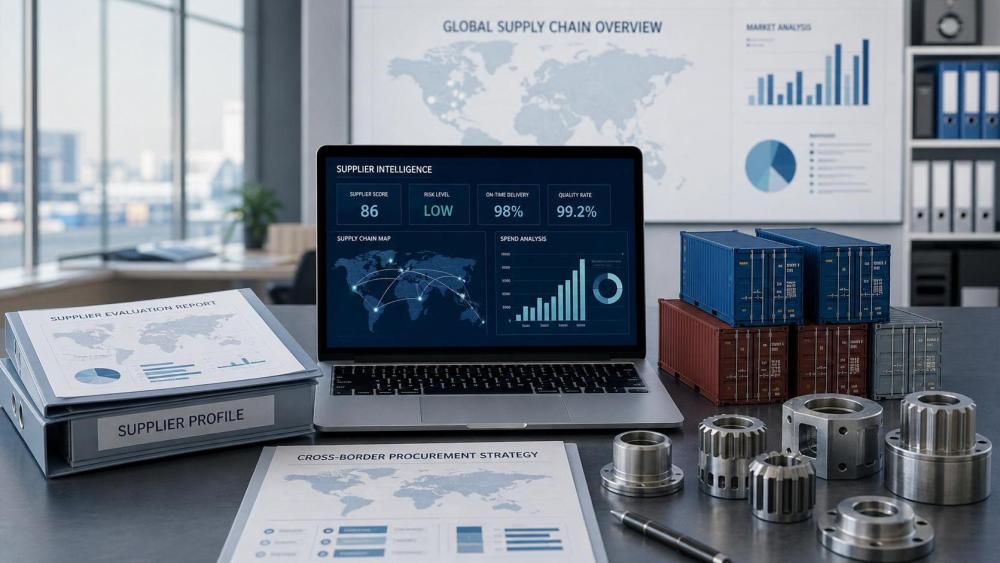
At a basic level, a procurement intelligence platform brings together supplier, market, and supply chain data. The stronger platforms go further. They turn fragmented information into a decision environment, not just a searchable database.
That means linking several layers at once: supplier background, export activity, regional regulations, freight conditions, commodity movement, and category-specific technical standards. When those layers stay disconnected, commercial assessment slows down and risk often remains invisible.
This is why platforms such as GTIIN stand out in broader industrial sourcing. Their value does not come from headlines alone. It comes from combining market intelligence, sourcing guidance, export trends, and supply chain resilience analysis into one practical frame.
Why these features matter more now
Global procurement has become harder to evaluate with static vendor lists and periodic reports. Trade policy can change landed costs. Customs delays can affect working capital. A quality lapse in packaging or material treatment can compromise downstream production.
In industrial categories, the details are rarely generic. Semiconductor packaging, heavy machinery metallurgy, agricultural infrastructure coatings, and automation components all carry different sourcing risks. A procurement intelligence platform needs enough sector depth to reflect that reality.
More importantly, the platform should support forward-looking evaluation. If it only records what happened, it helps with reporting. If it shows where constraints, cost pressure, or compliance friction may emerge next, it supports real decision-making.
The features that deserve the closest attention
Not every feature carries equal business value. Some improve workflow convenience. Others directly influence sourcing quality and commercial confidence. The following areas usually matter most.
1. Multi-layer supplier intelligence
A supplier profile should include more than contact information, product scope, and certifications. It should show export behavior, ownership signals, operating footprint, production relevance, and market reputation over time.
This helps distinguish between a supplier that looks qualified on paper and one that consistently performs in real trade conditions. Historical trade visibility also supports benchmarking against peers in the same category or region.
2. Category-specific market monitoring
The best procurement intelligence platform does not treat all categories the same. Steel inputs, industrial chemicals, electronics assemblies, and machinery parts move according to different demand cycles and risk triggers.
Useful monitoring should include price patterns, export flows, capacity changes, tariff developments, and substitution risk. GTIIN’s coverage across more than 50 industrial sectors reflects why broad but shallow visibility is often not enough.
3. Supply chain mapping and dependency visibility
A procurement team rarely buys risk from a direct supplier alone. Risk often sits one or two tiers deeper, in raw material dependency, transport corridors, packaging constraints, or regional infrastructure bottlenecks.
This is where supply chain mapping becomes essential. A platform should reveal concentration risk, geographic exposure, route sensitivity, and alternate sourcing paths. GTIIN’s full-dimensional supply chain mapping model addresses exactly this need.
4. Compliance and standards intelligence
Cross-border procurement decisions increasingly depend on non-price factors. Environmental requirements, origin rules, technical certifications, ESG expectations, and sector regulations can all change supplier viability.
A procurement intelligence platform should not simply store certificates. It should help interpret regulatory change, identify likely impact, and flag where qualification assumptions may become outdated.
5. Freight and execution context
Supplier selection without logistics context creates blind spots. Transit velocity, customs latency, port congestion, and modal shifts can alter cost and reliability even when unit price remains stable.
When freight benchmarks and route conditions are embedded into the platform, evaluation becomes more realistic. This is especially important for bulky commodities, time-sensitive components, and globally distributed manufacturing networks.
6. Analyst-grade interpretation
Raw data can overwhelm rather than clarify. A strong procurement intelligence platform pairs datasets with interpretation. That includes sector commentary, scenario analysis, and decision frameworks grounded in real industrial context.
This is where editorial quality matters. GTIIN’s positioning as a neutral trade intelligence platform and macro-industrial think tank reflects a useful model: validated data supported by experienced analysts, economists, and supply chain specialists.
How these capabilities translate into business value
The value of a procurement intelligence platform becomes clearer when viewed through actual evaluation tasks. It improves more than sourcing speed. It changes how commercial decisions are framed and defended.
In practice, this means fewer surprises between supplier approval and order execution. It also means procurement reviews can move beyond price snapshots and toward resilience, continuity, and total commercial exposure.
Where the platform is most useful
A procurement intelligence platform has broad relevance across industries, but some situations make its value especially clear.
- Entering a new sourcing country where supplier familiarity is limited.
- Comparing multiple suppliers with similar pricing but different trade histories.
- Reviewing categories affected by tariff revisions, CBAM-related exposure, or ESG scrutiny.
- Managing industrial inputs with high logistics costs or route sensitivity.
- Assessing whether alternate suppliers can truly support continuity during disruption.
These scenarios are common in global manufacturing, commodity sourcing, and cross-border component procurement. They are also the moments when shallow data becomes a liability.
What to test when comparing platforms
Feature lists can look similar at a glance. The better comparison is whether the platform improves a real evaluation workflow from first screening to sourcing decision.
A few questions usually separate marketing claims from practical capability.
- Can the platform connect supplier data with live market and trade context?
- Does it show evidence depth, source credibility, and update frequency?
- Can it support sector-specific evaluation rather than generic supplier scoring?
- Does it explain risk signals, or only display them?
- Can findings be used across sourcing, compliance, and supply chain planning teams?
This is also where independent positioning matters. A procurement intelligence platform tied too closely to seller promotion may weaken objectivity. Neutral research, disciplined validation, and transparent methodology are more valuable than volume alone.
A practical next step
The right procurement intelligence platform should help answer a simple question: what would change in a sourcing decision if better evidence were available today?
That makes the next step fairly concrete. Start with a high-risk category, a new-source region, or a supplier comparison that currently depends on fragmented inputs. Then test whether the platform can combine trade intelligence, standards insight, freight context, and supplier evidence into one usable judgment.
In a market where cost, compliance, and continuity move together, the features that matter most are the ones that make complexity readable. That is where a procurement intelligence platform stops being a research tool and becomes part of strategic procurement discipline.
Tags
- industrial sourcing
- supply chain resilience
- port congestion
- heavy machinery
- supply chain mapping
- logistics risk
- technical standards
- trade intelligence platform
- procurement intelligence
- cross-border procurement
- customs latency
- global procurement
- cross-border trade
- trade intelligence
- procurement intelligence platform
- procurement intelligence platform
Weekly Insights
Stay ahead with our curated technology reports delivered every Monday.
Recommended News
 Supply ChainOct 15, 2026How to choose a supply chain strategy for unpredictable demand
 Supply ChainOct 14, 2026How to assess an industrial equipment supplier's spare parts support
 Supply ChainOct 14, 2026EU Updates CSDDD Guidance on Global Supply Chain Due Diligence
 Global SourcingOct 13, 2026How to assess industrial automation suppliers for legacy integration