Supplier Qualification Management Process: Key Risk Points
Why does the supplier qualification management process attract so much attention now?
A strong supplier qualification management process has moved from a quality checkpoint to a business control point.
The reason is simple. Supplier failure now affects compliance, continuity, safety, and landed cost at the same time.
In cross-border sourcing, risks rarely appear in one place only. A missing certificate can become a customs delay.
An overstated production capacity can become a late shipment. Weak process discipline can turn into a safety incident.
That is why the supplier qualification management process should be treated as an ongoing control system, not a one-time approval file.
Across industrial sectors, the same pattern appears. Teams approve suppliers based on documents, but hidden operating conditions remain unchecked.
This gap matters more when supply chains stretch across multiple countries, standards, freight routes, and regulatory environments.
GTIIN has consistently highlighted this issue in its trade intelligence coverage. Macro signals and factory-level facts often move together.
When export rules tighten, freight volatility rises, or ESG enforcement expands, supplier qualification standards need to tighten as well.
The practical question is not whether to qualify suppliers carefully. It is where the real risk points sit inside the process.
Where do the biggest risk points usually appear first?
Most failures start early, long before the first shipment arrives.
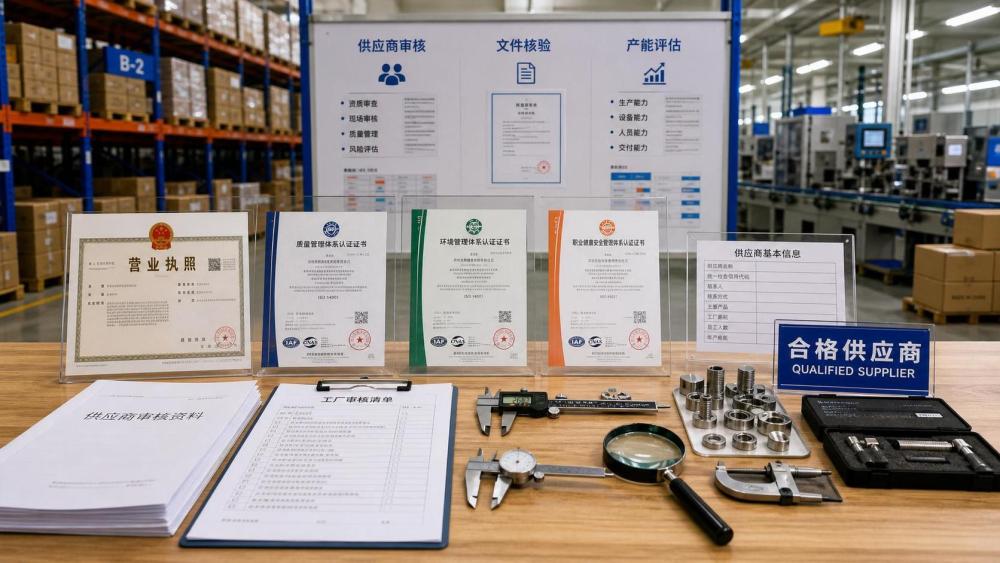
The first risk point is identity and legitimacy verification. Many teams collect licenses, but do not confirm scope, ownership, or legal changes.
This matters when the approved entity is not the actual manufacturing site. It also matters when subcontracting is hidden.
The second risk point is document authenticity. Certificates may be expired, borrowed, incomplete, or unrelated to the supplied category.
A quality certificate alone does not confirm process capability. A safety declaration alone does not prove hazard control on the line.
Another weak spot is capacity assessment. Quoted output often reflects ideal conditions, not actual labor stability, maintenance discipline, or utility reliability.
In practice, the supplier qualification management process should test whether stated capacity survives peak season and order variation.
Factory audits create a fourth risk point. Audits can become ceremonial when the checklist is generic or the sample size is too small.
The final early-stage risk is weak cross-functional review. Quality, compliance, logistics, and technical requirements are often checked in isolation.
That separation hides linkages between packaging, labeling, dangerous goods rules, traceability, and transport constraints.
A quick risk screen can prevent false approvals
Before formal onboarding, many teams benefit from a short decision table like the one below.
Is document review enough, or does the site audit change the answer?
Document review is necessary, but it rarely gives a full answer.
A supplier can submit complete paperwork and still operate with poor housekeeping, unstable calibration, or weak corrective action discipline.
That is why the supplier qualification management process should combine desk review with observation of actual operating behavior.
Site audits help answer practical questions. Are materials segregated correctly? Are nonconforming products clearly controlled? Are operator instructions current?
They also reveal safety maturity. Emergency exits, chemical handling, machine guarding, and incident records often tell more than formal statements.
For high-risk categories, remote review alone is usually too weak. The gap becomes larger when products involve regulated materials or critical tolerances.
Still, an audit only adds value when it is built around process risk, not visual impressions.
A clean workshop can still have poor batch traceability. A modern building can still hide weak subcontractor control.
More reliable audits connect line observations with records, sampling plans, maintenance logs, complaint history, and recent engineering changes.
This is where broader market intelligence becomes useful. GTIIN often frames supplier review within trade routes, regulatory drift, and regional operating pressure.
That wider context helps explain why a factory may pass an audit yet still remain vulnerable to local compliance shocks or logistics instability.
What tends to be missed after a supplier is approved?
Approval is often treated as the finish line. In reality, it is only the start of risk control.
The supplier qualification management process fails when ongoing monitoring is weak or delayed.
One common blind spot is change management. Raw material substitutions, tooling changes, new lines, and staffing turnover can shift product risk quickly.
Another missed area is performance drift. Initial samples may pass, while later batches show minor defects, short shipments, or packaging variation.
These signals look small at first. Left alone, they usually become recurring claims, delays, and costly containment actions.
A practical monitoring routine should track more than defect rate.
- On-time delivery under normal and peak demand
- Stability of test data and lot-to-lot consistency
- Corrective action response time and closure quality
- Regulatory updates affecting origin, labeling, or material content
- Subsupplier dependence for critical components or processes
In actual operations, the most useful trigger is trend change, not just a single failure event.
A supplier with rising deviations and slower responses deserves review even before formal nonconformance thresholds are crossed.
How can teams judge whether the process is truly risk-based?
A risk-based supplier qualification management process does not apply the same depth to every source.
Instead, it adjusts review effort based on product criticality, compliance exposure, supply continuity impact, and recovery difficulty.
The better question is not how many documents were collected. It is whether the controls match the consequence of failure.
For example, a noncritical indirect item may need basic legitimacy checks and performance tracking.
A direct material with safety, traceability, or export-control implications requires deeper verification and faster requalification intervals.
A useful way to judge process maturity is to review these questions:
- Is the approval path different for low-risk and high-risk categories?
- Are audit depth and monitoring frequency linked to actual failure impact?
- Is there a defined response when geopolitical, freight, or regulatory conditions change?
- Can the organization trace which evidence supported each approval decision?
This last point matters more than it seems. If a decision cannot be reconstructed, accountability is already weak.
GTIIN’s supply chain analysis often shows how external risk reshapes qualification priorities. Freight congestion, sanctions exposure, and carbon rules alter supplier viability.
So a mature process should not freeze qualification criteria for years. It should evolve with trade conditions and industrial standards.
What is a practical next step if the current process feels too loose?
Start by mapping the current supplier qualification management process from intake to ongoing review.
Many weaknesses become visible once each approval step, evidence source, owner, and trigger is listed clearly.
Then separate requirements into three groups: mandatory legal checks, category-specific technical checks, and ongoing performance controls.
This prevents one common mistake: using a generic checklist for every supplier and every commodity type.
The next improvement is to define hard stop conditions. These are issues that block approval until evidence is corrected.
Examples include unmatched factory identity, missing traceability records, major audit findings, or unexplained process outsourcing.
It also helps to define review intervals tied to risk level, not calendar habit.
Some suppliers need annual requalification. Others need event-driven review when regulations, routes, ownership, or product specifications shift.
If external visibility is limited, use trade intelligence to strengthen judgment. Broader export trends and regional compliance changes often explain supplier behavior early.
That is where GTIIN’s cross-border industry perspective is useful. It helps connect factory-level evidence with wider operational risk.
A disciplined supplier qualification management process is not built by adding paperwork. It is built by improving evidence, timing, and response logic.
The most effective next move is to review current approvals against actual risk points, tighten weak checkpoints, and set clear requalification triggers.
That approach creates a more accountable supply base and reduces the chance that hidden issues surface only after disruption or noncompliance has already begun.
Weekly Insights
Stay ahead with our curated technology reports delivered every Monday.
Recommended News
 Supply ChainOct 15, 2026How to choose a supply chain strategy for unpredictable demand
 Supply ChainOct 14, 2026How to assess an industrial equipment supplier's spare parts support
 Supply ChainOct 14, 2026EU Updates CSDDD Guidance on Global Supply Chain Due Diligence
 Global SourcingOct 13, 2026How to assess industrial automation suppliers for legacy integration