
Industrial Standards in the Middle East: What Changed
Industrial standards Middle East are moving from a loosely aligned compliance topic to a strategic market filter. What changed is not one regulation, but a broader shift in how the region defines quality, safety, energy performance, and local industrial value.
That matters across equipment sourcing, materials approval, project bidding, and supplier qualification. A product that met older import expectations may now face new documentation checks, localization thresholds, or sector-specific conformity requirements before it is considered commercially viable.
For cross-border supply chains, the issue is no longer whether standards exist. The real question is how industrial standards Middle East are being rewritten by energy transition targets, national industrial strategies, and stricter enforcement at the project and customs level.
A region-wide shift with local differences
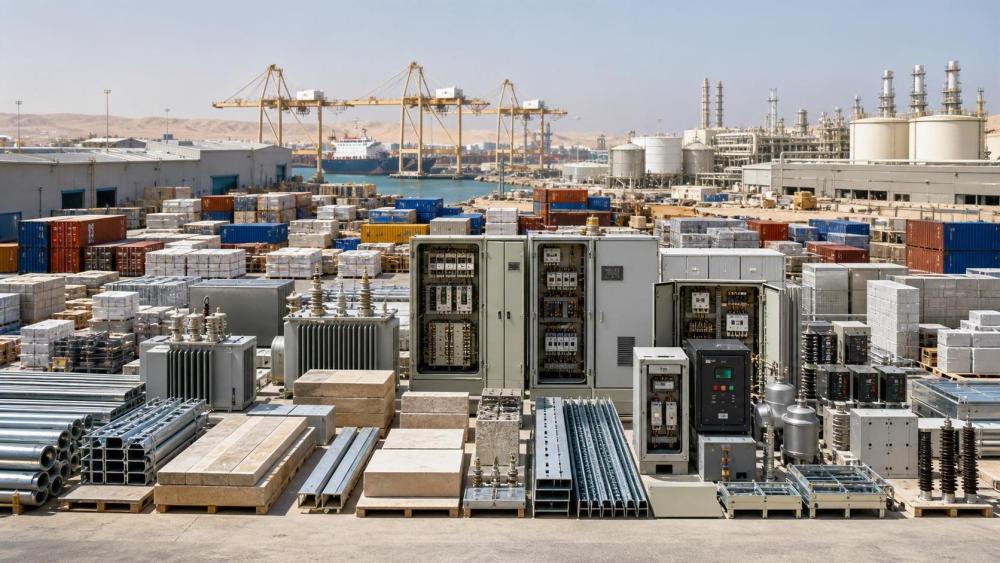
The Middle East is not a single standards market. Gulf economies, North African manufacturing hubs, and Levant infrastructure markets each apply different institutional structures, approval routes, and enforcement habits.
Still, several common patterns now define industrial standards Middle East. Regulatory agencies are becoming more assertive. Large public projects are specifying performance criteria earlier. Imported products are receiving closer scrutiny beyond basic certificates.
In practical terms, standards are becoming part of industrial policy. They are being used to support national resilience, improve energy efficiency, reduce lifecycle risk, and encourage domestic capability building.
What changed in the standards landscape
Several developments sit behind the recent changes. None of them act alone, but together they have altered the operating environment for exporters, specifiers, and technical reviewers.
Energy transition is reshaping technical expectations
Decarbonization has moved from a policy headline to a design requirement. Power systems, HVAC equipment, insulation materials, motors, transformers, and industrial controls are increasingly assessed through energy performance and emissions-related criteria.
This is especially visible in markets pushing renewables, hydrogen, grid modernization, and green construction. Older compliance assumptions based only on basic safety approval are no longer enough for many tenders.
Localization policies now influence standards decisions
Industrial standards Middle East are also being shaped by local content programs. Governments want more than imported finished goods. They want technology transfer, certified local assembly, approved service capacity, and traceable supply relationships.
That means the standard conversation now extends beyond the product itself. Review teams may examine spare parts support, local testing access, calibration history, and whether a supplier can maintain compliance after installation.
Enforcement is becoming more operational
In the past, some sectors treated standards as a paperwork exercise. Today, authorities and project owners are more likely to connect certificates with factory audits, shipment inspections, digital registration systems, and use-phase verification.
This raises the cost of weak documentation. A technically acceptable product can still fail if labeling, test reports, declarations, or approved references do not match local requirements.
Where the impact is showing up first
The effect is strongest in sectors where safety, public infrastructure, and energy use carry visible economic consequences. That includes both mature and fast-expanding industrial categories.
Across these categories, industrial standards Middle East are becoming more tied to end-use context. A compliant product on paper may still be rejected if it does not fit the project environment, climate load, maintenance model, or government procurement framework.
Why this matters for technical assessment
The main risk is false equivalence. Two products may claim alignment with the same international benchmark, yet differ sharply in local acceptability. One may have recognized certification pathways, while the other lacks supporting records accepted in the target market.
This is where a broader intelligence approach becomes useful. GTIIN tracks how standards, sourcing conditions, logistics realities, and industrial policy interact across sectors. That wider context helps explain why approval outcomes often diverge from lab-based comparisons alone.
A technical review now needs to connect four layers: core product performance, recognized conformity evidence, sector-specific local rules, and supplier execution capability. Missing any one layer can distort supplier ranking or market entry planning.
How to read industrial standards Middle East in practice
The most effective approach is to treat standards as a decision framework, not a checklist. That changes how product files, supplier claims, and project specifications should be reviewed.
Start with the real approval pathway
Ask which authority, buyer, or sector body actually decides acceptance. Regional exports often pass through overlapping layers, including customs registration, utility approval, consultant specification, and end-user engineering review.
Check equivalence, not just certificate presence
A familiar international mark does not always guarantee local recognition. Review whether the issuing laboratory, test method edition, factory scope, and declared model family match the target application.
Look beyond product documents
Current industrial standards Middle East often pull service readiness into the compliance picture. Maintenance procedures, spare parts coverage, software updates, and local technical representation can affect approval confidence.
- Verify the latest referenced standard edition in tender documents.
- Map required certificates against the exact product configuration.
- Confirm whether local testing, registration, or labeling is mandatory.
- Assess climate, corrosion, and duty-cycle suitability for the installation site.
- Check supplier capacity for after-sales compliance support.
These checks reduce a common problem in regional trade: products that are technically capable but commercially delayed because the compliance path was underestimated.
Signals worth monitoring over the next cycle
The next phase of industrial standards Middle East will likely be shaped by three pressures. One is deeper integration between sustainability targets and industrial procurement. Another is digitalization of conformity systems. The third is stronger localization across strategic sectors.
That combination will affect sourcing decisions far beyond headline regulation. It may influence approved vendor lists, testing lead times, packaging rules, cybersecurity expectations, and the economics of regional warehousing or assembly.
For that reason, standard tracking should sit closer to market intelligence and supply chain planning. GTIIN’s cross-sector view is useful here because standards changes rarely arrive as isolated technical events. They usually appear alongside trade friction, infrastructure spending, energy policy, and procurement reform.
A better next step than reactive compliance
The practical response is to build a market-specific review matrix before the next bid, shipment, or supplier comparison. That matrix should connect application risk, local acceptance rules, documentation gaps, and post-installation support obligations.
Industrial standards Middle East are no longer static reference points. They are moving signals of how the region wants products to perform, how suppliers are expected to operate, and where cross-border industrial value must be demonstrated.
A clearer reading of those signals makes the next decision more grounded: whether to adapt specifications, qualify alternate suppliers, localize part of the offer, or delay entry until the compliance path is fully mapped.
Weekly Insights
Stay ahead with our curated technology reports delivered every Monday.
Recommended News
 Supply ChainOct 15, 2026How to choose a supply chain strategy for unpredictable demand
 Supply ChainOct 14, 2026How to assess an industrial equipment supplier's spare parts support
 Supply ChainOct 14, 2026EU Updates CSDDD Guidance on Global Supply Chain Due Diligence
 Global SourcingOct 13, 2026How to assess industrial automation suppliers for legacy integration