Supply Chain Strategy: How to Balance Cost, Risk, and Resilience
Supply Chain Strategy: How to Balance Cost, Risk, and Resilience
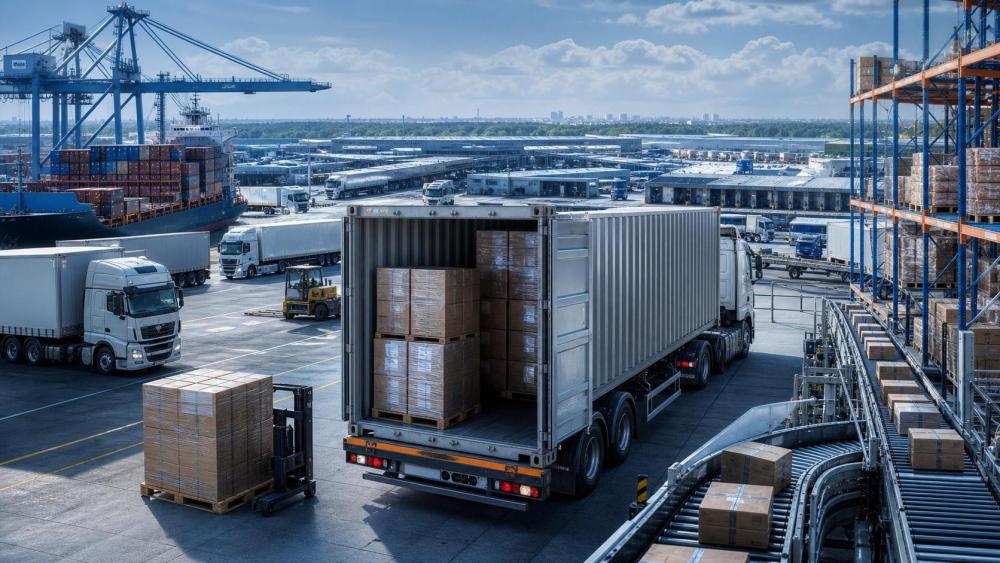
In an era of geopolitical volatility, cost inflation, and shifting trade rules, a strong supply chain strategy is no longer optional for business leaders.
The real challenge is balancing efficiency with risk control and long-term resilience.
This article explores how decision-makers can align sourcing, logistics, and supplier networks to reduce disruption, protect margins, and build more adaptive global operations.
A modern supply chain strategy cannot focus on price alone.
It must also account for lead time volatility, regulatory exposure, freight instability, and supplier concentration.
From recent shifts in trade patterns, the clearer signal is this: low-cost sourcing without structural flexibility creates hidden costs later.
That also means procurement and operations teams need a broader decision model.
The best supply chain strategy links total cost, disruption probability, and recovery speed in one framework.
Why Cost-Only Thinking Fails
Many companies still evaluate suppliers through unit price, payment terms, and shipping cost.
That approach looks efficient on paper, but it often ignores operational fragility.
A cheaper supplier may carry longer replenishment cycles, weaker compliance systems, or dependence on unstable ports.
Those risks rarely appear in the initial quote.
They appear later as expediting fees, stockouts, missed revenue, and emergency supplier onboarding.
In practice, a poor supply chain strategy usually breaks down in three places:
- Single-region sourcing with no recovery path
- Low supplier visibility below tier-one partners
- Inventory policies built for stable trade conditions
A stronger supply chain strategy looks at total landed cost and total exposure together.
That includes tariffs, customs delays, quality risk, carbon-related reporting, and working capital pressure.
The Three-Way Tradeoff: Cost, Risk, and Resilience
Every supply chain strategy involves tradeoffs.
Lower cost can increase risk.
Higher resilience can raise short-term expense.
The objective is not perfect balance in every category.
The objective is the right balance for the product, market, and risk profile.
1. Cost
Cost still matters, especially in price-sensitive sectors.
But cost should be measured across the full sourcing cycle, not only at purchase order stage.
This includes transport, duties, financing, defects, delays, and inventory carrying cost.
2. Risk
Risk includes geopolitical shocks, sanctions, climate events, cyber disruption, and regulatory change.
A practical supply chain strategy maps where these risks can interrupt flow, margin, or compliance.
3. Resilience
Resilience is the ability to absorb disruption and recover without major business damage.
It comes from options, visibility, and response speed.
That may mean dual sourcing, regional buffers, alternate logistics lanes, or stronger supplier collaboration.
How to Build a Better Supply Chain Strategy
A workable supply chain strategy starts with segmentation.
Not every product needs the same sourcing model.
High-volume commodity inputs should be managed differently from mission-critical engineered components.
Segment by business impact
Start by classifying items into four groups:
- High value, low supply risk
- High value, high supply risk
- Low value, low supply risk
- Low value, high supply risk
This gives the supply chain strategy a clear basis for choosing contracts, buffers, and supplier development priorities.
Map supplier dependency
Many disruptions begin below the visible supplier layer.
A robust supply chain strategy tracks critical raw materials, sub-tier capacity, and regional chokepoints.
Without this, supplier diversification may look broader than it really is.
Use scenario planning
Scenario planning makes a supply chain strategy more practical.
Model what happens if freight rates double, a trade lane closes, or a regulatory shift increases landed cost by 8%.
The value is not prediction alone.
It is faster decision-making when the market moves.
Decision Criteria for Supplier and Network Design
When evaluating suppliers or rethinking footprint, leaders need a structured scorecard.
A strong supply chain strategy turns broad concerns into measurable criteria.
This type of scorecard makes the supply chain strategy easier to explain across procurement, finance, and operations.
Practical Moves That Improve Resilience Without Losing Control of Cost
Resilience does not always require a full network redesign.
Often, targeted actions create meaningful protection with limited added cost.
- Add secondary suppliers for the highest-risk components, even if allocation stays small at first.
- Place inventory buffers only where replenishment risk is high and downtime cost is severe.
- Negotiate flexible logistics capacity for peak periods and emergency rerouting.
- Use supplier audits to verify capacity, traceability, and continuity planning.
- Review trade compliance exposure quarterly, especially in sensitive sourcing corridors.
In real operations, these moves improve the supply chain strategy because they increase response options before disruption happens.
That is usually cheaper than reacting under pressure.
What Leading Teams Measure
A supply chain strategy becomes credible when it is measurable.
The most useful metrics combine financial and operational views.
- Total landed cost by supplier and region
- On-time delivery under normal and stressed conditions
- Supplier concentration by category
- Time to recover after disruption
- Inventory coverage for critical materials
- Customs and compliance exception rates
These indicators help teams test whether the supply chain strategy is reducing exposure or simply shifting costs elsewhere.
A Smarter Supply Chain Strategy Starts with Better Visibility
The next phase of global sourcing will reward visibility, not just scale.
A resilient supply chain strategy depends on clearer supplier intelligence, stronger market monitoring, and better timing on cross-border decisions.
This is where GTIIN creates practical value.
By combining trade intelligence, industrial sourcing insight, export trend analysis, and supply chain resilience research, GTIIN helps teams judge cost pressure and disruption risk in the same view.
That makes supplier selection, regional planning, and procurement timing more grounded and more defensible.
The strongest supply chain strategy is rarely the cheapest or the most complex.
It is the one that sees risk early, adapts quickly, and protects margin through change.
For any business reassessing suppliers, trade lanes, or inventory logic, that is the right place to start.
Weekly Insights
Stay ahead with our curated technology reports delivered every Monday.
Recommended News
 Supply ChainOct 15, 2026How to choose a supply chain strategy for unpredictable demand
 Supply ChainOct 14, 2026How to assess an industrial equipment supplier's spare parts support
 Supply ChainOct 14, 2026EU Updates CSDDD Guidance on Global Supply Chain Due Diligence
 Global SourcingOct 13, 2026How to assess industrial automation suppliers for legacy integration