
Carbon Border Compliance Framework: What Exporters Need to Prepare Now
Carbon Rules Are Now an Operational Constraint
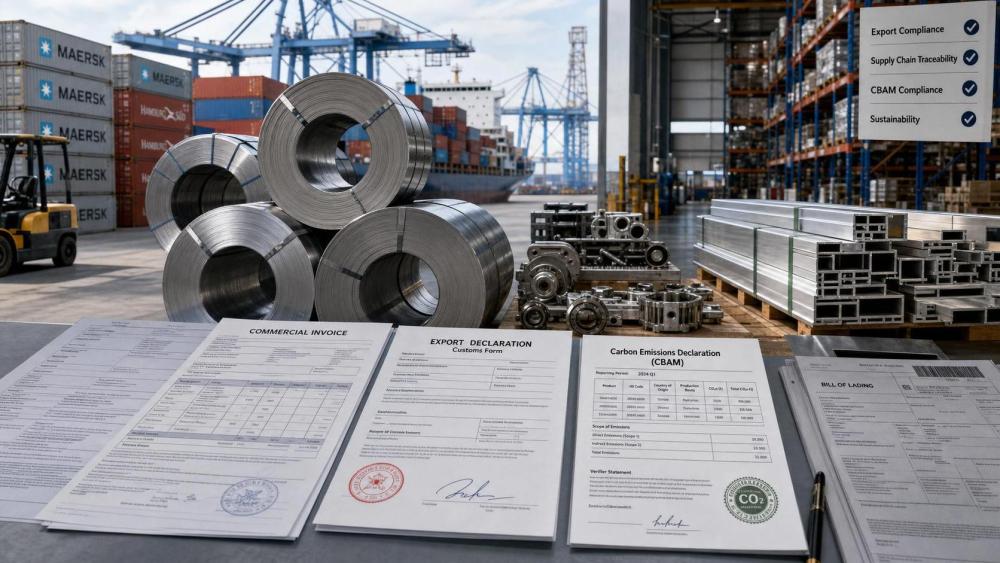
A carbon border compliance framework has moved from policy discussion to daily export execution.
That shift matters because carbon reporting now touches quotation logic, supplier selection, production routing, and customs documentation at the same time.
In practice, the issue is rarely just emissions accounting.
It is a coordination problem across commercial terms, plant data, product classification, and shipment timing.
For cross-border industrial trade, the risk is not limited to higher cost.
A weak carbon border compliance framework can delay clearance, weaken bid credibility, or force a last-minute switch in supply origin.
GTIIN tracks these pressures across commodity chains, engineered materials, machinery inputs, and industrial procurement networks.
The pattern is consistent.
Export readiness now depends on whether carbon data can travel with the product as reliably as the product itself.
That is why preparation cannot wait for a formal dispute or rejected filing.
Why the Same Rule Creates Different Pressures
Not every shipment faces the same compliance burden, even under the same market rule.
The carbon border compliance framework changes with product complexity, process transparency, and the number of upstream data sources involved.
A basic steel product with stable process inputs creates one type of workload.
A multi-component industrial assembly creates another.
More often, the real difference comes from how much verified emissions evidence exists below invoice level.
Where meter data, process boundaries, and supplier declarations are already structured, compliance can be embedded into normal export control.
Where records are fragmented, carbon checks become a parallel emergency workflow.
This is where market intelligence matters.
GTIIN’s supply chain mapping approach is useful because it connects regulatory exposure with sourcing geography, transit patterns, and technical production conditions.
A carbon border compliance framework works best when it is built around real operating conditions, not generic ESG language.
Where Bulk Materials Need Fast, Defensible Carbon Data
One common scenario involves bulk materials and semi-finished industrial inputs.
Steel, aluminum, cement-linked products, and chemical intermediates usually face the earliest scrutiny.
Here, the carbon border compliance framework depends on process-level clarity.
The key questions are straightforward.
Which plant produced the batch, what fuel mix was used, and whether embedded emissions can be traced to production records.
In this setting, a polished sustainability statement adds little value if site data is inconsistent.
A practical response is to standardize emissions boundaries by product code and plant location first.
Then link those records to export documentation templates before shipment scheduling begins.
The mistake here is assuming commodity products are simpler because the items are less customized.
In reality, high-volume material flows make data inconsistency more expensive and more visible.
For Engineered Goods, Supplier Mapping Matters More Than Headlines
Another scenario appears in engineered goods with multiple sourced components.
Industrial equipment, fabricated systems, and hybrid assemblies often carry carbon exposure from deeper tiers.
In these cases, the carbon border compliance framework is less about one plant and more about supplier architecture.
A final assembly site may be compliant on paper while upstream metal parts, castings, or processed inputs remain weakly documented.
That creates a gap between commercial confidence and filing readiness.
A better approach is to rank components by carbon materiality and regulatory relevance.
Not every bolt needs equal attention.
But primary structure, energy-intensive inputs, and externally processed parts usually do.
This is also where lead time planning changes.
If supplier declarations arrive after production completion, the carbon border compliance framework becomes a recovery exercise rather than a control system.
Different Export Situations Change What Must Be Checked First
The right sequence of checks depends on how the shipment is structured and how the buyer market enforces carbon rules.
This comparison shows why a carbon border compliance framework should not be copied unchanged from one trade lane to another.
Long-Cycle Projects Need Carbon Controls Earlier Than Shipment Week
A more demanding setting is project-based export.
Infrastructure packages, capital equipment, and phased industrial deliveries often run for months.
Here, the carbon border compliance framework must start during specification and procurement review.
Why so early?
Because supplier substitutions, revised bills of materials, and changed process routes can alter declared emissions after the commercial baseline was set.
A late-stage check often discovers that the original documentation logic no longer matches the delivered configuration.
In actual operations, revision control becomes as important as emissions calculation.
Any carbon border compliance framework used for long-cycle projects should connect engineering change notices with compliance updates.
Without that link, the paperwork may be technically complete but commercially unreliable.
Common Misjudgments Usually Start with Narrow Data Assumptions
Several mistakes appear repeatedly across sectors.
- Treating carbon compliance as a customs issue only, while procurement data remains uncontrolled.
- Using supplier averages for products that require plant-specific or batch-linked evidence.
- Assuming one reporting template works across all destination markets and all contract structures.
- Focusing on direct cost impact, while ignoring delivery risk and re-documentation workload.
- Treating similar production sites as interchangeable even when energy mix and process efficiency differ.
These are not minor administrative errors.
They usually indicate that the carbon border compliance framework was designed around reporting convenience rather than operational truth.
What a Usable Carbon Border Compliance Framework Should Include Now
A workable system does not need to begin as a massive transformation project.
It does need clear control points.
- Map products by regulatory exposure, emissions intensity, and destination market priority.
- Define data ownership for plant records, supplier declarations, trade codes, and filing evidence.
- Create one evidence hierarchy, showing which records are primary, secondary, and temporary.
- Align contract terms with data delivery deadlines, especially for outsourced processing steps.
- Build review points around engineering changes, shipment release, and market-specific reporting updates.
GTIIN’s cross-border supply chain perspective is useful here because carbon exposure rarely sits inside one department or one supplier tier.
A strong carbon border compliance framework should therefore mirror the real value chain, including freight timing, customs latency, and industrial sourcing shifts.
The Next Step Is a Trade-Lane Reality Check
Preparation now means more than collecting emissions figures.
It means testing whether the carbon border compliance framework can survive actual shipment conditions, supplier changes, and reporting deadlines.
The most useful next step is a trade-lane review.
List the exposed products, confirm which sites and suppliers feed them, and identify where evidence quality drops below filing needs.
Then compare those gaps against delivery cycles, buyer requirements, and destination-specific carbon rules.
That exercise usually reveals whether the current carbon border compliance framework is a reporting layer or a functioning export control system.
The difference will shape market access, pricing resilience, and supply chain credibility over the next phase of global trade adjustment.
Have questions about this sector analysis, or seeking best practices specific to your niche? Drop us a line below and let the senior consultants at GTIIN assist you.
“We respect your privacy. Your information is strictly confidential.”
Weekly Insights
Stay ahead with our curated technology reports delivered every Monday.
Recommended News
 Supply ChainNov 10, 2026China Extends Pause on 24% Additional Tariff on US Goods by Two Months
 Industry StandardsNov 10, 2026Which imports are subject to EU carbon border compliance?
 Global SourcingNov 09, 2026USTR Extends 178 China Section 301 Tariff Exclusions to January 2027
 Supply ChainNov 09, 2026How can a tariff risk management dashboard track cost exposure?



