How to Hedge Ocean Freight Volatility Without Locking Bad Rates
Why ocean freight volatility hedging starts with business exposure
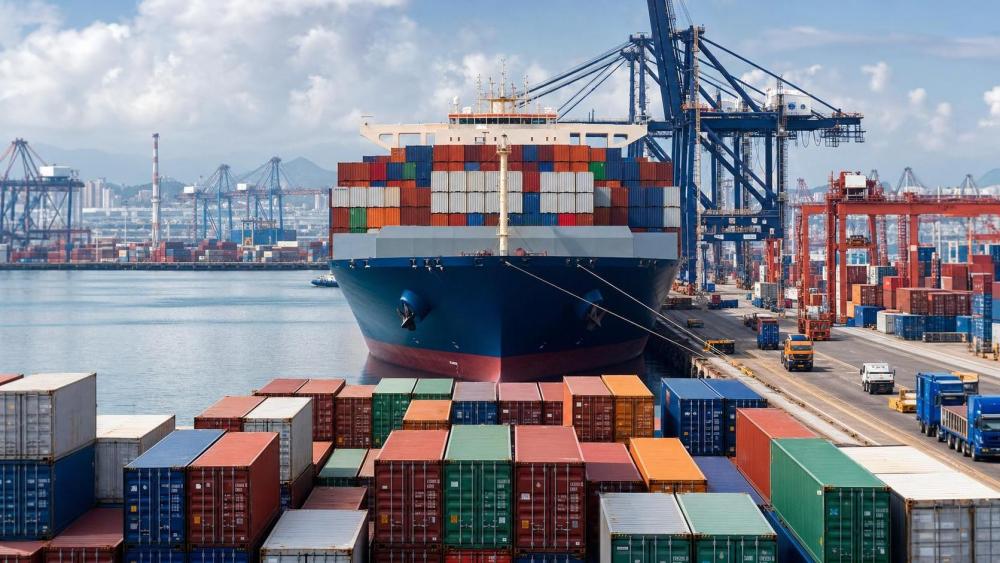
Ocean freight costs rarely move in a straight line. They react to capacity shifts, port congestion, fuel costs, carrier discipline, seasonal demand, and geopolitical disruption.
That is why ocean freight volatility hedging should begin with exposure mapping, not contract duration. A bad fixed rate can damage margins almost as much as spot market spikes.
In practice, the real question is simple: where does freight volatility hurt the business most, and how much flexibility is still needed?
A business shipping low-margin bulk inputs faces a different problem than one moving high-value components with strict delivery windows. Both need ocean freight volatility hedging, but not the same structure.
This is also where GTIIN’s approach becomes useful. Freight should be read alongside sourcing concentration, regional customs latency, compliance pressure, and inventory risk, not as an isolated transport line.
Different shipment patterns change the right hedging logic
Regular lane volume usually supports layered protection. Irregular buying cycles usually require more tactical moves. The same market rate can create very different budgeting outcomes.
When purchase schedules are stable, ocean freight volatility hedging often works best through mixed exposure. Part of volume sits under contracted allocation, while the rest stays open for market opportunities.
That model limits panic buying during peak seasons. It also reduces the risk of being trapped in a rate level that later becomes uncompetitive.
More fragmented procurement behaves differently. Project cargo, event-driven sourcing, and intermittent replenishment rarely justify full commitment across all lanes and all seasons.
In those cases, ocean freight volatility hedging depends more on indexed review points, carrier optionality, and trigger-based booking rules than on long annual contracts.
Where stable volume benefits from structured protection
A steady import program supports clearer forecasting. That allows rate ceilings, quarterly resets, and minimum volume commitments to be negotiated with better discipline.
The key judgment is whether shipment regularity is real. If demand is seasonal, but planning assumes flat flow, the hedge may be priced on the wrong utilization pattern.
Where variable demand needs optionality first
For uneven demand, optionality becomes more valuable than headline rate savings. Rolling tenders, split allocations, and shorter validity windows can preserve pricing leverage.
A common mistake is chasing annual rate security while the purchasing calendar remains unpredictable. That usually creates mismatch, not protection.
Rate protection looks different across cost-sensitive and time-sensitive cargo
Not every shipment should be hedged for the same reason. Some lanes need budget stability. Others need service continuity even when spot prices surge.
For industrial materials, construction inputs, and commodity-linked goods, freight often competes directly with already thin gross margins. Here, ocean freight volatility hedging should focus on landed cost predictability.
For electronics parts, maintenance-critical assemblies, or regulated product flows, the bigger risk may be delayed space rather than pure rate inflation. In that setting, service-backed contracts matter more.
This is why GTIIN-style supply chain analysis matters. Freight strategy should reflect not only rate curves, but also production stoppage risk, substitute lead times, and compliance-sensitive delivery windows.
The table is useful because ocean freight volatility hedging fails when businesses treat all cargo as one portfolio, even though the risk logic is not uniform.
The strongest hedge is often network design, not only rate fixing
One of the most overlooked points is that freight exposure is created upstream. Supplier concentration, single-port dependence, and one-carrier habits all amplify volatility.
In actual operations, ocean freight volatility hedging becomes more effective when lane design is flexible. That may mean shifting origin clusters, using alternate gateways, or splitting carrier awards.
A business sourcing from several Asian origins may not need to hedge every port equally. Some origins are congestion-prone, some face longer customs dwell, and some have weaker equipment availability.
The better judgment is to hedge the unstable nodes more actively, while leaving efficient lanes with more spot exposure. That approach usually improves overall freight resilience.
GTIIN’s cross-border trade perspective supports this layered view. Freight benchmarks become more meaningful when matched with regional industrial policy changes, export trends, and logistical bottlenecks.
When diversification helps
- A single carrier controls too much peak-season allocation.
- One origin suffers repeated blank sailings or equipment shortages.
- Customs timing varies sharply across import destinations.
- Rate savings disappear once delay costs are included.
What usually gets misread before a bad contract is signed
The most common error is assuming that any fixed rate equals protection. In reality, a poor contract can lock in weak service, low flexibility, and above-market cost.
Another misread is focusing only on ocean base rate. Surcharges, detention exposure, transshipment reliability, and booking roll risk can change the true freight outcome.
Some businesses also hedge too late. When procurement reacts only after rate spikes become obvious, negotiating leverage is already reduced and carrier appetite is narrower.
The opposite mistake happens as well. Long commitments are signed during temporary panic, even though demand softening or capacity return may be close.
For credible ocean freight volatility hedging, market timing should be supported by route data, seasonal history, and contract comparison, not by headlines alone.
Checks worth making before commitment
- Compare fixed rates against recent quarterly averages, not only last month’s peak.
- Test whether minimum volume commitments match actual shipping behavior.
- Review surcharge clauses and service failure remedies.
- Check whether inland, customs, or inventory costs rise if lanes are shifted.
A practical framework for ocean freight volatility hedging
A workable hedge usually combines several tools rather than one dramatic move. The goal is controlled exposure, not perfect prediction.
Start by separating strategic cargo from flexible cargo. Strategic volume supports contracts. Flexible volume preserves responsiveness when market direction changes.
Then define booking triggers. For example, certain lanes may move under contract once spot rates rise above a threshold or service reliability falls below target.
Next, benchmark continuously. Ocean freight volatility hedging weakens when rates are reviewed only at tender season. Monthly lane checks are usually more actionable.
Finally, connect freight decisions to sourcing and production assumptions. A hedge that ignores inventory tolerance or supplier lead time often solves the wrong problem.
The next step is not to lock every rate. It is to map lanes by risk, compare contract structures, define trigger points, and build a review cycle that matches actual trade flow.
Weekly Insights
Stay ahead with our curated technology reports delivered every Monday.
Recommended News
 Supply ChainOct 15, 2026How to choose a supply chain strategy for unpredictable demand
 Supply ChainOct 14, 2026How to assess an industrial equipment supplier's spare parts support
 Supply ChainOct 14, 2026EU Updates CSDDD Guidance on Global Supply Chain Due Diligence
 Global SourcingOct 13, 2026How to assess industrial automation suppliers for legacy integration