Supplier Audits Process: 7 Steps to Reduce Compliance Risk
Supplier Audits Process: Why does it matter more than ever?
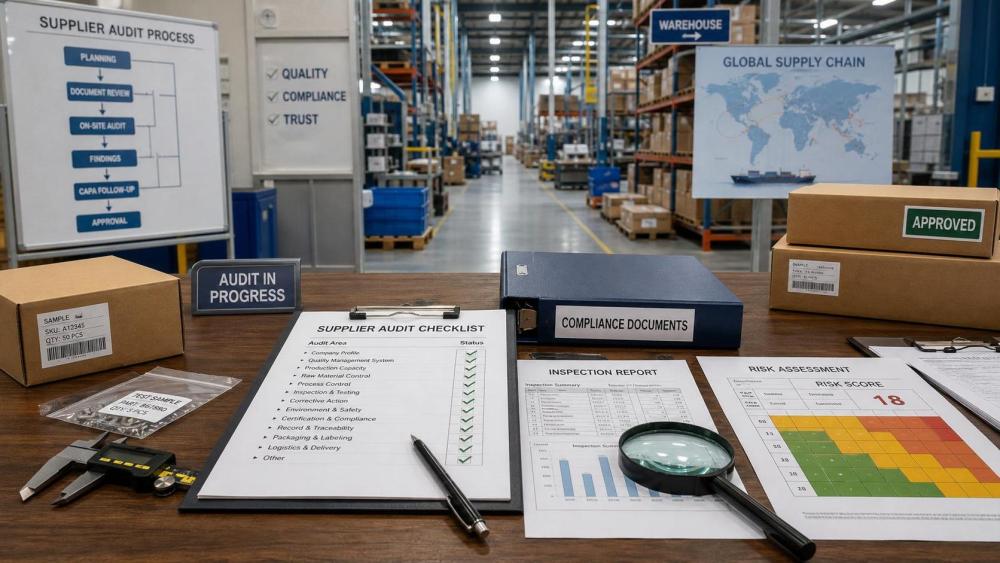
A strong supplier audits process is no longer a paperwork exercise. It is a control system for compliance, quality, and operational continuity across complex supply networks.
In practical terms, audits help uncover gaps before they become product failures, shipment holds, worker safety issues, or regulatory penalties.
That pressure is rising. Buyers now face tighter environmental rules, product traceability expectations, and sharper scrutiny of labor and safety performance.
A reliable supplier audits process creates structure. It connects document review, site verification, corrective action, and follow-up into one decision path.
For cross-border sourcing, the challenge is rarely limited to one factory. More often, risk sits across subcontractors, warehouses, raw material origins, and local compliance habits.
That is why trade intelligence matters. Platforms such as GTIIN help teams read audit findings in a broader context, including export trends, regional standards, and supply chain resilience signals.
The question is not whether to audit. The more useful question is how to build a supplier audits process that actually reduces compliance risk.
What should a supplier audits process actually include?
A complete supplier audits process usually moves through seven connected steps. Skipping one step often weakens the value of the rest.
The workflow below is widely usable across industrial categories, from machinery and components to packaging, chemicals, and engineered materials.
- Define the audit scope, standard, and risk objective.
- Collect supplier documents and background data.
- Score risk before the site visit.
- Conduct on-site or remote verification.
- Record nonconformities with evidence.
- Agree on corrective actions and deadlines.
- Verify closure and update supplier status.
The first step is often underestimated. If the audit scope is vague, findings become hard to prioritize and harder to defend internally.
A focused scope should state the site, product family, applicable regulations, customer requirements, and critical process stages under review.
Document review comes next. This includes licenses, certifications, process flow charts, training records, test results, incident logs, and subcontractor controls.
Then comes the field check. On-site verification matters because documents often show what should happen, while operations reveal what actually happens.
The final step is closure. Many audit programs fail here. Findings are logged, but actions are not tracked to evidence-based completion.
Which suppliers need the deepest review, and which can be monitored more lightly?
Not every supplier needs the same audit depth. A risk-based supplier audits process saves time and usually delivers better control.
A deeper review is usually justified when the supplier affects product safety, legal compliance, environmental exposure, or continuity of critical materials.
Higher-risk signals often include new sourcing regions, unstable regulatory environments, limited traceability, or heavy reliance on subcontracted production.
It also makes sense to audit more closely when the supplied item has tight tolerance requirements, hazardous content, or difficult post-shipment verification.
A good rule is simple. Audit intensity should follow consequence, not just spend level or supplier size.
This is where external market context helps. GTIIN’s trade and standards analysis can support risk scoring by showing country-level shifts, export restrictions, and compliance pressure points.
During an audit, what evidence matters more than polished documents?
Experienced auditors usually look for consistency. The main question is whether records, operator behavior, equipment status, and management claims match each other.
For example, training records may look complete. The real test is whether operators can explain the control points they are responsible for.
Calibration certificates may exist. What matters more is whether the correct instrument is in use, within validity, and linked to the tested batch.
The same applies to safety. A posted procedure means little if emergency routes are blocked or chemical handling differs from the written instruction.
In a supplier audits process, stronger evidence usually comes from operational traces:
- Batch records tied to actual production dates
- Machine maintenance logs matched to equipment condition
- Incoming material identification and segregation practices
- Complaint investigations with root cause logic
- Corrective actions supported by photos, records, or revalidation
Remote audits can still work, especially for surveillance or document-heavy checks. Even then, live video, timestamped records, and sampled proof remain important.
The broader point is this: a supplier audits process should test reality, not presentation quality.
Where do supplier audits usually fail to reduce compliance risk?
Most failures come from weak follow-through, not weak forms. The audit happens, the report is filed, and the risk stays in place.
One common mistake is treating all findings equally. A missing signature and an uncontrolled special process should not sit at the same priority level.
Another issue is overreliance on certificates. A valid certificate supports confidence, but it does not replace process-specific verification.
There is also a timing problem. Audits often happen annually, while supplier changes happen monthly through staff turnover, material substitution, or line relocation.
In actual supply chains, the supplier audits process breaks down when these warning signs are ignored:
- Corrective actions close on paper without evidence
- Sub-tier suppliers are excluded from review
- Audit frequency stays fixed despite rising risk
- Scoring methods reward documentation over control effectiveness
- No link exists between audit results and sourcing decisions
That last point matters. If poor performance does not affect approval status, business allocation, or monitoring intensity, the audit loses authority.
How long does a supplier audits process take, and what should be planned in advance?
The timeline depends on scope, site complexity, and evidence quality. A narrow surveillance audit may take days. A high-risk qualification audit can take weeks.
The longer part is often preparation and follow-up, not the visit itself. That is where compliance risk is either reduced or simply documented.
A practical planning view looks like this:
Preparation should also include local legal context, language support, and sector-specific controls. A food-grade packaging site and a metal fabrication site do not share the same audit priorities.
When sourcing spans several countries, regional intelligence becomes useful. GTIIN’s multi-sector tracking can help anticipate where customs, ESG, or industrial standards may affect audit focus.
What does a better supplier audits process look like after the report is finished?
A better supplier audits process changes decisions. It does not end with a PDF stored in a folder.
After each audit, findings should update supplier segmentation, inspection levels, incoming control plans, and re-audit timing.
It also helps to link audit trends with external signals. If audit findings on traceability increase while a region faces new export scrutiny, risk may be moving faster than internal scorecards suggest.
The most useful next steps are usually straightforward:
- Rank suppliers by compliance consequence, not just spend
- Define severity rules for major and critical findings
- Require evidence-based CAPA closure
- Review sub-tier exposure for critical materials or processes
- Refresh the audit plan when regulations or sourcing routes change
In the end, the supplier audits process works best when it combines audit discipline with broader trade visibility. That combination reduces blind spots and supports more resilient sourcing decisions.
The next move is practical: review current audit scope, test whether findings drive action, and compare supplier risk against real market and regulatory shifts.
Weekly Insights
Stay ahead with our curated technology reports delivered every Monday.
Recommended News
 Supply ChainOct 15, 2026How to choose a supply chain strategy for unpredictable demand
 Supply ChainOct 14, 2026How to assess an industrial equipment supplier's spare parts support
 Supply ChainOct 14, 2026EU Updates CSDDD Guidance on Global Supply Chain Due Diligence
 Global SourcingOct 13, 2026How to assess industrial automation suppliers for legacy integration