Hormuz Traffic Recovers, Costs Stay Uncertain
On June 24, 2026, vessel traffic through the Strait of Hormuz showed a clear operational rebound, with daily transits reaching the highest level seen since the Iran conflict and the monthly daily average recovering to nearly 60% of its pre-conflict level. Even so, this update matters less as a sign of full normalization than as a reminder that shipping conditions for Middle East and South Asia cargo remain unstable, especially for traders, manufacturers, cargo owners, forwarders, and procurement teams trying to manage delivery reliability, insurance exposure, and freight budgets.
What the latest shipping data confirms
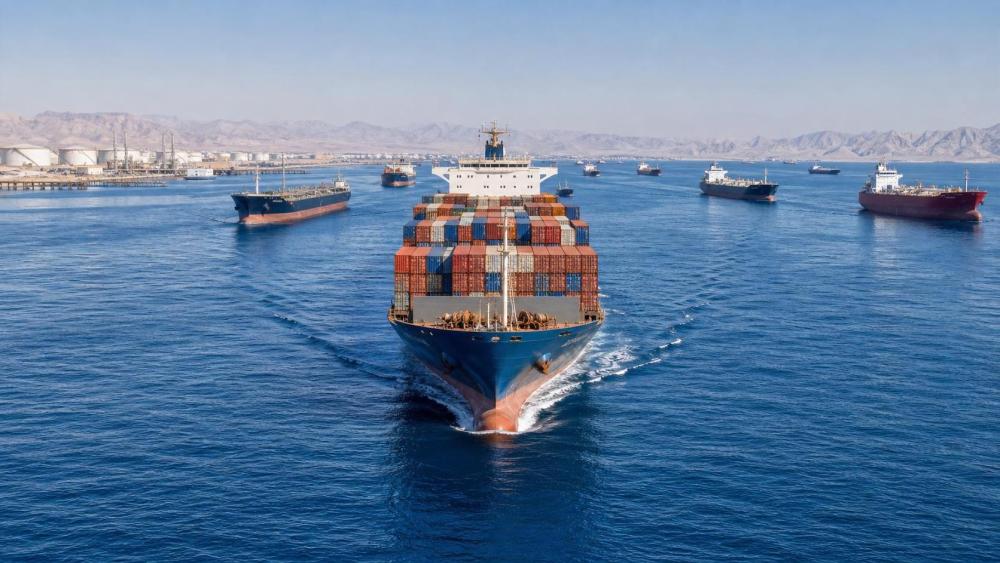
According to the information provided, S&P Global Commodity Insights reported that 78 vessels passed through the Strait of Hormuz on June 24, marking the highest single-day total since the Iran conflict began. The same information indicates that the average daily traffic for the month has recovered to nearly 60% of the pre-conflict level.
The confirmed summary also shows that geopolitical disruption is still pushing up transport costs. Carriers are continuing to skip ports, diversions around the Red Sea are extending vessel turnaround times, and available shipping capacity remains tight. These conditions are directly affecting delivery stability for cargo moving toward the Middle East and South Asia, while also complicating insurance and freight cost calculations.
Why the recovery does not remove supply chain pressure
For cargo owners and trading companies
From an industry perspective, the partial recovery in vessel movements does not automatically translate into predictable delivery performance. Companies shipping to the Middle East and South Asia may still face uncertainty in shipment scheduling, port calls, and total landed cost assumptions. What deserves closer attention is whether routing changes and skipped-port decisions continue to disrupt customer commitments and contract timing.
For procurement and manufacturing operations
Analysis shows that manufacturers and raw material buyers may feel the impact through longer replenishment cycles and less stable inbound planning. Even if cargo can move, extended turnaround caused by rerouting and tight space supply can affect production scheduling, inventory buffers, and purchase timing. The main risk is not only delay itself, but the reduced confidence in previously standard transit expectations.
For logistics and supply chain service providers
Forwarders, shipping coordinators, and other service providers are likely to face added pressure in quoting, booking, and shipment visibility. Freight and insurance calculations become harder when capacity remains constrained and operating patterns keep shifting. Observably, customers will expect more frequent updates on routing, timing, and cost exposure rather than relying on standard lane assumptions.
What businesses should monitor now
Changes in actual vessel deployment
It is more appropriate to track whether improved transit numbers are followed by steadier carrier operations in practice. A higher daily transit count is useful, but businesses should watch whether skipped-port behavior and rerouting patterns ease in actual bookings and shipment execution.
Delivery planning for Middle East and South Asia cargo
For companies with active orders in these corridors, attention should stay on delivery windows, customer communication, and internal planning assumptions. The current environment suggests that promised dates, replenishment cycles, and milestone-based delivery commitments may need closer review.
Freight and insurance budgeting
Analysis shows that cost management remains a practical priority. Even with some traffic recovery, the information provided makes clear that geopolitical disruption is still lifting transport costs. Businesses should therefore review whether freight and insurance estimates remain valid under changing routing and capacity conditions.
Documentation and coordination discipline
Where shipment timing is less predictable, coordination across suppliers, carriers, service providers, and customers becomes more important. What deserves closer attention is whether internal teams are working with updated transit assumptions and whether external communication reflects current shipping constraints rather than earlier pre-conflict expectations.
How this signal is best understood at this stage
Observably, this development points to operational recovery without confirming full market normalization. The rise in daily vessel transits and the monthly recovery toward 60% of pre-conflict levels suggest that flows are improving, but the continued pressure from geopolitical disruption, rerouting, skipped ports, and limited space supply indicates that the risk environment has not been resolved.
Analysis shows that this is better understood as a monitored industry development rather than a definitive turning point. For the market, the key question is not only how many ships are transiting, but whether delivery consistency and cost visibility also improve in a sustained way.
What this means for the market right now
The current update is meaningful because it shows that shipping activity through the Strait of Hormuz is recovering, yet the operating environment for Middle East and South Asia cargo remains exposed to disruption. A neutral reading is that the market has moved away from the weakest point in traffic, but not yet into a fully stable transport pattern.
It is more appropriate to understand this as a short-term operational improvement that still requires continued observation. For businesses, the practical takeaway is to avoid treating partial traffic recovery as the same thing as restored certainty in lead times, routing, or total shipment cost.
Basis of this article
This article is generated from the user-provided news title, event date, and event summary. The information available for this piece includes the reported June 24, 2026 transit figure, the stated recovery in monthly average vessel traffic, and the summary of continuing cost and capacity pressures affecting Middle East and South Asia shipments.
For this type of industry update, relevant source categories may usually include official notices, company disclosures, industry association updates, authoritative media coverage, and sector research publications. No specific official source link was provided in the input, so the underlying details should continue to be verified as follow-up information becomes available. Continued attention should focus on whether transit recovery is matched by improvements in routing stability, capacity availability, and freight and insurance predictability.
Tags
Weekly Insights
Stay ahead with our curated technology reports delivered every Monday.
Recommended News
 Supply ChainOct 15, 2026How to choose a supply chain strategy for unpredictable demand
 Supply ChainOct 14, 2026How to assess an industrial equipment supplier's spare parts support
 Supply ChainOct 14, 2026EU Updates CSDDD Guidance on Global Supply Chain Due Diligence
 Global SourcingOct 13, 2026How to assess industrial automation suppliers for legacy integration