Materials Testing Supplier Selection Checklist
Materials Testing Supplier Selection Checklist
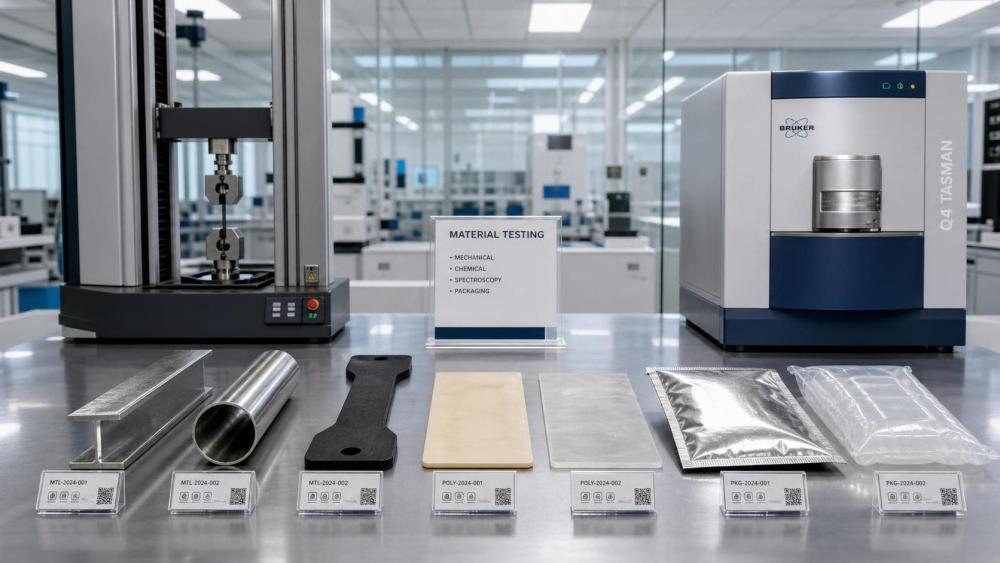
Choosing the right materials testing supplier affects product quality, workplace safety, and compliance outcomes.
A weak testing partner can delay approvals, miss defects, and create costly downstream risk.
A strong materials testing supplier brings reliable data, faster decisions, and clearer accountability.
This checklist is built for practical evaluation, not just vendor comparison on paper.
It helps you assess technical capability, reporting discipline, traceability, and service consistency before signing.
In real sourcing work, the best choice is rarely the cheapest lab.
It is the materials testing supplier that reduces uncertainty across the full product lifecycle.
Why Supplier Selection Matters More Than Ever
Testing now sits closer to procurement strategy than many teams expect.
Material failures can trigger recalls, site incidents, customer claims, or regulatory review.
That also means supplier qualification should go beyond a price list and a certificate copy.
Recent market shifts make this more urgent.
Supply chains are more fragmented, input materials change faster, and compliance expectations keep tightening.
A dependable materials testing supplier helps confirm whether incoming materials still match design intent.
That matters in metals, polymers, chemicals, building materials, packaging, and many mixed-material assemblies.
Start With Scope, Risk, and Testing Demand
Before comparing suppliers, define exactly what needs testing and why.
This step prevents overbuying, under-specifying, or selecting a lab with the wrong strengths.
Ask these internal questions first
- Are you testing raw materials, finished parts, or failure samples?
- Do you need routine batch verification or one-time qualification support?
- Which standards apply, such as ASTM, ISO, EN, UL, or customer-specific methods?
- How critical are turnaround time, chain of custody, and report defensibility?
- Will results support audits, claims, incident review, or supplier disputes?
A good materials testing supplier should fit the risk profile of the application, not just the test menu.
For example, destructive testing for structural components demands different controls than basic composition screening.
Core Checklist for Evaluating a Materials Testing Supplier
Once the scope is clear, move through the checklist in a disciplined way.
The points below cover the factors that usually separate dependable partners from risky ones.
1. Accreditation and standards coverage
Check whether the materials testing supplier holds relevant accreditation, especially ISO/IEC 17025.
Then verify the accredited scope, not just the certificate headline.
Some suppliers are accredited for selected methods only.
That detail matters when reports may be used for certification or dispute resolution.
2. Technical capability and equipment depth
Review equipment lists, calibration intervals, detection limits, and sample size constraints.
A qualified materials testing supplier should explain method suitability in plain language.
If answers stay vague, that is usually an early warning sign.
3. Staff expertise and interpretation quality
Testing data is only useful when interpretation is accurate and context-aware.
Ask who reviews results, who signs reports, and whether subject matter experts are available.
This is especially important for failure analysis, contamination review, and borderline compliance cases.
4. Traceability and sample control
A reliable materials testing supplier should have strong chain-of-custody procedures.
Sample labeling, storage conditions, retention periods, and contamination controls should be documented.
Without traceability, even correct test data can become hard to defend.
5. Turnaround time and surge capacity
Standard lead time matters, but emergency responsiveness matters too.
Ask how the supplier handles urgent release decisions, production holds, or incident-driven requests.
A strong materials testing supplier should show realistic capacity planning, not optimistic promises.
6. Reporting clarity and data integrity
Reports should be easy to read, technically complete, and audit-ready.
Look for test conditions, methods used, units, uncertainty where relevant, and pass-fail logic.
The best materials testing supplier will also flag limitations clearly.
Questions to Ask Before Shortlisting
Shortlisting gets easier when you ask direct, evidence-based questions.
- Can you share sample reports for similar materials and applications?
- Which tests are performed in-house, and which are subcontracted?
- How do you manage calibration, proficiency testing, and corrective actions?
- What is your escalation path when results appear inconsistent or inconclusive?
- How do you protect confidential formulas, drawings, or proprietary samples?
- What service levels can you commit to during peak demand?
A credible materials testing supplier should answer with specifics, documents, and process examples.
If replies stay generic, shortlist with caution.
Red Flags That Should Not Be Ignored
Supplier evaluation also means knowing when to walk away.
- Expired accreditation or unclear scope documentation.
- Frequent subcontracting without transparent disclosure.
- Reports lacking method details or reviewer identification.
- Unstable turnaround times without communication.
- Poor sample handling procedures or missing traceability records.
- Sales-driven claims that technical staff cannot support.
Even one of these issues can weaken confidence in a materials testing supplier.
Several together usually point to avoidable operational risk.
A Simple Scoring Model for Better Decisions
To compare options fairly, use a weighted scorecard instead of gut feeling.
This approach keeps the materials testing supplier decision grounded in business risk.
It also makes internal approval conversations much easier.
How to Make the Final Choice
At the final stage, compare the top candidates against real operating scenarios.
Ask how each materials testing supplier would handle a failed incoming batch, a disputed result, or an urgent release request.
Practical response quality often reveals more than presentations do.
If possible, start with a pilot project.
Use it to review communication speed, report consistency, and problem-solving behavior.
A capable materials testing supplier should feel like a technical partner, not just a transaction point.
Final Checklist for Confident Selection
- Confirm accredited methods match your exact testing needs.
- Verify technical depth, not just equipment ownership.
- Check report quality, traceability, and escalation procedures.
- Review service reliability under normal and urgent conditions.
- Use a weighted scorecard to compare each materials testing supplier fairly.
- Run a pilot before long-term commitment when the risk is high.
Choosing a materials testing supplier should never be reduced to price alone.
The right partner strengthens compliance, improves release confidence, and lowers hidden risk across sourcing and operations.
Use this checklist in your next review cycle, and turn supplier selection into a more controlled, defensible decision.
Weekly Insights
Stay ahead with our curated technology reports delivered every Monday.
Recommended News
 Supply ChainOct 15, 2026How to choose a supply chain strategy for unpredictable demand
 Supply ChainOct 14, 2026How to assess an industrial equipment supplier's spare parts support
 Supply ChainOct 14, 2026EU Updates CSDDD Guidance on Global Supply Chain Due Diligence
 Global SourcingOct 13, 2026How to assess industrial automation suppliers for legacy integration