FBX Jumps as Shanghai-Rotterdam Rates Reach $4,820
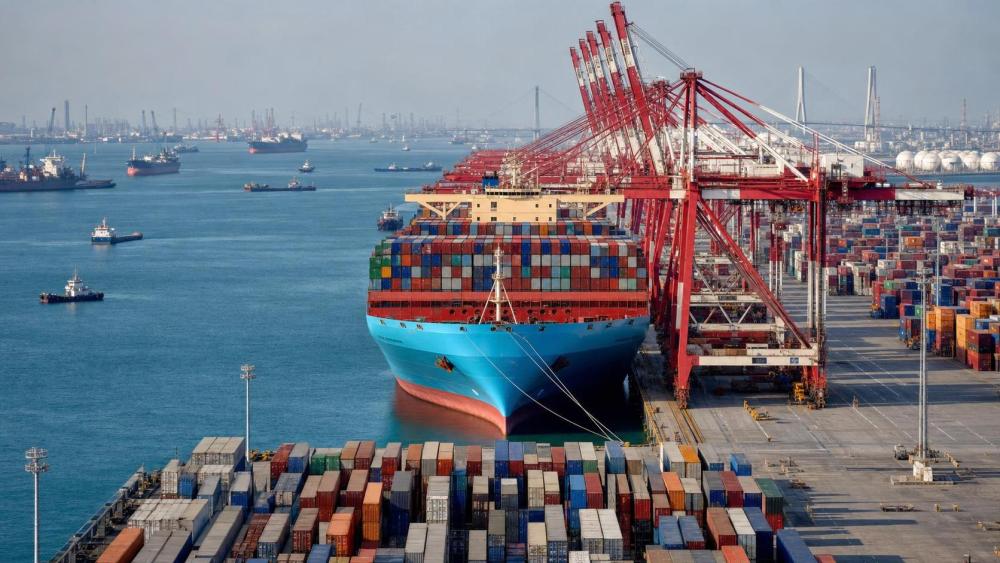
On 2026-07-04, the Freightos Baltic Index showed a sharp week-on-week rise in Shanghai-Rotterdam spot container rates, with the route reaching $4,820 per FEU. Beyond a price move, this development reflects the operational impact of routing disruption, capacity reallocation, and earlier booking behavior on trade execution rules in practice. For exporters, import buyers, manufacturers, and logistics providers, the issue is not only higher freight cost, but also changing delivery assumptions, booking discipline, and documentation timing across the supply chain.
What the latest FBX reading confirms
The reported change was a 22% week-on-week increase in Shanghai-Rotterdam container freight rates as of 2026-07-04. The level reached $4,820 per FEU, which the event summary states was the highest point since March 2026.
The confirmed drivers identified in the event summary were sustained Red Sea diversions, vessel capacity reallocation toward trans-Pacific routes, and early peak-season bookings by EU retailers. The Red Sea diversions were described as adding 12-14 days to transit time.
The same summary also states that air-rail intermodal alternatives were showing a median lead time of 28 days at that point.
Where the practical trade impact is likely to appear first
Shipment planning is tightening for exporters and direct trade sellers
From an industry perspective, exporters and direct trading companies are likely to feel the impact first because spot-rate volatility and longer transit time immediately affect booking windows, shipment scheduling, and delivery commitments. The operational pressure is likely to show up in booking confirmation timing, freight budget control, and the ability to keep shipping documents aligned with revised departure and arrival expectations.
What deserves closer attention is whether internal trade documents, customer delivery terms, and shipment milestone tracking are still matched to current route realities rather than to historical sailing assumptions.
Procurement and inventory decisions become more exposed for buyers and manufacturers
For procurement teams and processing manufacturers, the issue is not limited to freight cost. Analysis shows that when transit time extends and capacity is redirected elsewhere, purchase planning, replenishment cycles, and inbound material coordination all become more sensitive to delay. This may affect order release timing, supplier communication, and the practical feasibility of just-in-time delivery arrangements.
Companies in these roles should pay attention to whether procurement schedules, supplier delivery notices, and acceptance timing need adjustment to reflect longer route execution and less flexible booking conditions.
Supply chain service providers face higher execution and coordination pressure
For freight forwarders and broader supply chain service providers, the change matters because customers will expect updated routing, booking, and lead-time guidance under unstable shipping conditions. The impact is likely to concentrate in quotation validity, capacity reservation, mode selection, and customer communication around delivery risk.
Observably, the 28-day median lead time for air-rail intermodal options also matters as a practical benchmark, because it suggests that alternatives may not function as immediate substitutes in every urgent shipment scenario.
What companies should review now
Recheck delivery assumptions in contracts and order execution
Analysis shows that businesses moving goods on this corridor should review whether promised delivery timing, booking lead times, and internal escalation thresholds still reflect current operating conditions. Where shipment commitments depend on older transit assumptions, execution risk may rise even without any formal regulatory change.
Watch for changing documentary and coordination requirements
What deserves closer attention is the knock-on effect on commercial documents and shipping coordination. If departure plans change, companies may need tighter control over booking records, shipping notices, handover timing, and customer-facing delivery updates. The event summary does not provide detailed execution rules, so this should be treated as a monitoring point rather than a confirmed change in formal requirements.
Assess whether alternative modes actually fit the required timeline
The reported 28-day median lead time for air-rail intermodal service means companies should not assume that an alternative mode automatically restores schedule certainty. Procurement teams, exporters, and logistics managers should compare actual required delivery windows against current alternative-mode timing before revising transport plans.
Track buyer behavior and seasonal booking pressure
Because early peak-season bookings by EU retailers were listed among the confirmed drivers, companies should watch whether customer ordering behavior is pulling booking demand forward. Observably, this can affect when capacity must be secured and how early shipment plans need to be locked, even if no new formal trade rule has yet been announced.
Why this should be read as an execution signal, not just a freight headline
Analysis shows that this development is more relevant as a market execution signal than as a standalone pricing event. The confirmed facts point to a shipping environment in which route disruption, capacity shifts, and earlier bookings are changing the practical conditions under which trade is carried out. That does not by itself establish a new formal regulation, certification rule, or official trade restriction. However, it does signal that businesses may need to adjust compliance timing, delivery coordination, and procurement execution to stay aligned with actual transport conditions.
It is more appropriate to understand this as a live operational rule-of-execution issue: the underlying pressure is already visible in rates and lead times, while the downstream effects on contracting practice, tender wording, shipment scheduling, and customer service still require continued observation.
What this means for the market at this stage
At this stage, the reported surge in Shanghai-Rotterdam rates is best understood as a concrete sign that routing disruption and capacity reallocation are feeding directly into delivery planning and trade performance. The confirmed facts do not prove a settled long-term trend, but they do indicate that companies exposed to this lane should treat timing, booking, and fulfillment assumptions with more caution.
From an industry perspective, the most balanced conclusion is that this is neither a routine price fluctuation nor a fully defined rule change. It is a material execution development that can influence procurement, shipment coordination, and supply chain commitments, and it remains important to watch how the market and related trade practices respond.
Basis of this article and points requiring follow-up
This article is based on the user-provided news title, event date, and event summary concerning the Freightos Baltic Index movement on 2026-07-04. No specific official source link was provided in the input, so the underlying official source link remains to be verified on an ongoing basis.
For this type of event, source categories commonly relevant to later verification may include official notices, regulator releases, customs or trade authority information, industry association updates, standards body documents, and reporting from authoritative media. Further observation is still needed on any later policy detail, execution guidance, certification interpretation, tender document changes, market feedback, and how companies are adjusting in practice.
Tags
Weekly Insights
Stay ahead with our curated technology reports delivered every Monday.
Recommended News
 Supply ChainOct 15, 2026How to choose a supply chain strategy for unpredictable demand
 Supply ChainOct 14, 2026How to assess an industrial equipment supplier's spare parts support
 Supply ChainOct 14, 2026EU Updates CSDDD Guidance on Global Supply Chain Due Diligence
 Global SourcingOct 13, 2026How to assess industrial automation suppliers for legacy integration