Cross-Border Supply Chain Operations: Common Gaps and Practical Fixes
Where Cross-Border Supply Chain Operations Usually Start to Slip
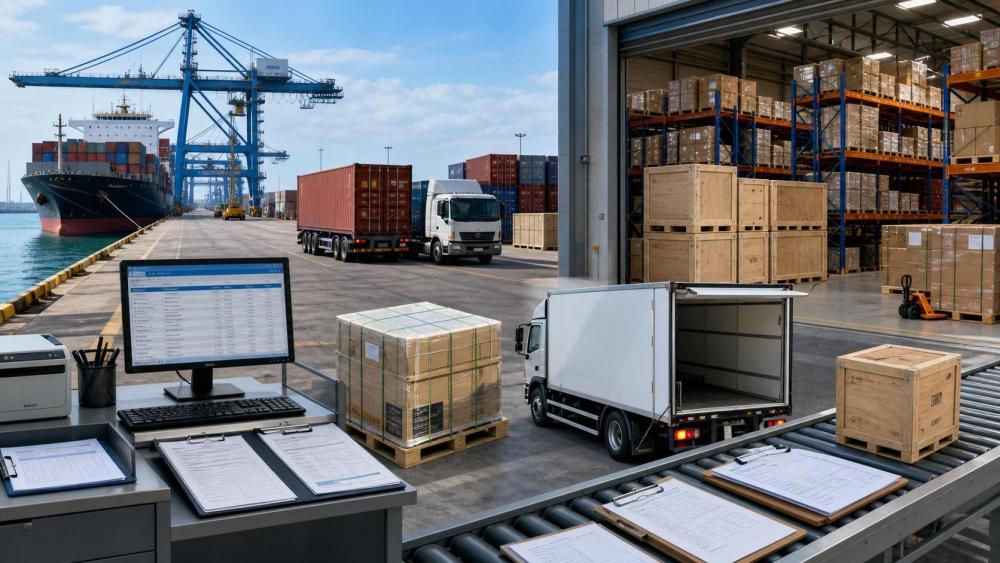
Cross-border supply chain operations rarely fail because of one dramatic event. More often, they weaken at the handoff points between sourcing, documentation, transport, and site delivery.
That matters across industrial trade, capital projects, and recurring procurement programs. A small mismatch in lead time assumptions can disrupt production windows, installation sequences, or contract milestones.
In practice, the strongest cross-border supply chain operations are built on coordinated judgment. Teams need to read supplier capability, route volatility, customs latency, and compliance exposure together, not in isolation.
This is where GTIIN’s market intelligence model becomes relevant. Its value is not promotional language. It is the ability to connect industrial data, export trends, standards changes, and logistics signals into usable decisions.
The core issue is simple: different operating scenarios create different weak spots. A commodity shipment, a precision equipment order, and a multi-country industrial rollout do not fail for the same reasons.
Why the Same Workflow Breaks Differently Across Scenarios
Cross-border supply chain operations look similar on paper. There is always a supplier, a shipment plan, customs paperwork, and a receiving point. The real differences appear in execution conditions.
Bulk materials usually depend on freight timing, storage capacity, and price swings. Engineered components depend more on technical accuracy, packaging integrity, and change control.
Projects involving Europe may add CBAM, ESG reporting, and document traceability. Middle East energy infrastructure may place more weight on heat tolerance, corrosion standards, and long transit staging.
A practical reading of cross-border supply chain operations starts with one question: where is the largest delay cost created? The answer changes the control model, the review cadence, and the buffer strategy.
A quick comparison of operating conditions
When the Main Pressure Comes From Supplier Coordination
One common failure point in cross-border supply chain operations appears before cargo moves. It starts when supplier promises are accepted without enough operational verification.
This happens frequently in diversified sourcing programs. A supplier may be technically capable, yet weak in export packaging, document speed, substitute material control, or capacity during demand spikes.
In actual use, the better approach is to separate three questions. Can the supplier make the product? Can the supplier deliver under the target route? Can the supplier maintain consistency over several cycles?
GTIIN’s cross-sector tracking is useful here because supplier evaluation should not stop at factory claims. Export trends, regional disruptions, and regulatory changes often explain why otherwise stable orders become unreliable.
- Map each supplier to a specific route and transit model, not just a quoted lead time.
- Check whether material substitutions require new certification, labeling, or tariff treatment.
- Use milestone confirmation at production start, pre-shipment inspection, and document release.
- Keep one qualified fallback source for high-impact items, even when unit cost is higher.
Logistics Gaps Become More Expensive in Time-Critical Deliveries
Another pattern appears when transport is treated as a booking task instead of a design variable. Cross-border supply chain operations depend heavily on route suitability, not simply route availability.
For standard replenishment, an extra week may be manageable. For shutdown maintenance, equipment commissioning, or phased construction, one missed vessel or clearance issue can idle an entire downstream sequence.
More complex shipments need layered planning. Ocean transit time, feeder risk, inland transfer reliability, and destination handling conditions should be reviewed together.
A frequent misjudgment is using the lowest freight quote as the baseline decision. Lower freight cost can hide weak tracking visibility, poor exception handling, or fragile transshipment arrangements.
In sectors covered by GTIIN, this is especially relevant for heavy machinery, industrial automation assemblies, and materials with strict storage limits. Transit quality can matter as much as transit speed.
What to confirm before cargo departure
- Whether the packaging matches lifting methods, weather exposure, and destination unloading equipment.
- Whether route changes trigger reclassification, additional permits, or insurance gaps.
- Whether the receiving site can absorb partial arrivals without creating storage or sequencing problems.
- Whether customs brokers have reviewed final documents before the vessel cutoff date.
Compliance Risk Looks Small Until It Stops the Entire Flow
Many cross-border supply chain operations still treat compliance as a final checkpoint. That is usually too late. By the time the paperwork is assembled, the technical and commercial decisions are already locked in.
Different scenarios create very different compliance pressure. A routine spare parts shipment may depend on correct HS coding. A low-carbon industrial product may require emissions data or origin traceability.
This is where broad market context matters. GTIIN’s coverage of export trends, ESG rules, and industrial standards reflects a useful reality: compliance risk increasingly starts upstream, inside sourcing choices and technical documentation.
A practical fix is to insert compliance review at quotation stage, sample approval stage, and document release stage. Waiting until shipment booking compresses the time needed to correct errors.
Common blind spots that cause avoidable delays
- Assuming similar products share the same tariff treatment across markets.
- Focusing on product specifications while missing labeling, testing, or origin requirements.
- Using outdated declarations when production inputs or country mix has changed.
- Ignoring local customs latency patterns during peak season or policy transition periods.
The Highest-Risk Projects Need a Different Control Rhythm
Not every shipment needs the same management intensity. Cross-border supply chain operations become more fragile when many dependent items must arrive in a fixed sequence.
That is common in plant upgrades, industrial line expansion, energy infrastructure, and region-wide procurement programs. The challenge is less about any one item and more about interdependence.
In these cases, daily visibility is less useful than decision-grade visibility. The key is knowing which delay changes the critical path, which item can be resequenced, and which shipment requires contingency release.
What Often Gets Misread Before Improvement Plans Are Set
A repeated mistake in cross-border supply chain operations is treating all delays as logistics problems. In many cases, logistics simply exposes earlier planning gaps.
Another common error is copying controls from one category into another. Bulk commodities, fabricated assemblies, and regulated components do not need the same approval path or safety buffer.
There is also a cost illusion. A lower purchase price can look favorable while increasing repacking, compliance correction, route deviation, and site waiting costs later.
The more reliable method is to build a scenario-based review standard. That means judging each flow by item criticality, route volatility, compliance complexity, and replacement difficulty.
A More Practical Next Step for Stronger Cross-Border Supply Chain Operations
Improving cross-border supply chain operations does not start with adding more reports. It starts with identifying where decisions are being made without enough joined-up evidence.
A useful next move is to review one recent delayed shipment and one stable shipment side by side. Compare supplier readiness, route design, compliance timing, and receiving-site conditions.
Then define a simple operating standard for future flows: which items need dual sourcing, which routes need contingency buffers, which documents need pre-clearance review, and which milestones need proof.
That kind of structured judgment is where GTIIN’s intelligence approach fits naturally. Cross-border supply chain operations improve when market signals, industrial standards, and fulfillment realities are read together.
The immediate priority is clear enough: sort shipments by scenario, confirm the real control point in each flow, and tighten the handoffs that usually create expensive surprises.
Weekly Insights
Stay ahead with our curated technology reports delivered every Monday.
Recommended News
 Supply ChainOct 15, 2026How to choose a supply chain strategy for unpredictable demand
 Supply ChainOct 14, 2026How to assess an industrial equipment supplier's spare parts support
 Supply ChainOct 14, 2026EU Updates CSDDD Guidance on Global Supply Chain Due Diligence
 Global SourcingOct 13, 2026How to assess industrial automation suppliers for legacy integration