Tariff Regulations Guide: Key Rule Changes to Watch in 2026
Trade policy is entering 2026 with more friction, more reporting demands, and less room for assumption. A practical tariff regulations guide is no longer just a customs reference. It is part of pricing discipline, supplier strategy, inventory planning, and board-level risk control across global trade.
For companies moving industrial inputs, finished goods, or capital equipment across borders, tariff rule changes can alter landed cost within weeks. They can also reshape sourcing logic, contract structure, and market access. That is why the rulebook for 2026 deserves early attention.
Why 2026 matters more than a routine tariff update
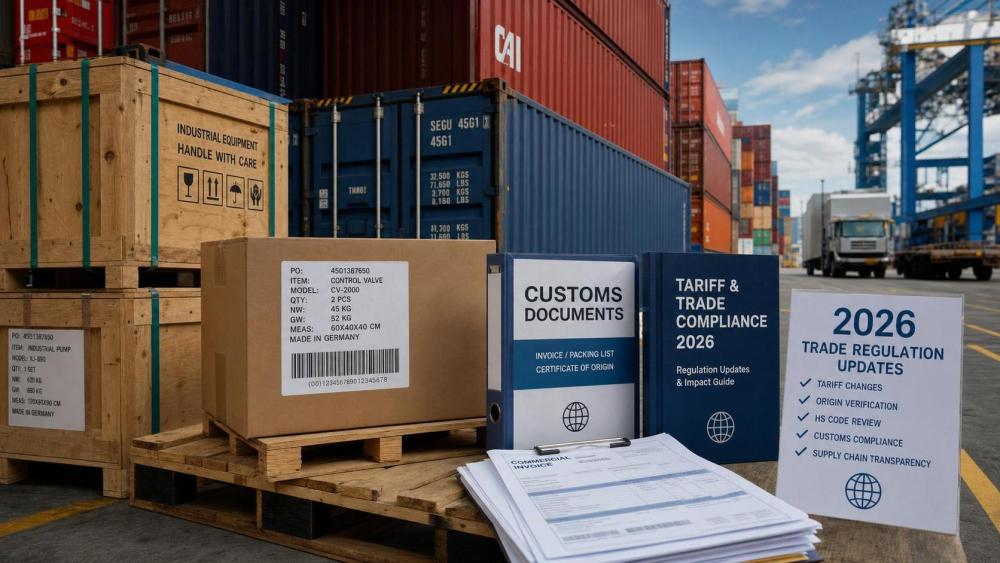
The coming cycle is different because tariffs are no longer isolated tax tools. They are increasingly tied to industrial policy, strategic security, emissions reporting, local content rules, and trade remedy enforcement.
In many markets, governments are moving from broad liberalization toward selective openness. Goods may still enter, but under tighter origin tests, sector-specific duties, or more aggressive customs scrutiny.
This shift affects more than import declarations. It changes margin forecasts, supplier negotiations, and investment timing. A strong tariff regulations guide helps convert policy noise into operational signals.
What a tariff regulations guide should actually cover
At its core, a tariff regulations guide explains how governments classify goods, assign duty rates, apply exceptions, and enforce compliance. In 2026, that baseline still matters, but the useful scope is broader.
It should connect tariff mechanics with origin documentation, valuation rules, anti-dumping actions, retaliatory tariffs, free trade agreement eligibility, and sector-linked policy changes.
For a business reviewing exposure, the real question is simple: which rule changes can materially affect landed cost, customs release speed, or sourcing flexibility during the next planning cycle?
The rules are technical, but the impact is commercial
A revised HS classification may look minor on paper. In practice, it can change duty rates, trigger licensing checks, or invalidate prior pricing assumptions.
A stricter origin interpretation may also reduce FTA benefits. That can turn a previously competitive sourcing lane into a margin problem almost overnight.
Key rule changes to watch in 2026
No single market will define 2026. The more important pattern is that several policy tracks are tightening at the same time. That overlap creates compound risk.
1. Customs valuation will face closer examination
Authorities are paying more attention to transfer pricing, assists, royalties, bundled services, and post-import adjustments. The old gap between tax logic and customs logic is narrowing.
For cross-border groups, that means declared values must withstand more consistent review. Pricing models that worked commercially may now require stronger customs defensibility.
2. Rules of origin will become more consequential
As tariff pressure rises, origin becomes a strategic filter. Customs agencies are expected to review transformation thresholds, supplier declarations, and regional content claims more carefully.
This is especially relevant in multi-country manufacturing chains, where components move through several jurisdictions before final assembly.
3. Sector-specific duties may expand
Steel, aluminum, batteries, electronics, clean energy equipment, chemicals, and selected machinery remain exposed. Some governments may broaden protective tariffs in response to overcapacity concerns or subsidy disputes.
A tariff regulations guide for 2026 should therefore track both general schedules and industry-targeted actions.
4. Carbon-linked border measures will influence tariff decisions
Carbon border systems are not identical to tariffs, but they create tariff-like cost effects. Europe remains central here, especially where reporting and embedded emissions data shape import economics.
The practical result is clear: tariff planning can no longer ignore climate compliance.
5. Trade remedies will move faster
Anti-dumping and countervailing investigations are becoming more active in several jurisdictions. Provisional duties can arrive before supply chains have time to adjust.
That makes early-warning monitoring more valuable than year-end review.
Where companies usually feel the impact first
Tariff changes tend to show up in a few operational pressure points before they appear in annual strategy decks. Those signals are worth watching closely.
These pressure points explain why tariff review has moved beyond trade departments. It now sits closer to finance, operations, and strategic planning.
How to read tariff changes across sectors
A broad tariff regulations guide must work across commodity flows, industrial components, and finished equipment. The specific exposure differs by category.
Bulk commodities and upstream materials
Here, duty changes often combine with freight swings and port delays. Even a modest tariff revision can distort delivered cost because volumes are large and contracts are thin-margin.
Intermediate manufacturing inputs
Origin and classification are usually the main pain points. Parts with multiple technical variants can be misclassified if engineering, procurement, and customs data are not aligned.
Capital equipment and advanced machinery
These shipments often involve accessories, software, installation elements, and after-sales packages. Customs valuation can become more complicated than the invoice headline suggests.
Why better intelligence matters before the rule takes effect
The biggest tariff mistakes usually happen before goods move. They begin with incomplete supplier data, weak product mapping, or delayed attention to policy proposals.
That is where structured trade intelligence becomes useful. GTIIN follows tariff friction, export trends, customs latency, and industrial policy signals across more than 50 sectors.
Its value is not in repeating public notices. It is in connecting regulation to supply chain consequences, especially where sourcing, compliance, and macro policy intersect.
A workable framework for 2026 decisions
A useful tariff regulations guide should support action, not just awareness. In practice, a four-part review is often enough to expose the largest risks.
- Map high-value and high-volume import lines by HS code, origin, and destination market.
- Test landed-cost sensitivity under alternative duty, carbon, and freight assumptions.
- Check whether supplier declarations, valuation logic, and FTA claims can survive audit review.
- Build fallback options for exposed categories before a formal duty announcement arrives.
This work does not require perfect certainty. It requires disciplined visibility, comparable scenarios, and faster escalation when policy signals harden.
What deserves attention next
Heading into 2026, the strongest position comes from treating tariff monitoring as part of commercial planning. The essential question is not whether duties may change, but where the next rule change will hit first.
Start with the product lines that carry the most margin risk, the trade lanes with the weakest documentation, and the markets where policy is moving fastest. A current tariff regulations guide, paired with sector-level intelligence, gives that review a more reliable foundation.
From there, the next step is straightforward: compare exposure by region, validate customs assumptions, and turn tariff uncertainty into a decision framework that can hold through 2026.
Weekly Insights
Stay ahead with our curated technology reports delivered every Monday.
Recommended News
 Supply ChainOct 15, 2026How to choose a supply chain strategy for unpredictable demand
 Supply ChainOct 14, 2026How to assess an industrial equipment supplier's spare parts support
 Supply ChainOct 14, 2026EU Updates CSDDD Guidance on Global Supply Chain Due Diligence
 Global SourcingOct 13, 2026How to assess industrial automation suppliers for legacy integration