Heavy Equipment Cost Trends: What Is Driving Price Shifts?
Heavy equipment cost trends are no longer moving in a single direction
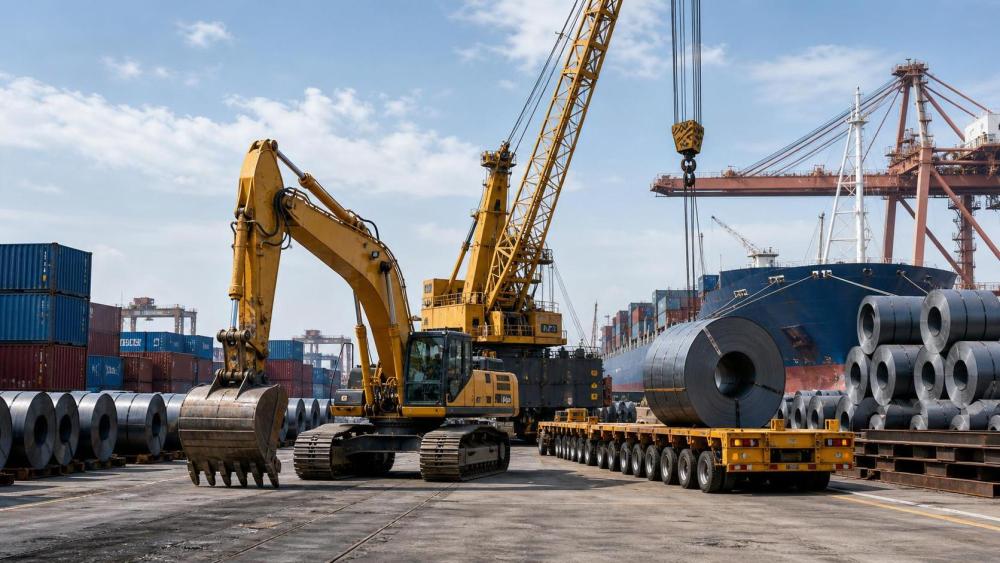
Heavy equipment cost trends have become a strategic signal, not just a pricing issue. Machinery values now reflect a wider mix of industrial pressure points across sourcing, logistics, regulation, and end-market timing.
That shift matters because capital planning is getting harder. A unit price today says less about long-term ownership cost than it did a few years ago.
From recent market behavior, the clearer pattern is divergence. Some categories remain elevated, while others show selective easing tied to freight normalization or softer regional demand.
For GTIIN, this kind of movement fits a broader industrial reality. Cross-border equipment pricing now sits at the intersection of commodity cycles, compliance changes, supplier capacity, and infrastructure investment priorities.
In that environment, heavy equipment cost trends are best read as a combined market indicator. They reveal where supply chains are tightening, where risk is being repriced, and where procurement assumptions need revision.
Why price shifts have become more visible this cycle
The latest round of heavy equipment cost trends is being shaped by layered forces rather than one dominant shock. This is why pricing often feels inconsistent across regions and machine classes.
Steel and alloy inputs still matter, especially for earthmoving, lifting, and mining equipment. Even when benchmark metals retreat, contract lag and inventory carry costs slow the pass-through effect.
Powertrain complexity is another factor. Engines, hydraulics, electronic controls, and sensor packages now account for a larger share of final value, especially in machines built for emissions compliance and remote diagnostics.
Labor pressure also remains embedded in production cost. It is no longer only about wage inflation, but about skilled assembly shortages, service technician scarcity, and longer commissioning cycles.
Freight has cooled from its peak in many lanes, yet global delivery costs are still uneven. Oversized cargo handling, port congestion risk, inland transport bottlenecks, and insurance premiums continue to reshape landed cost.
A more subtle signal comes from supplier risk pricing. Manufacturers and distributors increasingly build contingency into quotes when lead times, sanctions exposure, or component concentration look unstable.
The main forces behind current heavy equipment cost trends
Demand is changing the shape of the market, not just the volume
One reason heavy equipment cost trends look fragmented is that demand is no longer synchronized. Public infrastructure spending, energy transition projects, and resource extraction cycles are pulling equipment needs in different directions.
In some markets, fleets are being renewed because older units struggle to meet emissions rules or digital fleet visibility requirements. That supports pricing for newer models with telematics, fuel optimization, and compliance-ready configurations.
Elsewhere, buyers are extending asset life and turning to rebuilt or rental channels. That can soften demand for some new units, while increasing parts and service revenue pressure across the ownership cycle.
This is where heavy equipment cost trends become more than a dealer conversation. They reflect how capital discipline is interacting with project timing, financing conditions, and confidence in future utilization.
GTIIN’s cross-sector lens is useful here because heavy machinery pricing does not move in isolation. It tracks upstream commodity stress and downstream project economics at the same time.
The impact is spreading across valuation, risk, and supply chain planning
The practical impact of heavy equipment cost trends is showing up first in project evaluation. Capital budgets built on last-year assumptions can break quickly when transport, compliance, and delivery timing all move together.
Residual value assessment is also getting harder. Machines with higher technology content may hold value better in regulated markets, yet face steeper depreciation where service support or software compatibility is weak.
Supplier comparison has become more complex as well. A lower quoted price may hide higher landed cost, delayed delivery, limited spare parts access, or stricter payment terms driven by risk exposure.
In actual transactions, the most overlooked issue is cost timing. Price escalation clauses, currency exposure, and staged freight surcharges can alter final acquisition cost after an internal approval is already made.
Where closer scrutiny usually changes the decision
- Factory price versus delivered cost, especially for oversized or specialized units.
- Lead time reliability versus nominal lead time on the quotation.
- Compliance readiness for target export or operating markets.
- Expected maintenance burden during the first three years of operation.
- Exposure to single-source components, software modules, or regional service bottlenecks.
What the next phase of heavy equipment cost trends may look like
The next phase is unlikely to deliver a clean reset. Heavy equipment cost trends should remain mixed because the industry is balancing softer freight conditions against persistent compliance and labor costs.
A broad decline in prices looks less likely than selective normalization. Standardized equipment with healthier inventories may stabilize, while highly specified machines continue to command firmer pricing.
Another point worth watching is regional policy spillover. Carbon rules, localization requirements, and trade controls can all shift sourcing patterns before they visibly change list prices.
This is consistent with GTIIN’s wider view of industrial restructuring. Equipment costs increasingly reflect where production is being relocated, where compliance burdens are rising, and where infrastructure financing remains active.
Used equipment values also deserve attention. When new machine availability improves, secondary market premiums may cool, but not evenly across machine age, certification status, and refurbishment quality.
A stronger response starts with better market reading
The most effective response to heavy equipment cost trends is not to chase the lowest number. It is to build a clearer picture of full cost, timing risk, technical fit, and exposure across the asset lifecycle.
That means refreshing cost models more often, especially where quotations rely on imported components or cross-border delivery. Static annual assumptions are now too slow for many equipment categories.
It also helps to separate temporary volatility from structural repricing. Freight spikes may reverse faster than emissions upgrades, digital control systems, or skilled labor constraints.
A practical next step is to monitor five signals together: metal inputs, freight lanes, lead times, regulatory updates, and secondary market turnover. Looking at only one usually produces the wrong conclusion.
Heavy equipment cost trends will keep influencing project viability, supplier risk, and sourcing strategy. The businesses that read those signals early will make better timing decisions and avoid expensive misalignment later.
For ongoing evaluation, the priority is clear: compare scenarios, test assumptions by region, and track whether today’s quote reflects a short-term fluctuation or a lasting market shift.
Weekly Insights
Stay ahead with our curated technology reports delivered every Monday.
Recommended News
 Supply ChainOct 15, 2026How to choose a supply chain strategy for unpredictable demand
 Supply ChainOct 14, 2026How to assess an industrial equipment supplier's spare parts support
 Supply ChainOct 14, 2026EU Updates CSDDD Guidance on Global Supply Chain Due Diligence
 Global SourcingOct 13, 2026How to assess industrial automation suppliers for legacy integration