
FBX Falls as Red Sea Relief and Rail Capacity Expand
On July 9, 2026, the latest Freightos Baltic Index update pointed to a sharp week-on-week decline in spot freight rates on the Shanghai-Rotterdam route, driven by easing pressure from Red Sea diversions and additional Asia-Europe cold-chain rail services via Horgos and Erenhot. For importers, exporters, procurement teams, and supply chain service providers, this matters not simply as a price move, but as a signal that transport availability and routing conditions are changing in ways that can affect delivery planning, sourcing discipline, and execution requirements for time-sensitive industrial cargo.
What the July 9 update confirmed
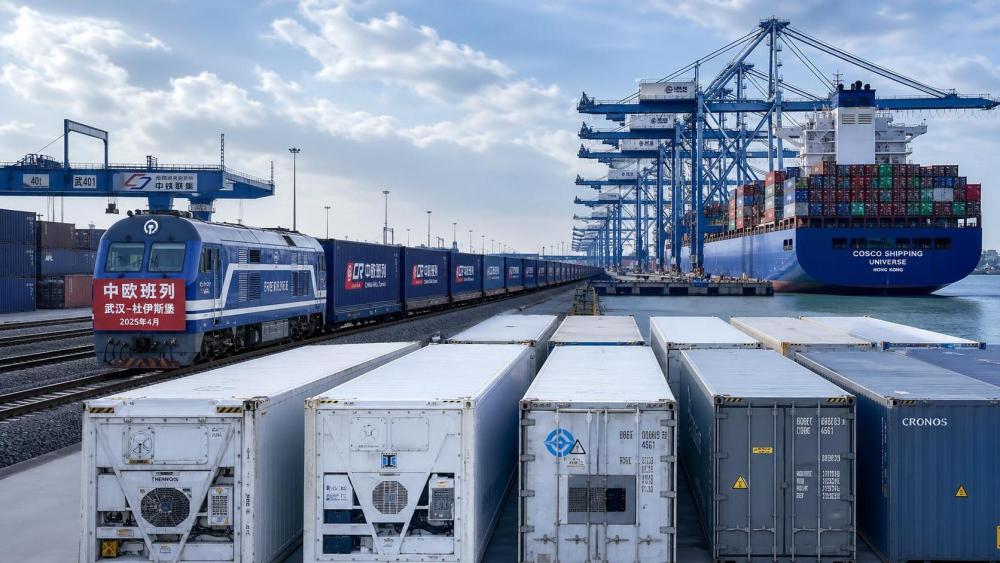
The confirmed facts are limited and clear. The Freightos Baltic Index on July 9, 2026 showed that spot freight rates from Shanghai to Rotterdam fell 18% week on week. The stated drivers were relief in Red Sea diversion pressure and the launch of three new Asia-Europe cold-chain rail services operating through the Horgos and Erenhot border crossings. The update also indicated a 22% increase in transport capacity. Based on the event summary, this change is expected to reduce overall logistics costs for European importers, with particular relevance for procurement of electromechanical equipment and precision components that require higher delivery speed.
Why the shift matters across trade and delivery workflows
Import planning is becoming more flexible
From an industry perspective, European importers may be affected first because lower spot freight rates and added rail capacity can change landed-cost calculations and shipment timing decisions. The main impact is likely to appear in transport mode selection, purchasing schedules, and supplier coordination. What deserves closer attention is whether procurement teams need to revise shipping terms, internal delivery windows, and supporting shipment documentation to reflect a wider set of feasible routing options.
Time-sensitive manufacturing supply chains may see execution changes
For manufacturers and industrial buyers handling electromechanical equipment and precision parts, the relevance is tied to delivery reliability as much as freight cost. Analysis shows that when rail capacity expands while maritime pressure eases, planning assumptions around lead times may need review. In practical terms, businesses should pay attention to order sequencing, inbound scheduling, technical document readiness, and any product-specific handling requirements linked to cold-chain or higher-control logistics arrangements where applicable.
Logistics service providers face new operational expectations
Supply chain service providers may need to respond by updating routing proposals, booking strategies, and customer communication. The potential effect is not limited to price quoting. Observably, service providers may also need to track whether clients require revised delivery commitments, document sets, or cargo handling instructions as capacity conditions change. This is especially relevant where service promises are tied to transit sensitivity, after-sales timing, or traceability obligations.
Export-side coordination may require closer document discipline
For exporters shipping into Europe, the immediate issue is less about a single rate movement and more about whether buyers begin to adjust purchase timing and delivery expectations. That can affect booking cadence, shipment release schedules, and coordination between production, packing, and export documentation. Companies should therefore watch for changes in customer requests related to dispatch timing, technical files, inspection records, and other delivery-supporting materials that may become more time-critical when transport options improve.
What companies should watch now
Review transport assumptions in contracts and purchase execution
Analysis shows that companies should reassess whether current procurement and sales execution still reflect actual transport conditions. Where pricing or delivery commitments were built around tighter capacity or longer diversions, teams may need to review booking assumptions and shipment planning language, while avoiding any premature conclusion that conditions have fully stabilized.
Check whether faster movement changes documentation timing
What deserves closer attention is the timing of shipping papers, technical documents, inspection materials, and any customer-required compliance files. Even without a new formal regulation stated in the input, a change in routing availability can create stricter execution expectations in practice, especially for higher-value industrial goods with narrow installation or production windows.
Track buyer-side procurement behavior in sensitive product categories
Observably, electromechanical equipment and precision components are the categories specifically mentioned as likely to benefit. Companies serving these segments should monitor whether customers begin to shorten order lead assumptions, request different transport combinations, or revise delivery milestones in tenders and purchase orders. At this stage, such shifts should be treated as items to monitor rather than confirmed market-wide outcomes.
Continue watching for follow-through in operating practice
The input confirms a capacity and pricing change, but it does not provide detailed execution rules, official implementation language, or downstream procurement instructions. Businesses should therefore continue to monitor whether carriers, rail operators, buyers, or service partners translate this shift into revised operating requirements, service conditions, or bid documentation expectations.
How this should be read at this stage
Analysis shows that this development is better understood as an execution signal than as a fully settled structural change. The combination of reduced Red Sea diversion pressure and added rail capacity suggests that some earlier logistics constraints may be easing, but the available information does not confirm a permanent reset in transport conditions. For industry participants, the practical takeaway is to treat this as a meaningful market and routing signal that can influence cost, delivery planning, and procurement behavior, while continuing to verify how consistently the change holds in actual trade operations.
The practical takeaway for the market
At this point, it is more appropriate to understand the July 9 update as evidence that transport conditions on the Asia-Europe corridor have become less strained in the short term, with possible benefits for cost and timing in selected industrial categories. The significance lies in execution: importers, exporters, manufacturers, and logistics providers may need to recalibrate delivery assumptions and document readiness, but the broader rule and market implications still require continued observation rather than fixed conclusions.
Basis of this article and what still needs verification
This article is based on the user-provided news title, event date, and event summary. For events of this kind, relevant source types typically include official notices, regulatory releases, customs or trade authority information, industry association updates, standard-setting documents, and reporting from established trade media. A specific official source link was not provided in the input, so further verification remains necessary. Areas that still require continued observation include any detailed implementation language, procurement-side execution changes, bid document adjustments, market feedback, and how businesses ultimately apply these logistics changes in day-to-day operations.
Tags
Weekly Insights
Stay ahead with our curated technology reports delivered every Monday.
Recommended News
 Supply ChainOct 15, 2026How to choose a supply chain strategy for unpredictable demand
 Supply ChainOct 14, 2026How to assess an industrial equipment supplier's spare parts support
 Supply ChainOct 14, 2026EU Updates CSDDD Guidance on Global Supply Chain Due Diligence
 Global SourcingOct 13, 2026How to assess industrial automation suppliers for legacy integration