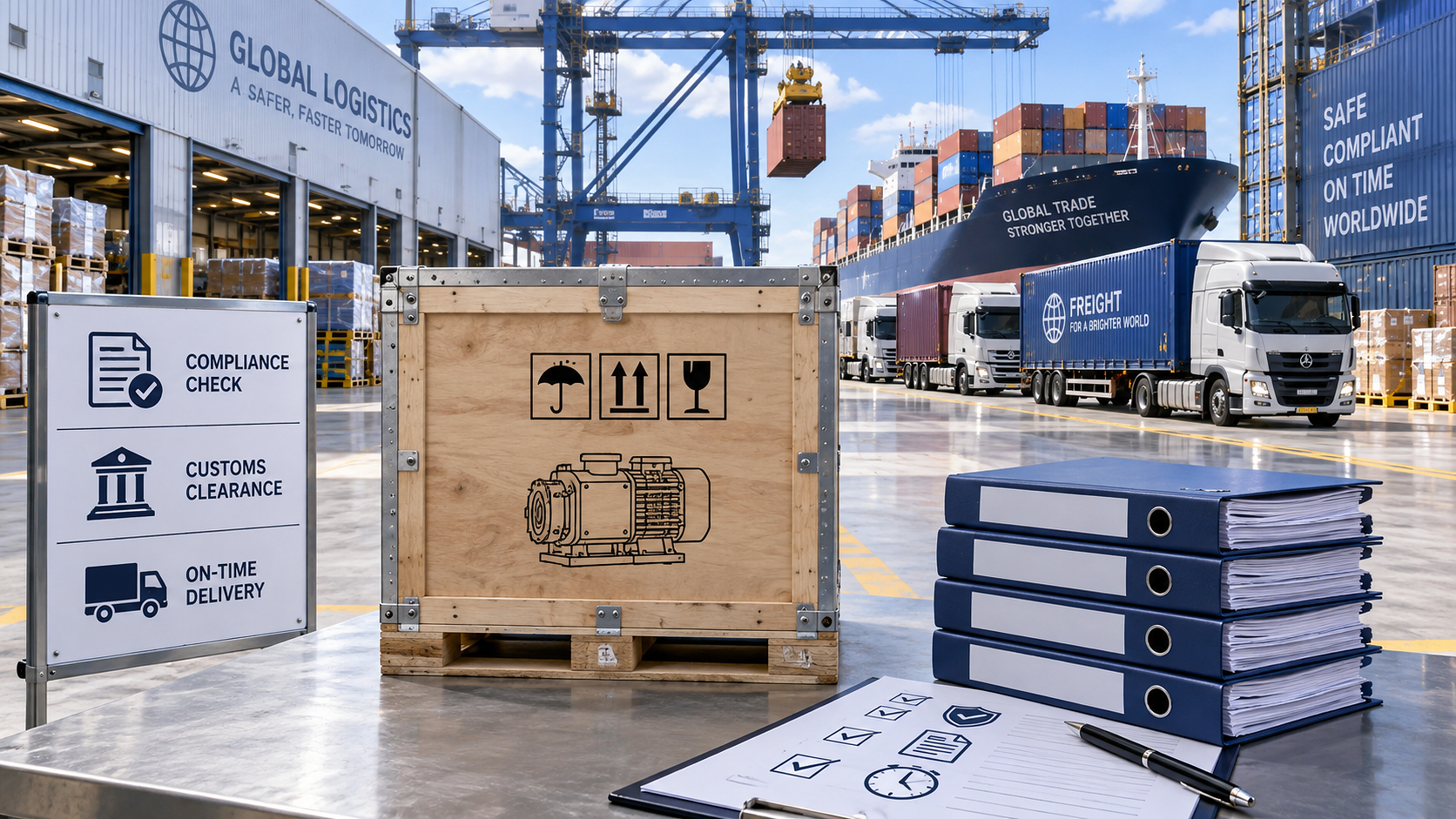
Cross-Border Supply Chain Consulting: Cost Risks and Selection Criteria
Cross-Border Supply Chain Consulting Is Not Freight Advice in Disguise
Cross-border supply chain consulting is often misunderstood because the term gets used for very different services. Some firms mean customs brokerage support. Others mean freight tendering, sourcing assistance, or a light-touch market entry report. For a business decision-maker, that ambiguity is exactly where cost risk begins. If the advisory scope is vague, the company may buy a consulting engagement expecting structural answers on supplier risk, landed cost exposure, and network resilience, only to receive operational recommendations that solve one shipment problem at a time.
In practice, serious cross-border supply chain consulting sits between strategy and execution. It helps companies understand how sourcing geography, transport mode, inventory policy, trade compliance, tariff treatment, supplier capability, payment terms, and local infrastructure interact. That interaction matters more than any single rate quote. A low ex-works purchase price can still turn into an expensive supply decision once duties, port congestion, customs delay, packaging loss, quality fallout, demurrage, and working-capital drag are included.
The strongest advisors do not treat global sourcing as a procurement-only issue. They read it as a chain of physical, regulatory, and financial dependencies. That is why a credible consulting process usually starts with mapping nodes and failure points, not with recommending a new forwarder or asking for last quarter’s freight invoices.
Where the Real Cost Risks Usually Hide
Most companies already track visible costs: unit price, freight, duty, warehousing, and perhaps broker fees. The harder part is seeing the costs that sit outside the purchase order but still erode margin. Cross-border supply chain consulting becomes valuable when it exposes those hidden layers early enough for management to act.
One common blind spot is false landed-cost confidence. A sourcing team may compare suppliers by quoted price and nominal transport cost, but fail to model variability. If the route depends on transshipment through unstable ports, or if the product category is vulnerable to inspection delay, the expected cost on paper will not match the delivered cost in the P&L. For regulated goods, errors in product classification, origin determination, or documentation completeness can trigger penalties, rework, or clearance holds. None of these outcomes are rare enough to be ignored simply because they do not happen every week.
Another hidden cost sits in specification mismatch. This is especially relevant in industrial procurement, where packaging, moisture protection, labeling, palletization, corrosion control, or batch traceability can be as commercially important as the core product itself. A supplier that meets the nominal product requirement but cannot meet export packaging or destination compliance requirements may create recurring loss through damage claims, production interruption, or emergency local substitution.
There is also the cost of organizational fragmentation. Many global supply problems are not caused by a single supplier failure. They come from purchasing, logistics, finance, quality, and legal teams using different assumptions. Consulting that only optimizes transport without reconciling Incoterms, insurance responsibility, payment milestones, and inspection ownership usually leaves the most expensive disconnects untouched.
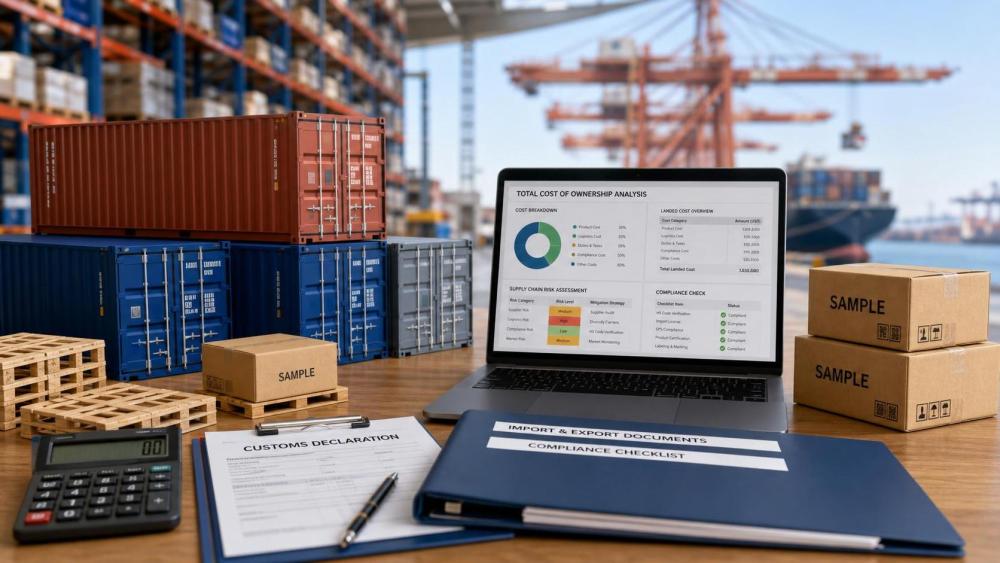
What Good Consulting Actually Evaluates
A useful way to assess cross-border supply chain consulting is to look at the variables it includes before it gives advice. If the methodology is credible, it should cover at least four layers: commercial structure, physical flow, compliance exposure, and resilience under disruption.
Commercial structure means more than purchase price. It includes currency exposure, payment terms, minimum order quantities, tooling commitments, contract flexibility, and the cost of switching. Physical flow covers route design, transport mode, lead-time variability, packaging integrity, handling sensitivity, and destination capacity constraints. Compliance exposure includes customs classification, product standards, import restrictions, sanctions screening where relevant, origin documentation, and sector-specific regulatory checkpoints. Resilience is the layer many buyers ask for but do not define clearly. In operational terms, it means how quickly the chain can recover when one node fails, what inventory buffers are rational, whether alternate suppliers are actually qualified, and whether demand can be reshaped without severe service damage.
This is where firms like GTIIN add a more strategic lens. In complex industrial trade, decision quality improves when micro-level conditions are connected to macro shifts. Material handling limits, port velocity, rail or ocean reliability, customs latency, and regulatory change should not be reviewed in isolation. They need to be read together, because the sourcing decision that works under stable freight conditions may fail under tariff friction, regional compliance tightening, or prolonged transit volatility.
Selection Criteria: How to Judge a Consulting Partner Before You Sign
The first question is not whether the consultant has global reach. It is whether they can work at the level of your actual sourcing problem. A firm may have a strong international brand and still be weak in the product, route, or regulatory details that matter to your category. Cross-border supply chain consulting should be evaluated against decision relevance, not presentation polish.
A practical selection screen looks like this:
One more test is worth applying: ask how the firm handles uncertainty. Good advisors do not promise precision where the market cannot support it. They usually work with scenarios, thresholds, and decision triggers. That is a stronger sign of competence than a single-point forecast dressed up as certainty.
Common Misreadings That Distort the Buying Decision
A frequent mistake is assuming that consulting value should be measured only by direct freight savings. That may be appropriate for a narrow logistics procurement project, but it is too small a frame for a cross-border advisory mandate. In many cases, the bigger gain comes from avoiding a bad sourcing structure, reducing compliance exposure, tightening supplier qualification, or shortening recovery time after disruption. Those benefits do not always show up as a clean line-item discount, but they are commercially real.
Another mistake is treating local presence as a substitute for analytical strength. Being on the ground in a sourcing market can help with supplier verification and operating context, but local access alone does not produce a sound cross-border model. Without strong trade intelligence, category knowledge, and a disciplined way to compare scenarios, local inputs can become anecdotal rather than decision-grade.
There is also a tendency to overvalue broad network size. Large contact networks matter, especially in fragmented markets, but they should not be confused with neutral judgment. Decision-makers should look for advisory independence: whether the consultant is compensated by supplier placement, whether freight relationships shape recommendations, and whether research conclusions are separated from transactional incentives.
What a Decision-Maker Should Ask Before Appointing a Consultant
The right discussion is less about credentials and more about operating logic. Ask what cost categories they model beyond unit price and freight. Ask how they distinguish between temporary disruption and structural sourcing risk. Ask where they expect your current process to be producing hidden expense or unmanaged exposure. Ask what evidence they need from your side to produce a decision that finance, procurement, and operations can all defend.
It is also worth asking what they will not do. A serious consulting partner should be able to state the limits of the assignment. For example, they may identify customs risk but not provide legal opinions, or they may assess supplier capability without acting as the contracting party. That boundary-setting is useful. It reduces confusion later and makes the deliverable more credible, not less.
For companies operating across multiple jurisdictions, the strongest advisory support often comes from firms that combine trade intelligence with industrial context. That is especially true where procurement decisions are affected by export trends, changing environmental rules, infrastructure constraints, or regional political shifts. The value is not in having more information than everyone else. It is in knowing which information changes the decision and which only creates noise.
A Better Standard for Selection
If you are selecting a cross-border supply chain consulting partner, the useful standard is straightforward: can they convert fragmented market signals into a decision framework your business can actually use? That means clarifying total cost, surfacing operational and compliance risk, testing sourcing assumptions under stress, and showing where resilience is worth paying for and where it is not.
The firms worth engaging are rarely the ones that make global trade sound simple. They are the ones that can explain complexity without hiding behind it, identify the cost risks your internal teams are not measuring consistently, and narrow the decision to a set of defensible options. In cross-border supply chains, that level of clarity is not a nice-to-have. It is often the difference between a sourcing strategy that survives volatility and one that only works in a spreadsheet.
Weekly Insights
Stay ahead with our curated technology reports delivered every Monday.
Recommended News
 Supply ChainSep 22, 2026How heavy equipment lifecycle data can reduce unexpected downtime
 Supply ChainSep 21, 2026How export regulations affect logistics lead times and delivery risk
 Industry StandardsSep 20, 2026What evidence is needed to pass a carbon reporting audit?
 Industry StandardsSep 19, 2026When does manufacturing compliance consulting reduce audit risk?