How rising costs are reshaping the industrial trade outlook
A sourcing plan can look sound at the start of a quarter and become unreliable before the first shipment leaves the port. A manufacturer may secure a familiar supplier, approve a forecast, and calculate an acceptable landed cost—only to face a higher energy surcharge, a revised freight quote, a longer customs hold, or a compliance-related documentation request. The immediate issue is not merely that one input became more expensive. It is that the assumptions connecting procurement, production, logistics, and sales no longer move at the same speed.
The industrial trade outlook is increasingly shaped by the way costs interact rather than by any single price movement. Businesses that respond only by pressing suppliers for lower unit prices can protect a purchase order while weakening supply continuity, quality control, or future negotiating leverage. A more durable response is to treat cost pressure as a supply-chain design problem: identify which costs are variable, determine where exposure is concentrated, and make sourcing, inventory, contract, and logistics decisions using total delivered risk rather than invoice price alone.
Why the cost equation has become harder to manage
Industrial trade has always involved more than the price of steel, chemicals, components, machinery, or packaging. What has changed is the degree to which several cost layers can shift at once. Raw material inputs can move with energy markets, regional supply constraints, weather disruptions, and production curtailments. Transport expenses may change according to equipment availability, route congestion, fuel conditions, carrier capacity, and the need to reroute cargo. Meanwhile, finance teams may see a different picture because exchange-rate movement, longer payment cycles, insurance adjustments, and working-capital requirements alter the true cost of buying abroad.
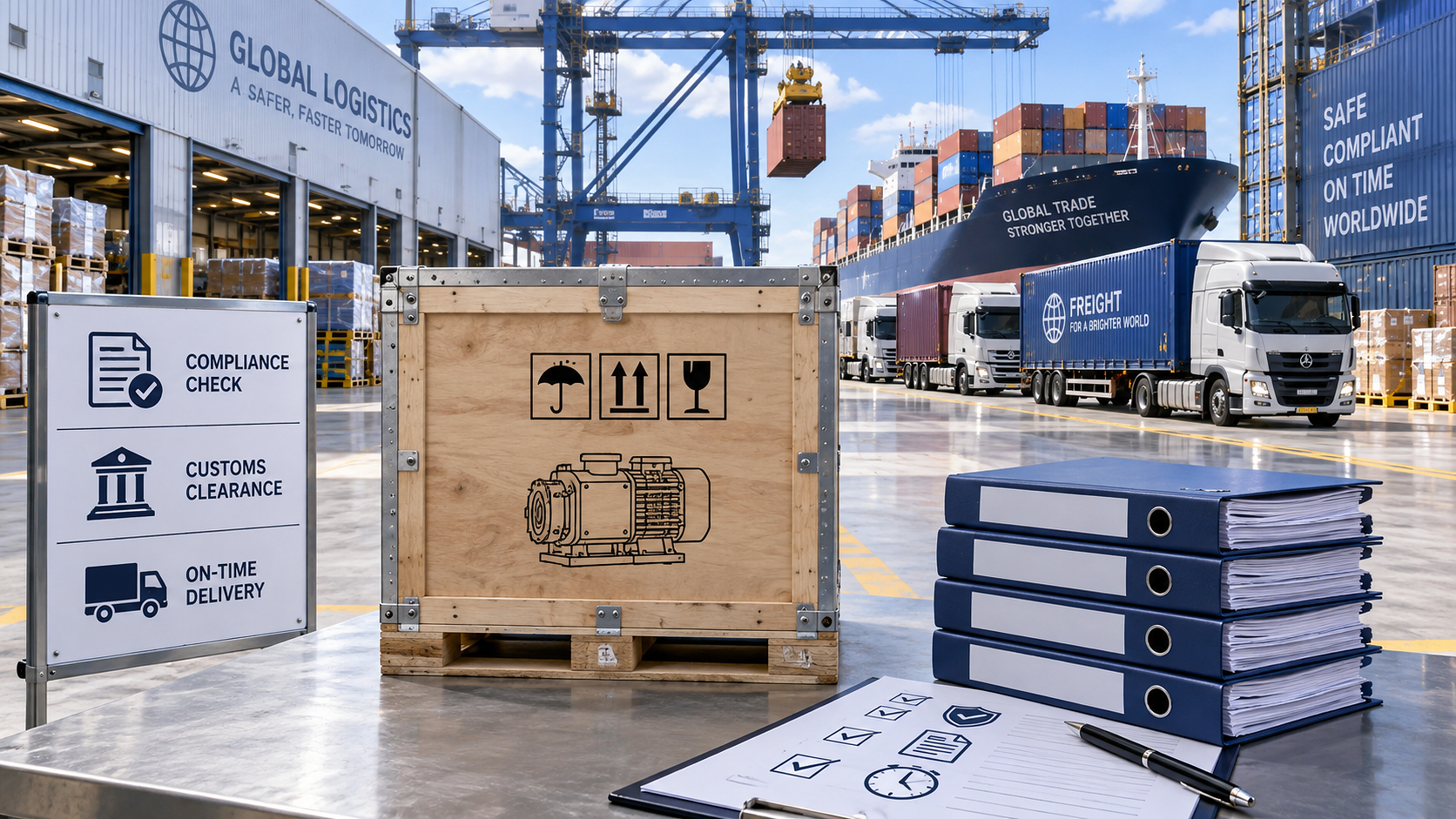
Compliance is another source of cost variability that is often underestimated during early sourcing discussions. Product classification, origin documentation, technical files, environmental declarations, labeling rules, screening requirements, and customs procedures can each affect time and cost. Even when no new duty applies, incomplete or inconsistent documentation can create delays that trigger storage fees, production downtime, expedited transport, or missed delivery commitments.
For decision-makers, the practical lesson is simple: the lowest quoted price is no longer a reliable proxy for the lowest commercial exposure. The industrial trade outlook cost calculation must include the probability and consequence of disruption, not just the arithmetic of a quoted unit rate.
Where cost pressure first becomes visible
Cost escalation rarely arrives as a single announcement. It usually appears through operational symptoms. Procurement may receive shorter quote-validity periods. Suppliers may request price-review clauses on materials that were previously fixed. Logistics teams may find that a route remains available but has less predictable transit timing. Operations may begin asking for additional safety stock because a small delay now risks stopping a production line. Finance may notice that inventory value is rising even when sales volume is unchanged.
These signals should not automatically trigger a supplier change. They should trigger a structured review of the affected cost chain. A useful starting point is to separate exposure into four categories:
- Input exposure: material, energy, labor, and processing costs embedded in the supplied item.
- Movement exposure: freight, handling, insurance, port charges, inland transport, and transit uncertainty.
- Regulatory exposure: duties, product requirements, origin rules, documentation burden, and customs delays.
- Commercial exposure: currency, payment terms, minimum order quantities, inventory carrying cost, and contractual flexibility.
Breaking the problem down this way prevents a common error: treating every increase as a procurement failure. A supplier may be operating efficiently while the route, currency, or documentation burden is driving the total cost increase. Conversely, a stable freight rate can hide a supplier-side issue if material substitution, lower inspection intensity, or extended lead times are being used to maintain a quoted price.
Use landed cost as a decision tool, not a retrospective report
Many organizations calculate landed cost after goods arrive, mainly for accounting or margin analysis. That is useful, but it is too late to guide a sourcing decision. The stronger approach is to build a forward-looking landed-cost range before committing volume. Rather than using one fixed estimate, teams can model a base case, a manageable stress case, and a severe-but-plausible disruption case.
The model does not need to be excessively complex. It should be detailed enough to show which assumption matters most. For a cross-border industrial purchase, the calculation may include:
A range-based model is particularly important for inputs with volatile material or energy content. A supplier’s quote may be competitive under normal conditions but become unattractive once expedited replenishment, extra inventory, or a different shipping mode is required. The goal is not to forecast every movement perfectly. It is to avoid making a volume commitment that only works under one narrow set of assumptions.
Do not confuse supplier diversification with resilience
When costs rise, adding suppliers is often the first response. Diversification can reduce dependence on a single facility, country, route, or material source. But it can also create new costs: additional qualification work, smaller order volumes, more quality audits, inconsistent specifications, fragmented logistics, and a larger administrative workload. A second supplier that relies on the same upstream material source, the same port corridor, or the same regulatory classification may offer less protection than expected.
Resilience depends on whether the alternatives are genuinely independent at the points that matter. Before treating a supplier as a backup, examine several layers:
- Where does the supplier obtain its critical raw materials or subcomponents?
- Can the same tooling, specifications, and inspection requirements be maintained?
- Which export routes, ports, carriers, and inland transport links are used?
- Does the supplier have capacity that is actually available during market stress?
- Would switching require new testing, customer approval, or revised technical documentation?
This review often leads to a more nuanced strategy than simply splitting volume equally. A business may retain a primary supplier for technically sensitive components, use a qualified regional source for urgent replenishment, and hold a limited buffer for parts with long replacement cycles. The best allocation depends on the cost of interruption, not on a standard percentage split.
When inventory is a hedge—and when it becomes another cost problem
Higher uncertainty often pushes companies toward larger inventories. This can be sensible for parts that can stop production, have long replenishment lead times, or require extensive qualification before substitution. Yet inventory is not free protection. It ties up cash, requires storage capacity, can introduce handling losses, and may become obsolete when specifications or customer demand change.
The question is not whether stock should increase across the board. It is which items justify a deliberate buffer. A practical segmentation method is to assess each item using three operational factors: time to replace, consequence of shortage, and ease of substitution. A low-value component with a long lead time and no approved alternative may deserve more attention than a high-value item that can be sourced locally within days.
Inventory decisions should also account for shelf life, corrosion sensitivity, packaging requirements, and storage conditions. Industrial products may appear durable but still degrade through moisture exposure, contamination, temperature variation, or packaging damage. Building stock without confirming preservation controls can convert supply protection into quality risk.
Contract terms now matter as much as quoted prices
In a more volatile cost environment, procurement contracts need to explain how changes will be handled before they occur. Vague language such as “prices subject to market conditions” leaves too much room for disagreement. At the same time, demanding an absolute fixed price for every input may encourage suppliers to build a large risk premium into the offer or reduce willingness to allocate capacity during tight conditions.
More useful agreements define the scope of change. Where price adjustments are appropriate, the contract can identify the relevant input category, review frequency, evidence required, notice period, and any limits on adjustment. For logistics-sensitive purchases, it may also clarify responsibility for booking, insurance, demurrage exposure, shipment readiness, and documentation accuracy.
Commercial flexibility has value when it is reciprocal. Buyers may seek options to adjust delivery schedules, while suppliers may need reasonable forecast visibility to secure materials and production slots. A contract that recognizes both realities is often more stable than one focused only on forcing a lower starting price.
Reassess regional sourcing without assuming local is always cheaper
Rising transport and compliance costs have made regional sourcing more attractive in many categories. Shorter routes can reduce transit uncertainty, simplify communication, and lower the stock needed to protect operations. Regional suppliers may also make site visits, corrective action, and engineering collaboration easier.
However, proximity does not automatically produce a lower total cost. Local or regional suppliers may face higher labor, energy, or capacity costs. They may have less scale, depend on imported materials themselves, or lack specialized production capability. A decision based solely on freight savings can overlook these constraints.
The relevant comparison is not “global versus local.” It is whether the regional option reduces enough risk, lead time, and working-capital burden to justify any unit-price difference. For standardized, bulky, or frequently replenished goods, shorter supply chains may offer a strong advantage. For highly specialized components with stringent performance requirements, a distant established supplier may remain preferable if technical quality and continuity are well controlled.
Build a regular cost-risk review into operating decisions
Rising costs become more damaging when information arrives late or remains isolated within separate teams. Procurement may know that a supplier plans an adjustment, logistics may see route pressure, and finance may monitor currency exposure, but no one may combine those signals before a purchasing decision is made. A recurring cross-functional review helps turn fragmented observations into actions.
The review should focus on exceptions rather than becoming a broad market discussion. Examine items with expiring quotes, declining supplier delivery performance, high freight sensitivity, uncertain origin documentation, or inventory coverage below the replacement lead time. For each item, assign a concrete next step: validate classification, request a revised capacity commitment, qualify an alternative source, reserve transport earlier, adjust stock policy, or renegotiate a price-review mechanism.
The purpose is not to eliminate volatility, which is impossible in industrial trade. It is to make sure that a cost increase is understood early enough to preserve options. The companies most likely to protect margins are not necessarily those with the lowest purchase prices. They are the ones that can see where cost pressure is forming, distinguish temporary movement from structural change, and act before a single disrupted shipment becomes an expensive operational crisis.
Weekly Insights
Stay ahead with our curated technology reports delivered every Monday.
Recommended News
 Supply ChainSep 22, 2026How heavy equipment lifecycle data can reduce unexpected downtime
 Supply ChainSep 21, 2026How export regulations affect logistics lead times and delivery risk
 Industry StandardsSep 20, 2026What evidence is needed to pass a carbon reporting audit?
 Industry StandardsSep 19, 2026When does manufacturing compliance consulting reduce audit risk?