When should environmental monitoring and compliance be outsourced?
Environmental monitoring and compliance should be outsourced when the internal team can no longer produce reliable, timely, and defensible evidence of compliance without distracting from core operations. The decision is usually triggered by a change in regulatory exposure, operating complexity, reporting burden, or technical risk—not simply by a desire to reduce headcount.
A familiar pressure point occurs when a facility expands production, enters a new jurisdiction, modifies a process, or begins supplying customers with stricter environmental requirements. Sampling schedules become harder to maintain, emissions data must be reconciled across sites, permits need interpretation, and a missed reporting deadline can affect plant continuity, customer qualification, or cross-border trade. In those conditions, outsourcing environmental monitoring and compliance can be more controlled than trying to stretch an internal team beyond its competence or available capacity.
Start with the real question: can the organization defend its compliance position?
The relevant test is not whether employees can collect readings or complete a reporting form. It is whether the organization can demonstrate, under inspection or contractual review, that its environmental controls are appropriate, records are traceable, methods are suitable, and corrective actions are properly managed.
Internal management may remain practical for a stable, low-risk operation with a limited number of permits, mature procedures, trained personnel, and predictable monitoring requirements. Outsourcing becomes more appropriate when those conditions no longer hold. A specialist provider can contribute technical methods, regulatory interpretation, calibrated equipment, independent review, laboratory coordination, and surge capacity. However, outsourcing does not transfer legal accountability. Management still needs to understand what is being monitored, what results mean, and whether action is required.
Signals that internal environmental monitoring is becoming a business risk
One missed test does not automatically justify a managed service. Repeated warning signs, especially where they overlap, deserve a structured decision. The strongest indicators are usually operational rather than theoretical.
- Monitoring is dependent on one or two individuals. If a resignation, absence, or production emergency would stop sampling, recordkeeping, or reporting, the control system is fragile.
- Requirements have expanded faster than internal expertise. This may follow a new discharge permit, an air-emissions source, hazardous-material handling, waste classification issue, or a new facility in another regulatory jurisdiction.
- Data cannot be traced from field reading to final report. Missing chain-of-custody records, uncertain instrument calibration, inconsistent units, and disconnected spreadsheets make it difficult to defend results.
- Environmental tasks regularly lose priority to production demands. When operators postpone inspections, samples, or corrective actions because of output pressures, compliance risk is being managed informally.
- Internal teams are interpreting complex rules without specialist support. Regulations often require judgment about applicability, monitoring frequency, thresholds, record retention, notifications, and reporting formats. A basic understanding is not always enough.
- Audits repeatedly uncover documentation or follow-up gaps. Findings that recur after closure often indicate a system design problem, not an isolated employee error.
- Customers, lenders, insurers, or buyers request more evidence. Supplier assessments can require environmental data that goes beyond minimum permit obligations, including waste handling records, emissions inventories, material declarations, or incident controls.
These conditions matter because environmental nonconformance rarely stays within the environmental function. It can delay a shipment, interrupt a production line, complicate a site acquisition, weaken a supplier approval process, or create uncertainty during contract negotiations. The financial exposure may come less from a single measurement result than from the inability to prove that risks were controlled.
Situations where outsourcing is usually justified
A new site, acquisition, or cross-border expansion
Expansion often creates a temporary but intense compliance workload. Before operations stabilize, the business may need to identify applicable permits, establish baseline monitoring, map waste streams, prepare reporting responsibilities, and align local practices with corporate requirements. Internal teams may understand the existing operation well but lack local regulatory knowledge or the capacity to build a second system quickly.
Outsourcing is useful here when it is scoped as a transition: regulatory gap assessment, monitoring plan design, initial sampling, compliance calendar setup, and training for site personnel. The organization should avoid treating the provider as a substitute for local operational ownership. Site leaders still need clear responsibilities for daily controls, incident escalation, maintenance coordination, and access to records.
Variable or technically demanding monitoring needs
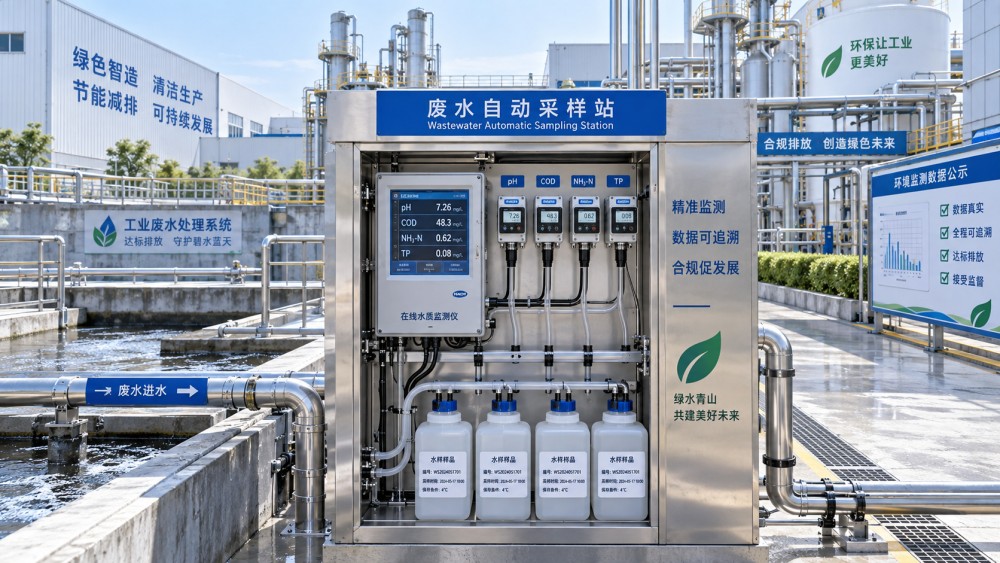
Some facilities do not need a full-time internal environmental specialist, yet their requirements are too technical to handle casually. Examples may include periodic stack testing, groundwater sampling, wastewater characterization, noise assessment, soil investigation, stormwater inspection, or waste profiling. Purchasing and maintaining specialized equipment, training staff, validating methods, and retaining technical competence may be uneconomic when demand is intermittent.
External support can provide access to appropriate instruments and qualified sampling procedures without permanently carrying those resources in-house. The key procurement issue is method suitability. A provider should be able to explain sampling locations, frequency, preservation requirements, quality controls, analytical limitations, and how deviations will be documented. A low-price offer is not comparable to a robust service if it omits those controls.
Reporting pressure and fragmented data
Environmental data often originates from meters, inspection forms, laboratory certificates, maintenance records, waste contractors, utility invoices, production systems, and incident logs. The challenge is not collecting more information; it is establishing a reliable record that connects data to regulatory and operational decisions.
Outsourcing may be justified where different sites use inconsistent formats, reporting deadlines are difficult to track, or management cannot obtain a clear view of open obligations. A provider can support data validation, calendar management, permit registers, submission preparation, and evidence retention. Yet an external party should not become the only place where compliance knowledge resides. Contract terms should require accessible records, understandable reports, and a handover process if the engagement changes.
Independent review after a near miss or enforcement concern
When an internal issue has raised questions about monitoring integrity, an independent review can be more valuable than adding another internal check. This does not require assuming misconduct. A near miss may result from unclear ownership, a misunderstood permit condition, uncalibrated equipment, poor contractor coordination, or a process change that was never assessed for environmental impact.
In this situation, external work should be evidence-led. The scope may include reviewing permit conditions against actual operations, tracing selected data points through the reporting process, examining corrective-action closure, and identifying where controls fail under normal production pressure. The outcome should distinguish immediate remediation from system changes that prevent recurrence.
Do not outsource a broken governance model
Outsourcing can improve execution, but it cannot resolve unclear internal authority. A provider may collect samples and prepare reports, yet someone within the organization must decide whether a result requires process adjustment, notification, capital expenditure, maintenance intervention, or senior escalation.
Before selecting a service model, assign internal ownership for four matters: legal accountability, operational response, approval of submissions, and budget authority for corrective action. Without this, external reports can become administrative documents rather than management tools.
Choosing between a specialist project and an ongoing managed service
A project-based engagement suits a defined problem: a compliance audit before an acquisition, a permit application, a wastewater investigation, an emissions inventory, or a monitoring program redesign. The deliverable should be concrete, such as a gap register, sampling plan, corrective-action roadmap, or reporting package. This option works when the internal team can manage ongoing obligations once the technical issue is resolved.
An ongoing managed service is more suitable when the workload is recurring and failure consequences are material. It may cover scheduled monitoring, contractor coordination, document control, reporting support, compliance calendar management, and periodic management review. This arrangement is valuable where several sites need consistent procedures but do not justify dedicated specialist staff at each location.
A hybrid model is often more resilient. Site personnel perform routine visual checks, maintain day-to-day controls, and report operational changes. External specialists handle technical monitoring, independent verification, regulatory updates, and complex submissions. This keeps environmental awareness close to operations while reducing dependence on internal expertise for tasks that require specialized capability.
What to test before appointing a provider
Procurement should assess more than credentials and pricing. Environmental monitoring and compliance services are only useful when the provider’s process fits the organization’s actual risks, assets, operating hours, and reporting obligations.
- Define the compliance boundary. List sites, processes, permits, emissions sources, discharge points, waste streams, reporting obligations, and relevant customer requirements. A vague brief produces a vague scope.
- Ask how the provider handles data quality. Clarify calibration controls, sampling protocols, chain of custody, laboratory interfaces, review procedures, record retention, and treatment of invalid or missing data.
- Check response arrangements. Determine who is contacted when an abnormal result appears, how quickly it is escalated, who interprets it, and who has authority to act outside normal business hours.
- Require transparent deliverables. Reports should identify the applicable obligation, result, method, exception, action owner, and due date. Management should not have to infer the compliance status from technical attachments.
- Confirm coverage during disruption. Sampling schedules, reporting deadlines, and incident support should not depend on a single assigned consultant. Ask about continuity, subcontracting, and replacement arrangements.
- Protect access to data. The organization should retain access to source records, laboratory reports, monitoring histories, and working files throughout the contract and after termination.
Cost should be evaluated against control failure, not only service fees
Internal delivery may appear less expensive because payroll costs are already budgeted. That comparison can be misleading when employees require training, equipment, calibration, software, laboratory coordination, regulatory interpretation, and time away from their primary roles. Conversely, a broad outsourced contract may be wasteful if the actual need is limited to periodic specialist testing.
A more useful comparison separates fixed capability from variable demand. Estimate the internal resources needed to maintain competent coverage throughout the year, including absence and turnover. Then compare that with the cost of external services under realistic conditions: routine work, extra sampling after an abnormal result, site expansion, audit support, and emergency response. The preferred model is the one that provides dependable control at the level of risk the organization carries.
Set review points after outsourcing begins
Once a provider is appointed, management should review performance through operational evidence rather than general satisfaction. Useful questions include whether scheduled work was completed on time, whether data exceptions were explained, whether corrective actions closed at the required level, whether regulatory changes were identified early, and whether site teams understand the findings.
Environmental monitoring and compliance should be brought back in-house, or moved to a hybrid model, when the organization has built stable expertise, monitoring needs become sufficiently routine, and internal governance can maintain the same standard of evidence. Outsourcing remains the stronger choice when specialist judgment, independent verification, multi-site coordination, or fluctuating technical demand would otherwise create gaps that the business cannot credibly defend.
Tags
Weekly Insights
Stay ahead with our curated technology reports delivered every Monday.
Recommended News
 Market TrendsSep 28, 2026What freight market insights reveal about carrier capacity shifts
 Supply ChainSep 27, 2026How importers can reduce customs delays through trade compliance
 Market TrendsSep 25, 2026Which industrial market research trends signal a shift in demand?
 Supply ChainSep 24, 2026How trade compliance screening prevents costly shipment delays