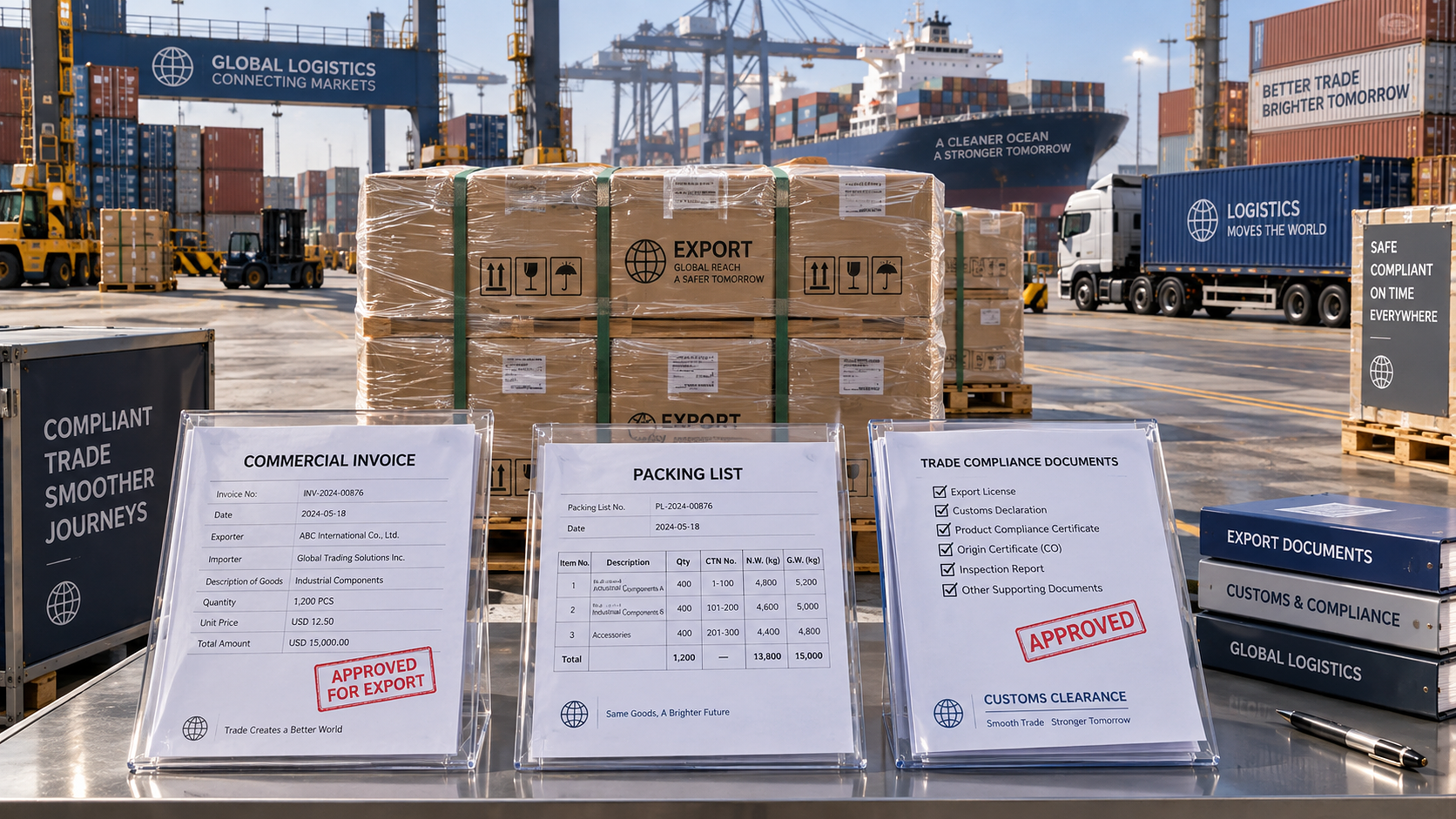
What evidence is needed for a successful compliance verification?
A successful compliance verification is built on evidence that can answer four questions without ambiguity: what requirement applied, what was done to meet it, how the result was checked, and whether the evidence belongs to the specific product, process, site, or shipment under review.
For quality and safety managers, a certificate alone rarely settles those questions. A credible file connects the applicable rule to controlled procedures, objective test or inspection results, traceable records, and a response when something went wrong. The evidence must also be current enough to represent the condition being verified. An outdated laboratory report, an unsigned checklist, or a supplier declaration that cannot be linked to a batch may look complete in a document folder while failing under audit.
Start with the requirement, not the document list
Compliance verification becomes weak when teams collect standard documents before defining the obligation they are meant to prove. The required evidence changes depending on whether the issue concerns product safety, worker safety, environmental controls, import requirements, customer specifications, or an internal management-system commitment.
A verification file should identify the relevant requirement at a usable level of detail. This may include the regulation, standard, contractual clause, technical specification, permit condition, or internal procedure. It should also state the scope: the product family, manufacturing line, facility, supplier, destination market, or time period covered.
That scope matters because evidence is often overextended. A material test report for one grade of steel does not automatically validate another grade. A safety training record for one shift does not prove training across an entire site. A certification issued to a parent company may not cover a subcontractor or a different production location. Before accepting any evidence, reviewers should ask whether its scope matches the claim being made.
The most defensible approach is to create a requirement-to-evidence matrix. It does not need to be elaborate. Its purpose is to make gaps visible before an auditor, customer, regulator, or border authority finds them.
Evidence must be objective, traceable, and relevant
Objective evidence is information that can be independently examined. It is stronger than a statement that a process “follows requirements” because it shows what was observed, measured, approved, or performed. Test data, calibrated instrument records, signed inspection reports, supplier certificates, shipping documents, and controlled electronic logs can all serve this role. Their value depends on context and traceability.
Traceability is the thread that joins individual records into a verification argument. A test report should identify the sample, lot, date, method, laboratory or operator, acceptance criteria, and result. A production record should show which inputs, equipment settings, personnel authorizations, and inspections relate to the finished output. For safety controls, the connection may run from a risk assessment to a control measure, then to inspection frequency, corrective action, and follow-up evidence.
Relevance is equally important. A technically sound report may be unsuitable if it tested the wrong configuration, used a method not accepted by the applicable requirement, or predates a material or process change. Quality teams should examine the basis of every critical record rather than treating documents with formal headings or stamps as automatically valid.
In cross-border supply chains, relevance can also depend on the destination market and the role of the economic operator. Product marking, declarations, labeling, restricted-substance records, safety data, origin records, and customs documentation may be governed by different obligations. One consolidated supplier package may help, but it should not replace a market-specific review.

The core evidence categories in an audit-ready file
A useful compliance file usually combines several types of evidence. The exact mix should be risk-based, but the following categories form the backbone of most verification work.
1. Requirement and design evidence
This category establishes what the product or operation was intended to meet. It may include approved specifications, drawings, bills of materials, hazard analyses, risk assessments, regulatory applicability assessments, and records of design review. Where requirements are translated into internal controls, the translation should be visible. For example, a product safety requirement should connect to test criteria, acceptance limits, labeling content, and release controls.
For changed products or processes, change-control records are especially important. They show whether a revised component, alternative supplier, modified formulation, software update, or relocated production step received the required compliance review before release. Without this link, earlier approval evidence may no longer represent the item currently being supplied.
2. Supplier and material evidence
Supplier declarations, certificates of analysis, material certificates, approved-supplier records, and incoming-inspection results are common starting points. They should not be treated as interchangeable. A supplier declaration may state conformity, while a certificate of analysis may show measured properties for a particular batch. Each has a different evidentiary role.
Where purchased material affects safety, regulatory status, or critical performance, the file should show how the organization qualified the supplier and how it maintains confidence after approval. This can include supplier audits, periodic document review, incoming testing, quality agreements, change-notification requirements, and escalation rules. A supplier’s management-system certificate can support confidence in its controls, but it does not by itself prove that every delivered batch meets a specific product requirement.
3. Process-control and competence records
Many compliance failures arise in execution rather than design. Procedures, work instructions, equipment maintenance logs, calibration records, sanitation or housekeeping records, monitoring logs, and training records demonstrate that a control was available and operating.
Records should show more than attendance. Where competence affects product quality or safety, organizations should be able to demonstrate that personnel were authorized for the relevant task and that instructions were available in a usable form. For high-risk activities, verification may include practical observation, qualification testing, supervision records, or periodic reassessment.
Electronic systems can improve record integrity, but only if access, changes, approvals, and retention are controlled. A digitally completed checklist is weak if entries can be altered without an audit trail or if the system cannot identify who made the change and when.
4. Inspection, testing, and measurement evidence
Inspection and test records provide direct evidence of conformity, provided the method is suitable and the result can be trusted. The record should identify the item tested, applicable requirement, method, sampling basis, result, acceptance decision, and reviewer where appropriate.
Measurement credibility also depends on the equipment and method. Calibration status, uncertainty where relevant, equipment suitability, sample handling, and laboratory competence may all affect whether a result can support a compliance claim. Testing conducted by an external laboratory should be reviewed for scope, method, sample identity, report limitations, and whether the report covers the exact product configuration.
A passing result is not always enough. Sampling plans should be proportionate to risk. A single sample may be acceptable for a stable, well-controlled attribute, but it may provide little assurance for a variable process, a safety-critical characteristic, or a newly introduced supplier. The verification strategy should explain why the chosen frequency and sample size are appropriate.
5. Certification, declarations, and external approvals
Certificates, declarations of conformity, permits, licenses, and third-party audit reports can be valuable evidence, particularly where an independent body has assessed a defined scope. Their limitations need to be understood. Review the issuing organization, validity period, scope statement, product or site coverage, exclusions, and any conditions attached to the approval.
A certificate should be corroborated where the risk justifies it. For example, an organization may compare a supplier’s certificate scope with purchase specifications, verify that the manufacturing location is included, and retain current batch or shipment records. For regulated products, a declaration should be supported by the technical documentation and testing required for that declaration, rather than existing as a standalone form.
Corrective-action evidence separates a controlled system from a paper system
No operation remains free of deviations. Auditors often place substantial weight on how an organization recognizes, contains, investigates, and prevents them. A complete nonconformance record generally shows the issue, affected scope, immediate containment, disposition decision, root-cause analysis, corrective action, assigned responsibility, target date, and effectiveness check.
The effectiveness check is frequently the missing piece. Closing an action because a revised instruction was issued does not prove that the underlying failure was removed. More persuasive evidence may include follow-up inspection results, repeat audit findings, retraining verification, trend data, revised control limits, or a defined period without recurrence. The appropriate evidence depends on the risk and the nature of the failure.
Safety-related deviations deserve particular discipline. Where a control failure could expose workers, users, or the public to harm, the record should make clear whether work was stopped, affected product was segregated, authorities or customers were notified where required, and risk assessments were updated. Delayed documentation can obscure decision-making and weaken the organization’s ability to demonstrate responsible control.
Common evidence failures that undermine verification
- Documents without linkage: certificates, reports, and checklists are retained, but no identifier connects them to the relevant batch, site, process, or release decision.
- Expired or superseded evidence: a record was valid when issued but no longer reflects the applicable standard, supplier status, process, or product configuration.
- Uncontrolled copies: teams rely on locally saved procedures, screenshots, or spreadsheets without revision control or approval history.
- Missing negative evidence: only passing results are retained, while failures, rework, deviations, and rejected materials are absent from the file.
- Unsupported declarations: a conformity statement exists, but underlying tests, assessments, material data, or technical records cannot be produced.
- Incomplete outsourced-process oversight: the organization holds an external provider’s certificate but lacks evidence that outsourced work is defined, monitored, and accepted.
These failures are often symptoms of fragmented ownership. Engineering may hold technical files, procurement may retain supplier records, operations may own process logs, and quality may maintain audit evidence. Compliance verification requires a controlled way to assemble those records around a specific claim. A shared repository can help, but governance matters more than storage location: record owners, approval rights, retention periods, retrieval expectations, and escalation paths should be clear.
Build evidence around risk and change
Not every requirement warrants the same level of documentation. High-consequence controls, regulated characteristics, new suppliers, new markets, major process changes, recurring defects, and outsourced critical activities normally require deeper evidence and more frequent review. Stable, low-risk controls may be verified through routine monitoring and periodic sampling.
A practical review question is: what changed since this evidence was accepted? Changes in material source, factory location, production equipment, test method, legislation, labeling, packaging, transport route, or intended market can all affect the validity of an earlier conclusion. A compliance file should make it easy to identify which changes trigger reassessment and who has authority to release the revised condition.
The strongest verification files are not the largest ones. They make a clear, traceable case that the applicable requirements were identified, controls were implemented, conformity was checked with suitable evidence, and deviations were handled in a disciplined way. When a quality or safety manager can follow that chain from requirement to result without relying on assumptions, the organization is in a far stronger position to withstand audit scrutiny and make sound release decisions.
Weekly Insights
Stay ahead with our curated technology reports delivered every Monday.
Recommended News
 Market TrendsSep 28, 2026What freight market insights reveal about carrier capacity shifts
 Supply ChainSep 27, 2026How importers can reduce customs delays through trade compliance
 Market TrendsSep 25, 2026Which industrial market research trends signal a shift in demand?
 Supply ChainSep 24, 2026How trade compliance screening prevents costly shipment delays