How trade compliance screening prevents costly shipment delays
How Trade Compliance Screening Prevents Costly Shipment Delays
Introduction: For trade operators, a single compliance oversight can trigger customs holds, missed delivery windows, and avoidable costs. Effective trade compliance screening helps verify parties, products, documents, and restricted-country risks before cargo moves.
When screening is built into daily shipment workflows, teams reduce clearance uncertainty, protect customer commitments, and keep cross-border operations moving with greater confidence. The practical goal is simple: identify exceptions before freight reaches a border.
For most operators, shipment delays do not begin at the port, airport, or border crossing. They begin earlier, when a customer, supplier, consignee, product code, document, or destination was not checked carefully enough.
Trade compliance screening is therefore not merely a legal obligation managed by specialists. It is an operational control that helps shipping teams prevent last-minute holds, avoid rework, and make more reliable delivery decisions.
Why Shipment Delays Often Start Before Cargo Moves
A customs hold can look sudden to an operations team, but authorities usually act on information already included in declarations, shipping documents, invoices, licenses, or carrier manifests. Screening creates time to correct those issues.
Common delay triggers include sanctioned-party matches, incomplete consignee information, restricted destinations, inaccurate product descriptions, missing export licenses, inconsistent values, and classifications that do not match the actual goods being shipped.
Some exceptions are relatively simple to resolve. A missing address field or unclear invoice description may be corrected quickly. Others require legal review, supplier evidence, license validation, or a decision to stop the shipment entirely.
The difference between a manageable exception and a costly disruption is usually timing. When a trade compliance screening issue appears before booking, loading, or dispatch, the team still has options.
When the same issue appears after cargo has departed, operators may face storage charges, demurrage, detention, customs examinations, rerouting expenses, customer escalations, and disruption to downstream production schedules.
For industrial supply chains, the consequences can extend beyond one shipment. Delayed components may interrupt assembly lines, delay maintenance projects, reduce inventory availability, or force buyers to source emergency replacements at higher cost.
Screening is especially important when shipments involve unfamiliar counterparties, new markets, controlled technologies, dual-use components, high-value equipment, regulated chemicals, or goods moving through complex intermediary networks.
Operators should not assume that an established customer automatically presents no risk. Ownership structures, addresses, business names, destination routes, and sanctions restrictions can change after a commercial relationship begins.
What Trade Compliance Screening Should Check
Effective trade compliance screening examines more than one name against one restricted-party list. A useful process reviews the transaction as a connected set of parties, products, documents, destinations, and commercial facts.
The first area is party screening. This generally includes the buyer, seller, consignee, end user, freight forwarder, notify party, bank, broker, and any intermediary named in the transaction.
Names should be screened against relevant sanctions, denied-party, debarment, and watch lists. The exact lists depend on the exporting country, importing country, company policy, product type, and jurisdictions involved.
Matching requires judgment. A similar name does not automatically mean the party is restricted. Operators need enough identifying information, such as address, registration number, nationality, ownership details, or date of incorporation.
The second area is destination screening. The final destination matters, but so do transit countries, free-trade zones, transshipment points, and routes that may indicate diversion or unauthorized re-export risk.
A shipment may appear acceptable based on the consignee’s country alone, while still requiring closer review because its goods, end use, financing route, or onward destination creates additional restrictions.
The third area is product screening. Teams need an accurate description of what is being shipped, including technical specifications, composition, model number, intended use, country of origin, and relevant tariff classification.
Product information supports several decisions at once. It helps determine customs treatment, valuation consistency, licensing needs, export-control exposure, duties, labeling requirements, and whether special certificates are required.
The fourth area is end-use screening. Certain goods can be commercially ordinary but sensitive in particular applications. Questions about military use, nuclear activity, surveillance, aerospace, chemical processing, or advanced manufacturing may require escalation.
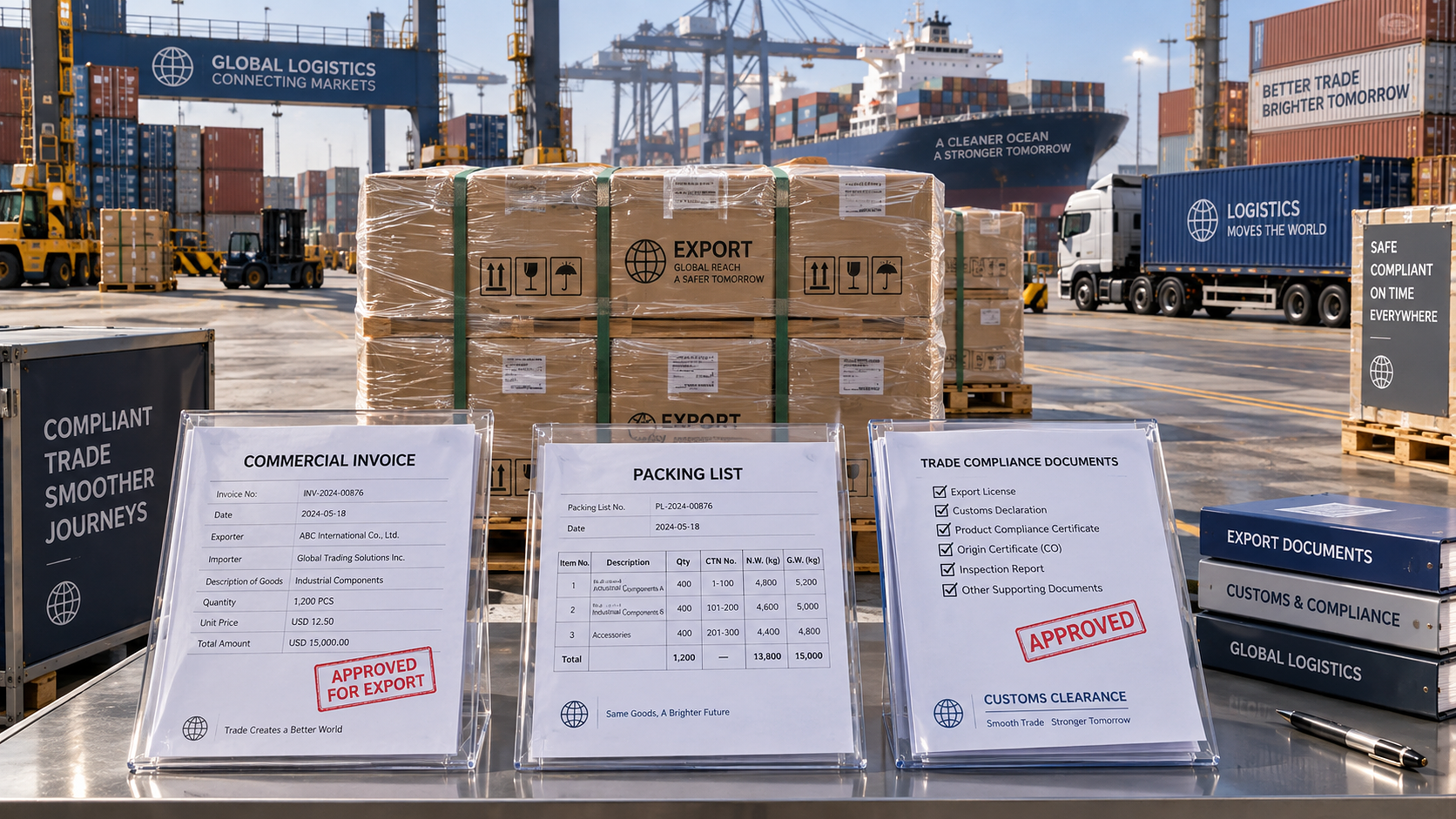
The fifth area is document screening. Commercial invoices, packing lists, purchase orders, certificates, bills of lading, export declarations, and licenses should tell a consistent story about the parties and goods.
How Screening Prevents Specific Operating Costs
The most visible benefit of trade compliance screening is fewer customs holds. Authorities can stop cargo when party information, product data, origin claims, valuation, licensing, or destination details raise concerns.
Pre-shipment checks reduce the chance that these concerns first emerge after cargo is already in a terminal. This helps operators preserve delivery schedules and avoid urgent corrective work across multiple teams.
Storage costs are another major concern. Cargo that cannot clear may remain at a port, airport, bonded warehouse, or carrier facility while documents are amended or compliance questions are resolved.
Ocean shipments can also accumulate demurrage and detention charges. Even short administrative delays become expensive when containers occupy terminal space or equipment beyond the free-time period agreed with the carrier.
Airfreight delays create a different cost pattern. Operators may pay premium rates for urgent freight, then lose the service advantage because goods are held for documentation, licensing, or sanctions review.
Screening also protects customer relationships. Buyers often judge logistics performance by delivery reliability, regardless of whether a delay originated with customs, a forwarder, an incomplete document, or internal compliance procedures.
For operators, a reliable screening record makes communication easier. Teams can explain that goods were reviewed, exceptions were resolved, and shipment data was verified before release to the carrier.
Better screening can reduce manual rework as well. When teams collect correct party and product data early, they spend less time correcting invoices, revising declarations, chasing end-use statements, and responding to broker questions.
There is also a risk-management benefit. A delayed shipment is costly, but shipping to a prohibited party or sending controlled goods without authorization can result in fines, seizures, penalties, and reputational damage.
Build Screening Into the Daily Shipment Workflow
Trade compliance screening works best when it is part of the operating workflow, rather than an emergency task assigned after a shipment has already been packed, booked, and scheduled for collection.
Start when the order is accepted. New customers, new suppliers, unusual destinations, and first-time product combinations should be screened before teams make delivery promises or commit scarce inventory.
Repeat screening before shipment release. Lists and restrictions can change, while commercial details may also change between order placement and dispatch. Rescreening helps capture those updates before goods move.
For recurring business, operators can use a risk-based approach. Stable, well-documented customers may follow a streamlined process, while higher-risk transactions receive additional checks and compliance approval.
A practical workflow begins with clean master data. Customer names, legal entities, addresses, tax numbers, contacts, and related parties should be standardized so screening tools do not rely on incomplete records.
Next, confirm product data at the stock keeping unit or model level. Generic descriptions such as “machine parts” or “electronic equipment” are rarely sufficient for customs, licensing, or end-use review.
Then validate the shipment route and destination. Check the consignee, ultimate end user, delivery location, transit points, Incoterms, and whether the commercial destination matches the physical delivery destination.
After that, review supporting documents before carrier handover. The invoice, packing list, declaration data, license references, and shipping instructions should use consistent names, quantities, values, and product descriptions.
Finally, establish a release decision. A shipment should move only when the required checks are complete, any alerts are resolved, and the person responsible can confirm that evidence is documented.
Simple status labels can help busy teams. For example, use “cleared,” “pending information,” “escalated,” and “blocked” rather than allowing shipments to remain in an unclear administrative state.
How Operators Should Handle Screening Alerts
An alert is not automatically a shipment prohibition. Screening systems frequently identify possible matches, especially when parties have common names, abbreviated legal names, translated names, or incomplete address information.
The operator’s first task is to avoid guessing. Pause the affected shipment stage, record the alert, and collect the information needed to determine whether the match is false, possible, or confirmed.
Useful evidence may include the party’s full legal name, registered address, corporate registration number, ownership details, identification records, website, business activity, and confirmation from the customer or supplier.
Compare this information with the list entry carefully. Similarity in name alone is insufficient. A meaningful review considers geography, aliases, dates, corporate links, addresses, and the type of restricted activity involved.
If the issue cannot be cleared through available evidence, escalate it to the designated compliance owner. Operators should know who has authority to approve, reject, or request outside legal guidance.
Do not solve an alert by changing a name, deleting a consignee field, or using vague product wording. Attempts to conceal or bypass a screening issue can create more serious compliance exposure.
Document the outcome, even when the match is cleared. A record should show what was screened, which information was reviewed, who made the decision, and why the transaction was released.
Clear escalation rules reduce delays because operators do not need to decide complex regulatory questions alone. They can gather facts quickly, route the case correctly, and keep stakeholders informed.
Data Quality Is the Foundation of Faster Clearance
Many compliance failures are really data-quality failures. Screening cannot produce reliable results when customer names are misspelled, addresses are partial, product descriptions are generic, or order records lack end-user information.
Operators should treat key shipment fields as controlled data, not optional notes. Required fields should be visible in the order system and should be completed before the transaction progresses.
For parties, the minimum data set should generally include legal name, full address, country, contact details, and an identifier appropriate for the company’s market and internal policy.
For products, teams should retain technical descriptions, part numbers, tariff classifications, origin data, declared values, weights, dimensions, and applicable regulatory documentation in accessible records.
For transactions, record the buyer, consignee, end user, payment terms, route, Incoterms, intended application, and any license or certificate requirements identified during the review process.
Standardized descriptions improve both compliance and speed. A broker can prepare declarations more accurately when invoice language aligns with product master data rather than relying on manually written descriptions.
Data discipline also supports audit readiness. When customs authorities, customers, banks, or internal reviewers ask questions, operators can retrieve the screening trail instead of reconstructing decisions from email threads.
Use Technology Without Losing Operational Judgment
Screening software can improve consistency, speed, and recordkeeping, particularly for companies handling many customers, suppliers, shipments, and destination markets. However, technology does not replace accountable human review.
A suitable tool should screen relevant lists, support configurable match thresholds, capture review notes, retain audit records, and integrate with order management, ERP, transport, or customs systems where possible.
Automation is most valuable when it prevents routine work from being repeated. For example, it can screen new party records automatically, flag list updates, and stop shipment release when an unresolved alert exists.
Operators still need training to understand what alerts mean. They should know which information to collect, when to rescreen, what signals require escalation, and why certain product or destination combinations are sensitive.
Measure the process using operational indicators. Useful metrics include alert resolution time, shipments held before dispatch, customs holds after dispatch, document correction rates, and recurring data-quality failures.
Reviewing these metrics helps teams identify whether delays result from weak product data, late order entry, unclear ownership, poor document coordination, or insufficient authority for resolving alerts quickly.
Make Trade Compliance Screening a Delivery-Reliability Control
Trade compliance screening should be viewed as a practical control for protecting shipment flow. Its value is not limited to avoiding penalties; it helps operators release goods with better information and fewer surprises.
The strongest programs screen parties, products, destinations, end uses, and documents before dispatch. They also repeat critical checks when transaction details change or when regulatory lists are updated.
For daily operations teams, the essential discipline is straightforward: gather complete data early, screen before release, resolve alerts with evidence, document decisions, and escalate cases that exceed operational authority.
When these steps become routine, companies can reduce avoidable holds, control freight-related costs, improve customs readiness, and deliver a more dependable experience to customers across international markets.
Weekly Insights
Stay ahead with our curated technology reports delivered every Monday.
Recommended News
 Supply ChainSep 24, 2026How trade compliance screening prevents costly shipment delays
 Supply ChainSep 23, 2026What drives cross-border logistics management pricing for importers?
 Supply ChainSep 22, 2026How heavy equipment lifecycle data can reduce unexpected downtime
 Supply ChainSep 21, 2026How export regulations affect logistics lead times and delivery risk