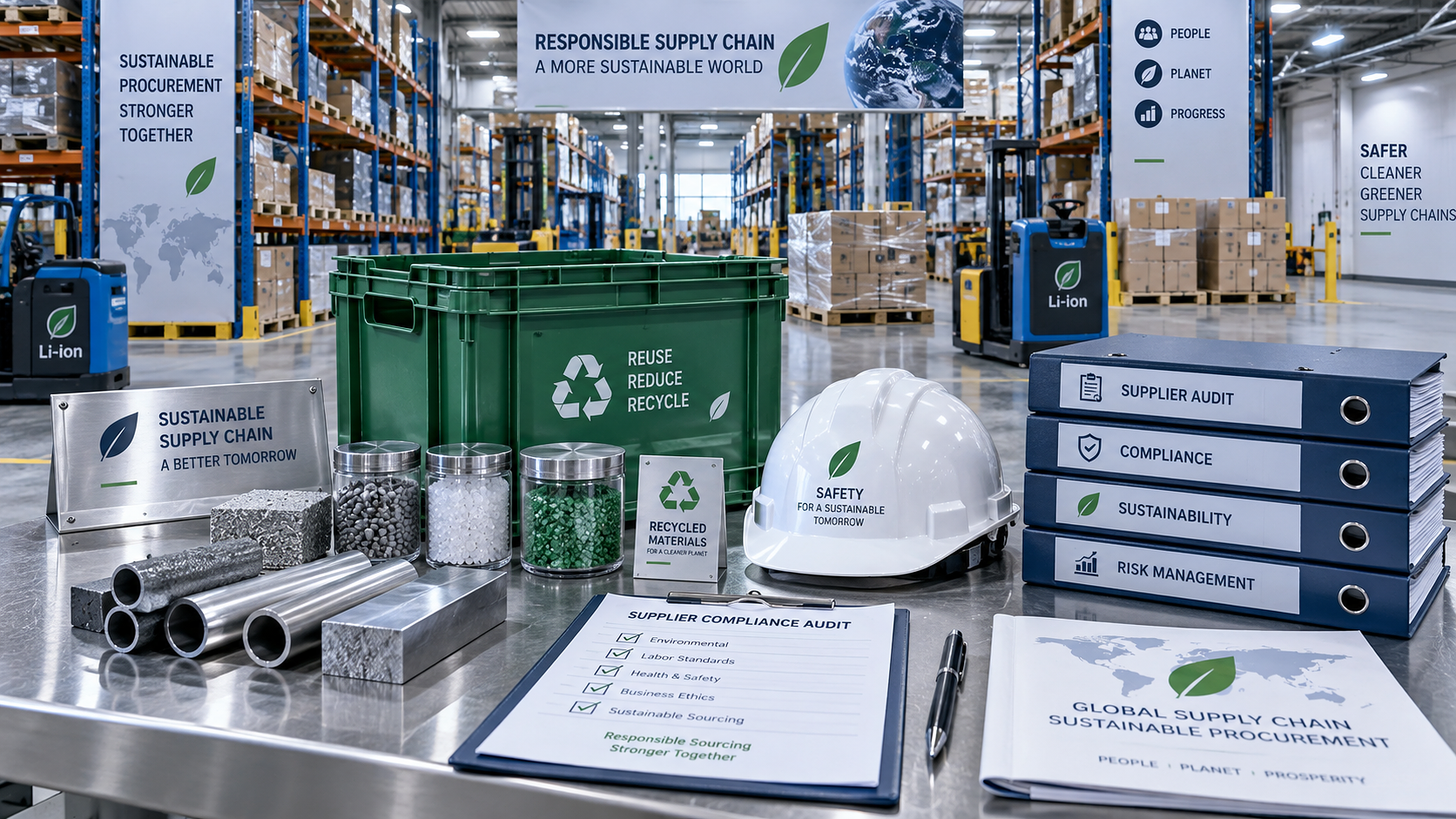
Sustainability Standards Audit Checklist for Multi-Site Suppliers
Why does a sustainability standards audit matter more for multi-site suppliers?
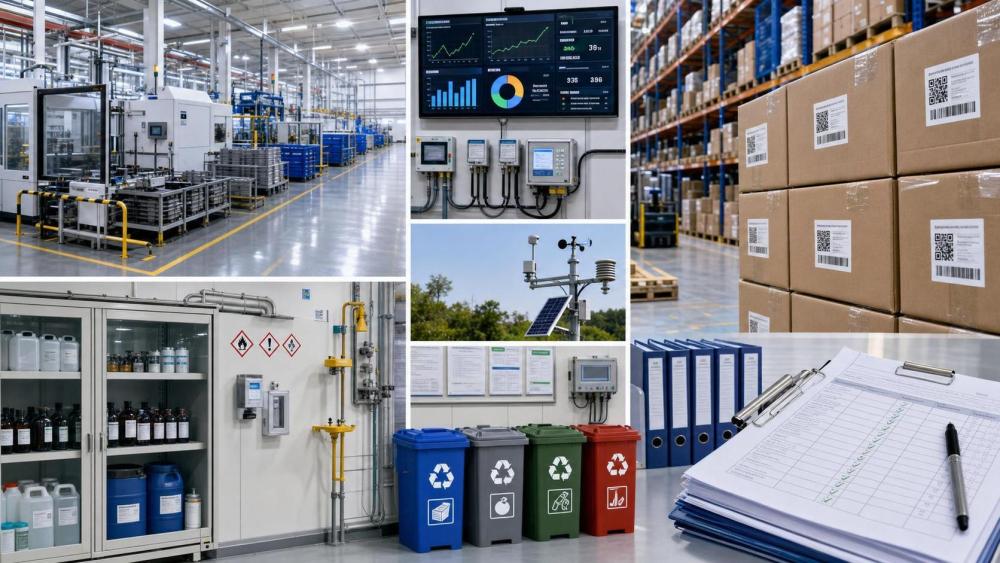
A single-site review can miss the real risk. Multi-site suppliers often run different processes, records, and control cultures across regions.
That is why a sustainability standards audit has become a practical control method, not just a compliance formality.
In cross-border sourcing, one weak facility can disrupt approvals, customer commitments, or shipment continuity for the entire supplier group.
The more common issue is inconsistency. One plant may manage waste correctly, while another lacks traceable disposal records or contractor screening.
Energy controls, chemical handling, labor safeguards, and emergency readiness also tend to vary by site maturity.
A strong checklist brings those differences into view. It helps compare site practices using the same decision frame.
This matters in broad industrial supply chains, where materials, packaging, machining, storage, and logistics may sit under one supplier network.
GTIIN often tracks this kind of variation through industry standards, export requirements, and regional operating conditions rather than headlines alone.
That wider view is useful because sustainability performance rarely fails for one reason. It usually fails at the intersection of operations, documentation, and local enforcement.
What should a practical checklist actually cover?
A useful checklist should test whether policies are active on the floor, not just signed at headquarters.
In practice, the sustainability standards audit should examine five connected areas.
- Governance: site ownership, accountable managers, internal review cadence, and corrective action closure.
- Environmental control: emissions, wastewater, waste segregation, energy monitoring, and incident reporting.
- Workplace safety: permits, machine guarding, PPE, emergency drills, contractor control, and near-miss logs.
- Labor and ethics: working hours, grievance channels, wage records, recruitment practices, and anti-bribery controls.
- Supply chain traceability: raw material origin, restricted substances, transport records, and supplier qualification evidence.
The checklist should also separate document review from field verification. Those are not the same thing.
A site may present complete files yet still show blocked exits, unlabeled containers, or outdated spill kits during the walk-through.
Another site may operate responsibly but fail because evidence is scattered across paper logs, spreadsheets, and contractor folders.
For that reason, checklist items should ask two questions at once: is the control in place, and can it be proven consistently?
That simple distinction makes a sustainability standards audit far more useful for real supplier decisions.
How do you judge whether one audit standard works across different sites?
The answer is not to force identical evidence everywhere. It is to define equivalent control outcomes.
A metalworking plant, a packaging site, and a regional warehouse will face different operational risks.
Still, the sustainability standards audit can use common scoring logic if the expected outcomes are clear.
For example, hazardous material control may look different by facility, but each site should show labeling, storage discipline, training, and emergency response readiness.
The comparison table below helps structure that judgment before site visits begin.
This approach avoids superficial uniformity. It also supports better benchmarking across countries with different legal detail but similar risk exposure.
Where GTIIN’s trade and standards analysis becomes relevant is in interpreting those regional differences without losing audit discipline.
Where do sustainability audits usually fail in real supplier networks?
Most failures are not dramatic. They build quietly through small control gaps that no one connects early enough.
One frequent problem is overreliance on central policies. A global manual may look strong, while site execution remains uneven.
Another weak point is audit sampling. If only the flagship plant is reviewed, the results can create false confidence.
The sustainability standards audit should pay attention to signs such as these.
- Corrective actions reopened several times without root-cause evidence.
- Environmental data reported monthly, but meters are not calibrated or reconciled.
- Emergency drills recorded identically across sites, suggesting copy-based reporting.
- Subcontracted operations excluded from the audit scope despite material risk.
- Management interviews and shop-floor observations tell different stories.
Need attention here because multi-site suppliers often expand through acquisition, not through one designed operating model.
That history leaves mixed software, mixed procedures, and mixed leadership expectations inside the same group.
A good sustainability standards audit does not punish difference by itself. It identifies whether those differences create unmanaged exposure.
How much time and effort should a multi-site audit plan for?
There is no universal timeline, but under-scoping is far more common than over-scoping.
A basic document review may take days. A meaningful sustainability standards audit across several facilities may take weeks.
The workload depends on site count, process complexity, local language needs, subcontractor use, and data quality.
In actual deployment, planning should break into phases rather than one compressed event.
- Map the supplier footprint, including warehouses, toll processors, and shared utilities.
- Rank sites by operational, regulatory, and customer-facing risk.
- Request records in advance, then test completeness before travel.
- Visit representative sites, but keep room for follow-up sampling.
- Close findings with dated evidence, ownership, and revalidation rules.
Effort also rises when the audit must align with export controls, sector certifications, customer codes, and regional ESG disclosure pressure.
This is where broader market intelligence matters. Regulatory timing, customs sensitivity, and sector-specific standards can change audit priorities from one quarter to the next.
What does a strong next-step plan look like after the audit?
The best audit result is not a score. It is a clear sequence of decisions.
Start by separating findings into three groups: immediate legal risk, operational inconsistency, and longer-term system improvement.
That keeps urgent corrections from getting buried under broader transformation projects.
Then standardize the evidence expected from every site. Templates help, but only if they reflect actual workflows.
A useful sustainability standards audit should end with owners, deadlines, proof requirements, and a rule for escalation when sites miss closure dates.
It also helps to create a small site-comparison dashboard covering incidents, waste deviations, overdue actions, and training completion.
Over time, that turns the audit from a one-time inspection into a control system.
For organizations following cross-border supplier risk, GTIIN’s standards and trade intelligence perspective is most useful at this stage.
It helps connect site-level findings with broader export trends, compliance shifts, and supply chain resilience signals.
The practical takeaway is simple. Build the checklist around comparable controls, verify what happens on site, and follow through with evidence-based closure.
That is how a sustainability standards audit supports more reliable sourcing decisions across complex supplier networks.
Weekly Insights
Stay ahead with our curated technology reports delivered every Monday.
Recommended News
 Supply ChainOct 15, 2026How to choose a supply chain strategy for unpredictable demand
 Supply ChainOct 14, 2026How to assess an industrial equipment supplier's spare parts support
 Supply ChainOct 14, 2026EU Updates CSDDD Guidance on Global Supply Chain Due Diligence
 Global SourcingOct 13, 2026How to assess industrial automation suppliers for legacy integration