Should You Replace Aging Automation Equipment or Maintain It?
The decision to replace aging automation equipment or keep maintaining it should not be based on the latest repair invoice alone. A machine can be old yet dependable, while a newer system can create disruption if it is poorly specified, difficult to integrate, or supported by an unstable supplier network.
The practical question is whether the existing asset can continue to meet production, safety, quality, and delivery requirements at an acceptable level of risk. If it can, disciplined maintenance may be the better economic choice. If breakdowns, obsolete controls, unavailable parts, or operating limitations are beginning to constrain the business, replacement becomes a strategic investment rather than a simple capital expense.
For industrial operations, the best answer is often neither “repair everything” nor “replace everything.” It is a planned decision by asset, production line, and operational risk.
Start with the cost of lost production, not the cost of a repair
Aging equipment is frequently kept in service because individual repairs appear affordable. This comparison is incomplete. The relevant cost includes the labor, spare parts, service call, and downtime associated with the repair, but it also includes missed output, delayed shipments, emergency freight, quality losses, overtime, and the management time consumed by repeated failures.
One replacement unit may require a significant initial outlay. Yet a legacy packaging line, robotic cell, conveyor control system, or process skid can become more expensive when it fails unpredictably during high-demand periods. The cost is especially high when the asset is a bottleneck: a failure at one critical station can stop several downstream operations even if the rest of the plant is functioning normally.
Maintenance remains financially sensible when failures are infrequent, predictable, and quickly recoverable. It becomes less sensible when every repair is an emergency, when the same failure modes recur, or when a minor component fault creates a long production stoppage.
Calculate the decision over a realistic operating horizon rather than comparing a single repair with a single purchase quote. Include expected maintenance, internal labor, energy use where material, training, spare-parts inventory, planned shutdown time, and the cost of unplanned downtime. The resulting comparison is a lifecycle decision, not a maintenance-versus-purchase argument.
When maintaining legacy automation is still the right choice
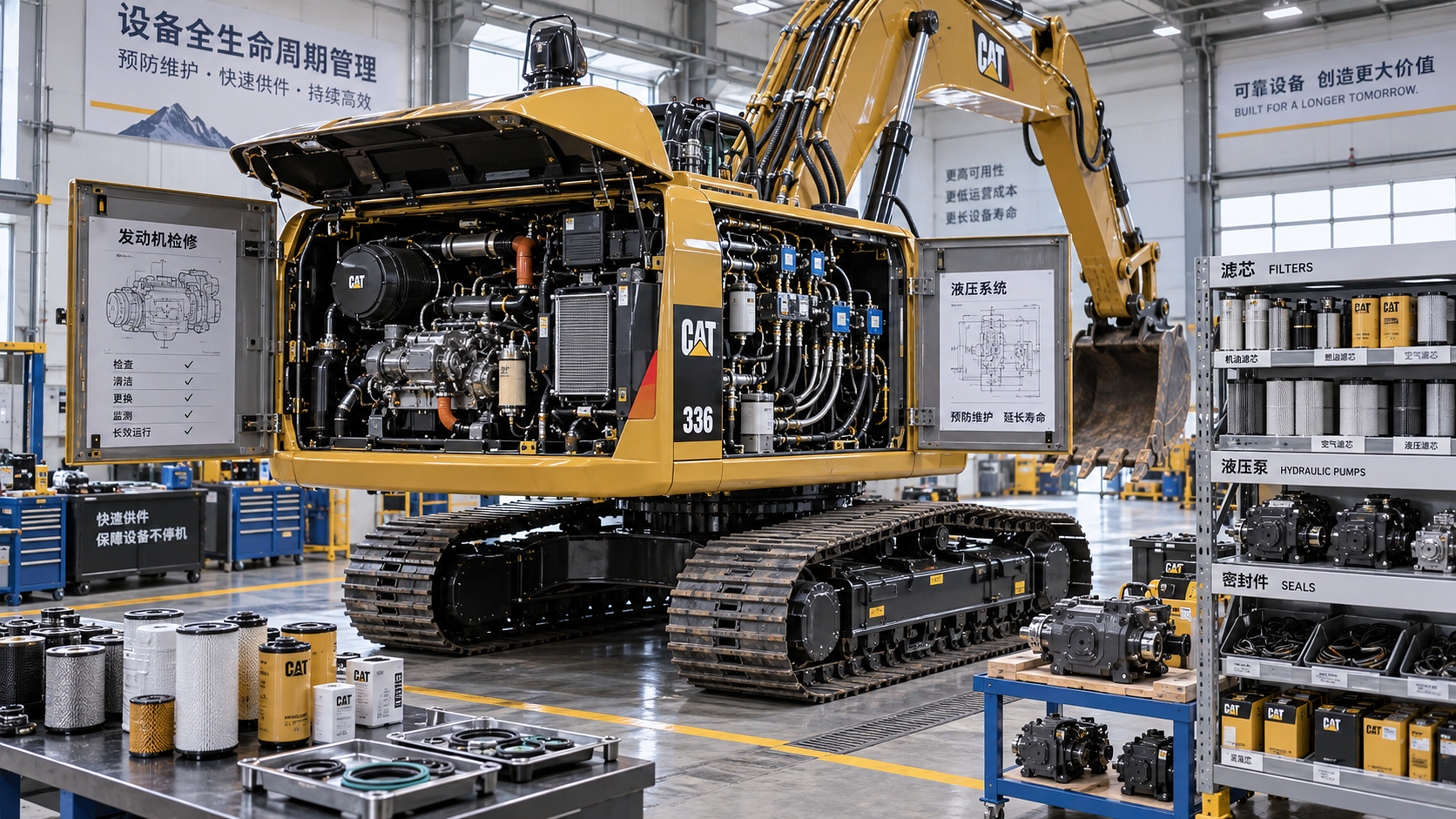
Older automation equipment does not automatically need replacement. Many mechanically robust assets have long usable lives, particularly when their duty cycle is stable and their core function has not changed. A well-built machine may remain a sound production asset if its mechanical condition is good and its controls can be supported or selectively upgraded.
Retrofitting is often the middle path. Replacing an obsolete controller, drive, HMI, vision system, or safety circuit can restore serviceability while preserving the mechanical platform. This works best when the structure, motion components, tooling, and process capability remain fit for purpose.
However, a retrofit should not be treated as an automatic low-cost solution. A control upgrade may expose worn actuators, old wiring, undocumented interlocks, or process tolerances that were previously hidden by slow operation. Before approving a retrofit, define the technical boundary: which components will be retained, which interfaces must remain compatible, who owns the revised software documentation, and what spare parts must be stocked after commissioning.
A partial modernization is a poor choice when the machine’s core mechanical limitations are already causing rejects, speed restrictions, frequent alignment work, or safety concerns. Installing modern controls on an exhausted mechanical system can create a more sophisticated way to manage the same underlying problem.
The warning signs that favor replacement
Replacement should move higher on the priority list when aging equipment creates operational uncertainty rather than manageable maintenance work. The clearest warning sign is not simply age. It is the loss of control over outcomes.
- Critical spares are becoming difficult to obtain. A component may still be available today, but supply may rely on brokers, reclaimed parts, long lead times, or a single service source. That turns a minor fault into a supply-chain exposure.
- The equipment has become a quality constraint. Increasing variation, inconsistent positioning, poor traceability, or inability to meet updated customer specifications can have greater consequences than a direct breakdown.
- Production requirements have changed. Higher mix, shorter runs, more frequent changeovers, additional product formats, or tighter delivery windows may exceed what the legacy system was designed to handle.
- Safety depends on workarounds. Operators should not need informal procedures, bypassed alarms, improvised guarding, or exceptional skill to keep a machine productive.
- Knowledge is concentrated in one person or one vendor. If only a retiring technician or a remote specialist understands the controls, the asset is already carrying continuity risk.
- Data visibility has become operationally necessary. If scheduling, maintenance planning, traceability, or quality analysis requires production data that the asset cannot reliably provide, replacement or a substantial upgrade may be justified.
None of these conditions requires an immediate purchase by itself. Together, they indicate that the equipment is no longer merely old; it is becoming difficult to govern.
Do not assume new equipment automatically solves the problem
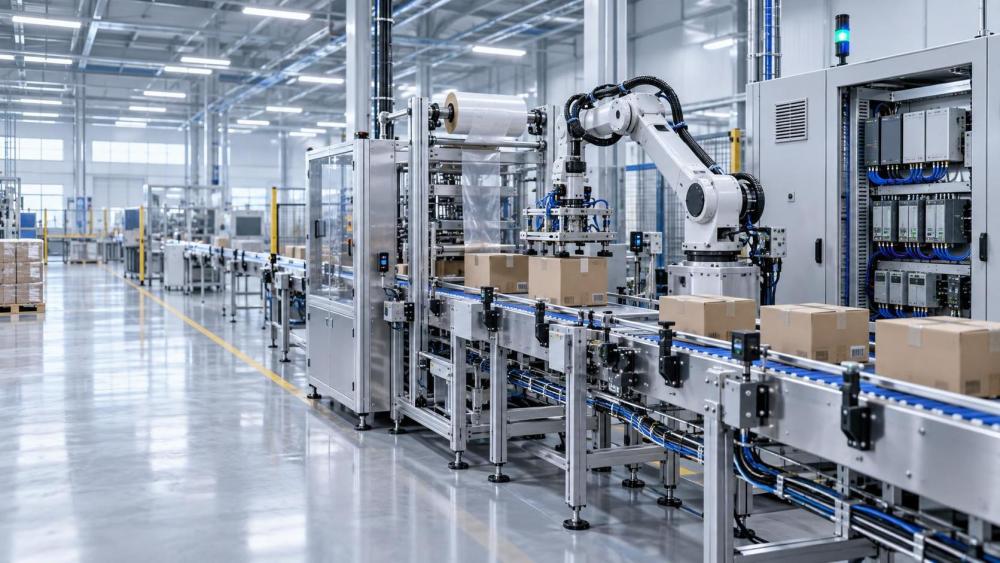
New automation can improve performance, connectivity, safety functions, and changeover capability. It can also introduce commissioning delays, interface problems, operator learning curves, and dependence on proprietary software or remote support. Replacement is only a better decision when the proposed system is specified around the actual production problem.
A vague goal such as “more automation” often leads to overspecification. A line that mainly needs reliable material movement may not need a highly complex, data-heavy solution. Conversely, a process with frequent product changes and strict traceability may need more than a like-for-like machine replacement. The replacement scope should reflect future operating needs, not only the limitations of the current asset.
Before selecting new equipment, document the baseline: current cycle time, actual output rather than nominal output, changeover time, reject patterns, operator interventions, utility constraints, footprint, upstream and downstream interfaces, and the consequences of a stoppage. This prevents suppliers from designing around an idealized process that does not exist on the shop floor.
Also examine the ownership model around the machine. Can internal personnel access alarm histories, back up programs, and understand basic fault recovery? Is the control architecture supported in the regions where the equipment will operate? Are manuals, electrical drawings, software revisions, and spare-parts lists included in the handover? A modern machine without accessible documentation can become tomorrow’s legacy problem.
Supply chain conditions can change the economics
Equipment decisions are often evaluated as though parts, service technicians, and replacement systems are available on demand. Cross-border operations know otherwise. Lead times, freight disruptions, customs processes, regional electrical standards, local service coverage, and geopolitical pressure can all affect the true resilience of an automation investment.
For a maintained asset, map the supply chain for the small number of components that can stop production: controllers, drives, safety modules, servo motors, gearboxes, specialized sensors, pneumatic components, and proprietary mechanical assemblies. Identify whether alternatives are genuinely interchangeable or merely similar in appearance. A lower-priced substitute that requires software changes, safety revalidation, or redesign during a breakdown is not a practical contingency.
For a replacement project, procurement should assess more than the machine price and delivery promise. Review the origin of critical components, local commissioning capacity, availability of consumables, warranty response arrangements, software licensing terms, and the path for future expansion. A machine assembled in one country may still depend on controls, motors, or precision components sourced from several others.
GTIIN’s supply-chain perspective is useful here because automation modernization is both an engineering decision and a sourcing decision. A technically attractive solution can carry material risk if its critical spares, service model, or compliance requirements do not match the operating geography. Mapping these dependencies before approval gives maintenance and procurement teams a more realistic view of total exposure.
A practical decision process for each asset
Large modernization programs become more manageable when equipment is classified instead of judged as one aging fleet. Begin by separating assets into bottlenecks, quality-critical equipment, safety-critical equipment, support equipment, and non-critical utility assets. A failure on a peripheral conveyor does not deserve the same replacement logic as a failure in a controlled process cell.
- Establish the asset’s production role. Identify what stops when it stops, what quality risks it creates, and whether there is a manual or alternate route.
- Review failure history by pattern. Look for recurring faults, escalating repair difficulty, unavailable parts, and failures that consume disproportionate recovery time.
- Assess technical condition separately from age. Examine mechanics, controls, safety, documentation, tooling, and integration requirements. A twenty-year-old machine with supported controls may be less risky than a newer machine with undocumented modifications.
- Compare three options. Evaluate continued maintenance, targeted retrofit, and full replacement. Excluding the middle option often produces a distorted choice.
- Test the project against future demand. Consider product mix, expected capacity, data needs, labor availability, quality requirements, and site constraints over the intended service period.
- Plan the transition. Define installation windows, temporary capacity, operator training, acceptance criteria, spare-parts strategy, and rollback measures before issuing the order.
This process is more useful than adopting a universal replacement age. Some equipment should be replaced early because its failure impact is unacceptable. Other machines can remain in service for years with preventive maintenance, proper documentation, and a focused spare-parts plan.
Common mistakes that distort the decision
The most common mistake is treating maintenance expense as waste without asking what the work achieves. Replacing bearings, seals, cables, and standard sensors can be normal asset stewardship. The concern is not routine maintenance; it is repeated corrective work that fails to restore dependable performance.
Another error is using theoretical capacity to justify replacement. A new system may offer a higher rated speed, but plant output may still be constrained by feeding, inspection, material availability, curing time, packing, or labor downstream. Replace the actual constraint, not the most visible machine.
Some organizations also postpone action until equipment becomes unrepairable. That approach preserves short-term capital but removes choice. An emergency replacement is more likely to involve rushed specifications, limited supplier evaluation, expensive logistics, and disruption to production planning. Replacement decisions are usually strongest when made before the asset reaches crisis status.
Finally, avoid viewing connectivity as a benefit by itself. Data collection has value when it improves maintenance planning, traceability, scheduling, energy management, or process control. If the organization has no owner for the data and no process for responding to it, added connectivity may increase complexity without improving operations.
Choose the option that reduces future uncertainty
Maintaining aging automation equipment is appropriate when condition is stable, repairs are controllable, support is available, and the machine still fits the production plan. Retrofitting is appropriate when the mechanical platform remains sound but controls, safety, or serviceability have become weak. Replacement is appropriate when the asset limits output, quality, safety, resilience, or the ability to operate the business as intended.
The strongest decision is supported by a clear view of failure impact, lifecycle cost, future demand, and supply-chain dependencies. Instead of asking whether an old machine deserves one more repair, ask whether the organization can confidently rely on it through the next planning horizon. That reframes the decision from equipment age to operational capability.
Tags
Weekly Insights
Stay ahead with our curated technology reports delivered every Monday.
Recommended News
 Supply ChainSep 22, 2026How heavy equipment lifecycle data can reduce unexpected downtime
 Supply ChainSep 21, 2026How export regulations affect logistics lead times and delivery risk
 Industry StandardsSep 20, 2026What evidence is needed to pass a carbon reporting audit?
 Industry StandardsSep 19, 2026When does manufacturing compliance consulting reduce audit risk?