Middle East Global Trade Compliance Risks and 2026 Rule Changes
Middle East Compliance Is Shifting From Operational Detail to Strategic Risk
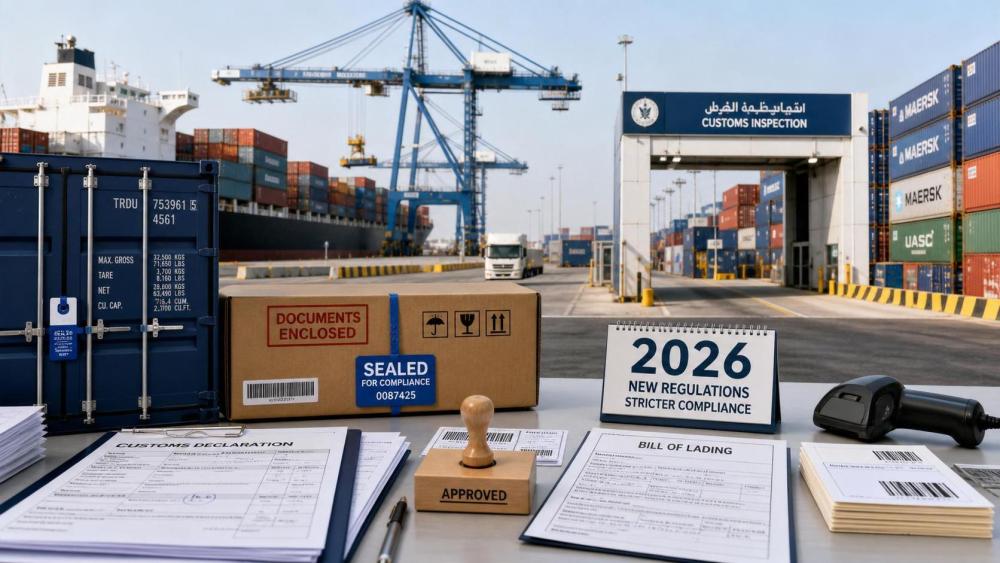
The next wave of global trade compliance Middle East changes is no longer a narrow legal issue.
It is becoming a market access question, a financing question, and increasingly a board-level resilience question.
As 2026 rule changes move closer, trade controls across the region are tightening in ways that affect documentation, sanctions screening, customs valuation, and product traceability.
This matters because the Middle East now sits at the intersection of energy transition, re-export growth, industrial diversification, and geopolitical friction.
That combination creates opportunity, but it also raises the cost of weak compliance architecture.
From recent trade flows, a clearer pattern is emerging.
Authorities are asking for greater transparency on origin, end use, beneficial ownership, and environmental claims.
At the same time, counterparties, banks, insurers, and logistics providers are becoming less tolerant of incomplete files or inconsistent declarations.
For cross-border operations, global trade compliance Middle East planning now shapes speed, cost, and credibility at the same time.
Why the Pressure Is Becoming More Visible Now
The immediate signal is not one single law.
It is the layering of customs modernization, sanctions enforcement, ESG-linked reporting, and dual-use sensitivity across connected jurisdictions.
Several regional hubs are expanding their role as transit, assembly, and redistribution centers.
That makes the quality of trade documentation more important than before, especially where goods move through free zones or multiple intermediaries.
A second driver is industrial policy.
Governments across the Gulf are investing in local manufacturing, clean energy, metals, chemicals, food systems, and advanced logistics infrastructure.
When industrial upgrading accelerates, compliance frameworks usually follow.
Product standards, technical files, origin treatment, and supplier due diligence all become more detailed.
A third force comes from outside the region.
European carbon rules, US export controls, and broader sanctions expectations increasingly affect transactions that touch Middle East routes, partners, or financing channels.
This is why global trade compliance Middle East exposure can no longer be assessed only at the customs desk.
It now sits across procurement, legal, treasury, logistics, and commercial planning.
The strongest drivers behind the 2026 shift
The Risk Is Spreading Across More Business Functions
One reason global trade compliance Middle East risk is rising is that it no longer stays in one document set.
It now travels with product classification, supplier onboarding, freight instructions, invoice logic, and post-shipment audit trails.
In practical terms, customs teams may classify goods correctly while commercial teams create exposure through contract language or delivery routing.
The reverse also happens.
A clean contract can still fail when the proof of origin, technical specification, or consignee screening is weak.
This is especially relevant in sectors with mixed components, controlled technologies, or complex after-sales service obligations.
Machinery, chemicals, electronics, metals, energy equipment, and engineered materials all face this pattern.
More worth noting is the shift in timing.
Compliance failures are no longer discovered only during customs clearance.
They increasingly appear during bank review, insurance placement, supplier qualification, or customer audit.
That widens the commercial impact far beyond penalties.
Where exposure is increasing fastest
- Re-export transactions where the first origin and final end use are several steps apart
- Free zone movements with incomplete handoff records or inconsistent consignee details
- Dual-use adjacent items with ambiguous technical descriptions
- ESG claims made without verifiable emissions, sourcing, or production data
- Urgent shipments where manual overrides bypass standard screening controls
Documentation Quality Is Becoming a Competitive Variable
Many organizations still treat documentation as an administrative output.
That view is becoming outdated in the Middle East trade environment.
The stronger signal is that documentation now acts as a trust layer between customs, lenders, insurers, freight operators, and buyers.
When files are internally consistent, shipments move with fewer interventions.
When they are fragmented, even low-risk cargo can attract disproportionate scrutiny.
This is where GTIIN’s trade intelligence model becomes useful as a reference lens.
Its cross-sector analysis shows that resilient supply chains are usually built on connected data, not isolated declarations.
Origin evidence, technical parameters, transit logic, and regulatory status need to tell the same story.
For global trade compliance Middle East decisions, that alignment is becoming more valuable than speed alone.
Another change is the growing importance of beneficial ownership visibility.
Authorities and counterparties increasingly want to understand who ultimately controls a shipment, not only who signs the invoice.
That requirement affects channel strategy, distributor structures, and partner selection.
The 2026 Rules Will Reward Preparation More Than Last-Minute Fixes
The common mistake is to wait for formal publication of every local requirement before acting.
That approach is too narrow for the current cycle.
By the time a rule is fully enforced, upstream expectations from banks, major customers, and logistics partners are often already in place.
In that sense, global trade compliance Middle East readiness should be treated as staged preparation.
Recent patterns suggest that 2026 will bring tighter cross-checking between customs data, sanctions screening, environmental disclosures, and commercial records.
It may not look dramatic on paper.
Yet the operational effect can be significant because small mismatches create cumulative friction.
A product code error can trigger valuation questions.
A weak end-use statement can delay banking review.
An unsupported sustainability claim can weaken acceptance in downstream markets.
This is why preparedness is increasingly measured by traceability depth, not just policy existence.
What deserves immediate attention
- Map all Middle East trade lanes by jurisdiction, free zone use, and re-export exposure
- Review classification logic for goods with technical or dual-use sensitivity
- Test whether origin, invoice, shipping, and ESG records remain consistent under audit
- Upgrade sanctions screening to include vessels, ownership links, and route anomalies
- Identify where manual workarounds still override formal control points
What the Next Phase of Decision-Making Should Look Like
The next phase is less about adding more policy documents.
It is about deciding which information must stay verifiable across the entire shipment lifecycle.
That includes source of goods, technical identity, ownership chain, end-use logic, carbon or sustainability claims, and route-level screening records.
Organizations that handle this well usually build compliance into sourcing and commercial design, not only into post-order review.
They also monitor changes through a wider lens.
That means tracking industrial policy, customs technology upgrades, external sanctions signals, and sector-specific standards at the same time.
GTIIN’s value in this environment is not promotional but analytical.
A cross-border trade intelligence framework helps connect what often gets reviewed separately: freight patterns, industrial regulation, sourcing decisions, and market-entry risk.
That integrated view is becoming essential because global trade compliance Middle East conditions are no longer changing in isolation.
They are part of a wider reordering of supply chains, capital discipline, and regulatory expectations.
The sensible next step is to run a staged review now, before 2026 deadlines compress response time.
Start with the lanes and product groups where documentation complexity, sanctions sensitivity, and re-export dependence overlap.
Then build a practical update plan around data integrity, partner screening, and audit-ready evidence.
In the current cycle, the organizations that move early are not simply reducing risk.
They are preserving access, protecting margin, and keeping regional trade options open when conditions tighten further.
Weekly Insights
Stay ahead with our curated technology reports delivered every Monday.
Recommended News
 Global SourcingOct 25, 2026How to find active suppliers in a trade intelligence platform dashboard
 Supply ChainOct 25, 2026Trade Tariffs Cause Whiplash at Port Milwaukee, Disrupting Cargo Flows
 Supply ChainOct 24, 2026How to use traceability to verify supply chain sustainability claims
 Market TrendsOct 24, 2026FedEx Report: AI Drives Asia-Pacific Chip and Digital Infrastructure Supply Chain Demand