Which documents prove customs compliance requirements are met?
A shipment can appear ready to move—goods packed, carrier booked, invoice issued—yet still stop at customs because the document set does not prove what the declaration claims. A product description may be too vague to support tariff classification, an origin statement may not match production records, or a safety-controlled item may travel without the permit required at destination. Delays then affect more than freight timing: they can disrupt incoming inspection, production schedules, release of regulated goods, and traceability investigations.
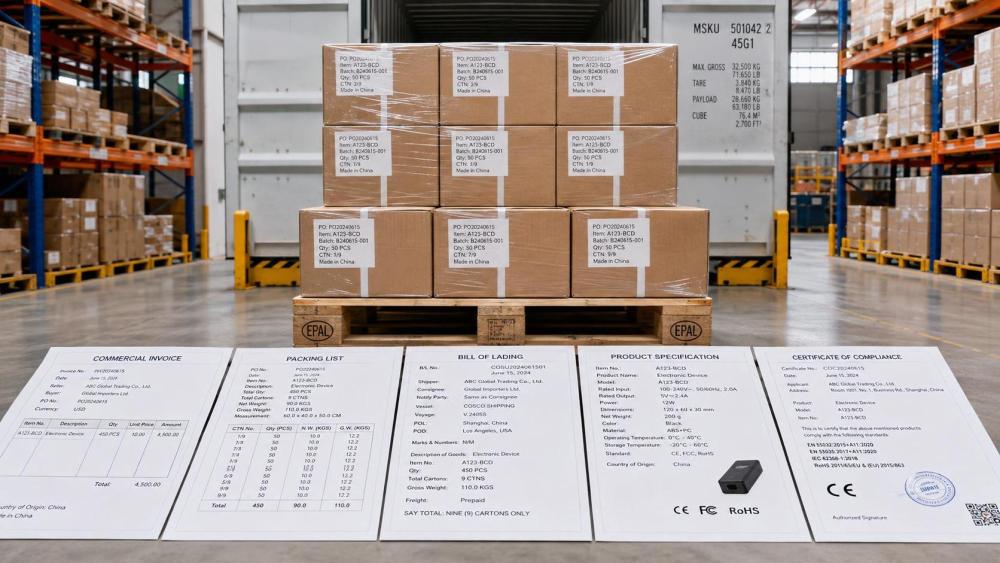
The short answer is that customs compliance requirements are met by a connected evidence trail, not by one universal certificate. Customs authorities generally expect documents that support five core facts: what the goods are, how they are classified, where they originate, what they are worth, and whether they may legally enter or leave the country. The exact set changes by product, trade lane, customs procedure, and applicable controls, but the records below form the working foundation.
The core transaction documents customs will usually examine
Some documents are transmitted with the customs entry, while others are held in the importer’s or exporter’s file and produced during a query, inspection, post-clearance audit, or dispute. A reliable file links these records to the same purchase order, product code, shipment reference, quantities, and parties.
The commercial invoice is often treated as a basic shipping form, but it is also a major customs evidence document. “Industrial parts,” “samples,” or “machine accessories” rarely provide enough information for classification or admissibility review. A stronger description identifies the product’s common name, material or composition where relevant, function, model or part number, and quantity. For regulated goods, include the detail needed to connect the shipment to an approval, certificate, registration, or permit.
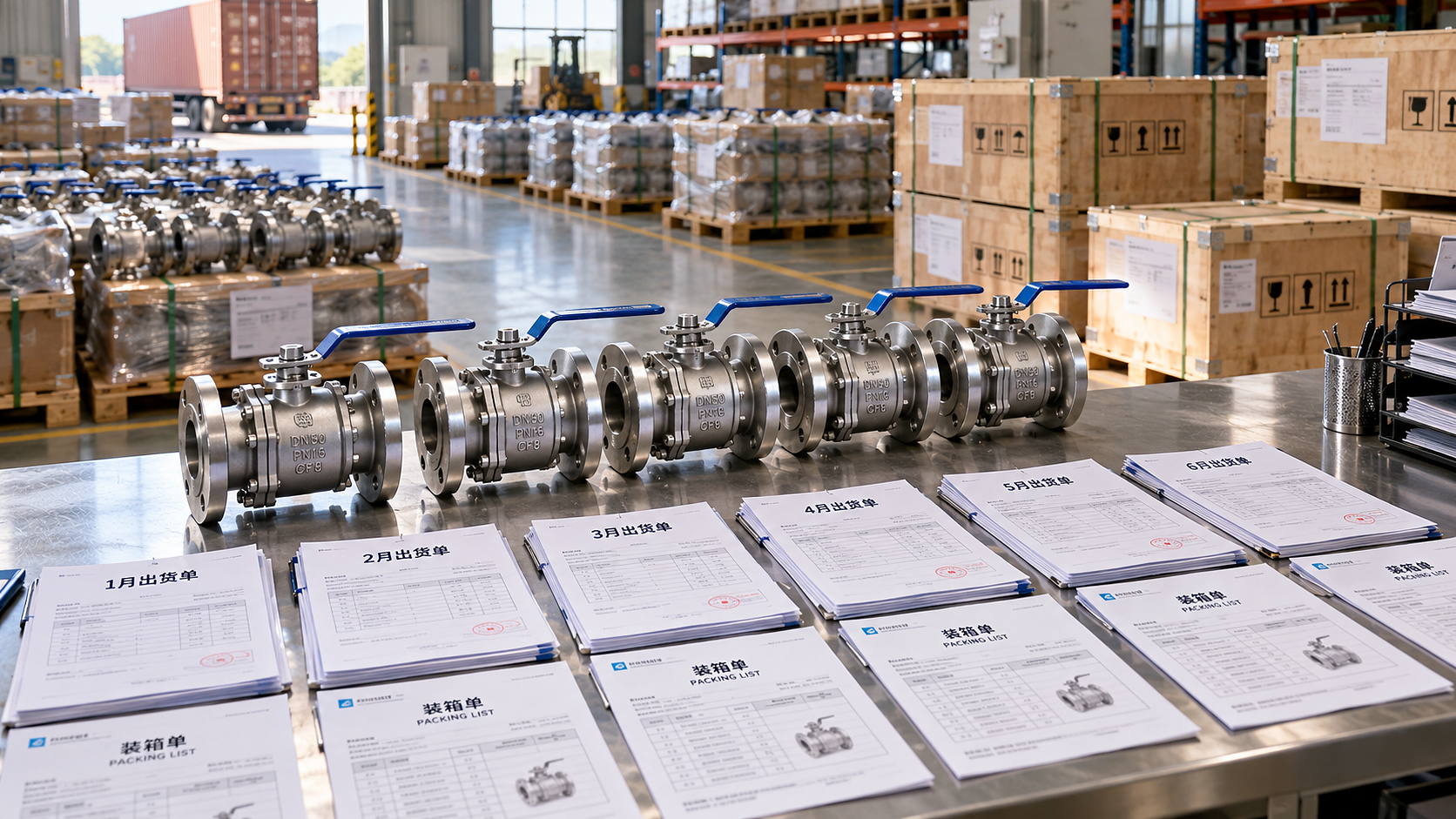
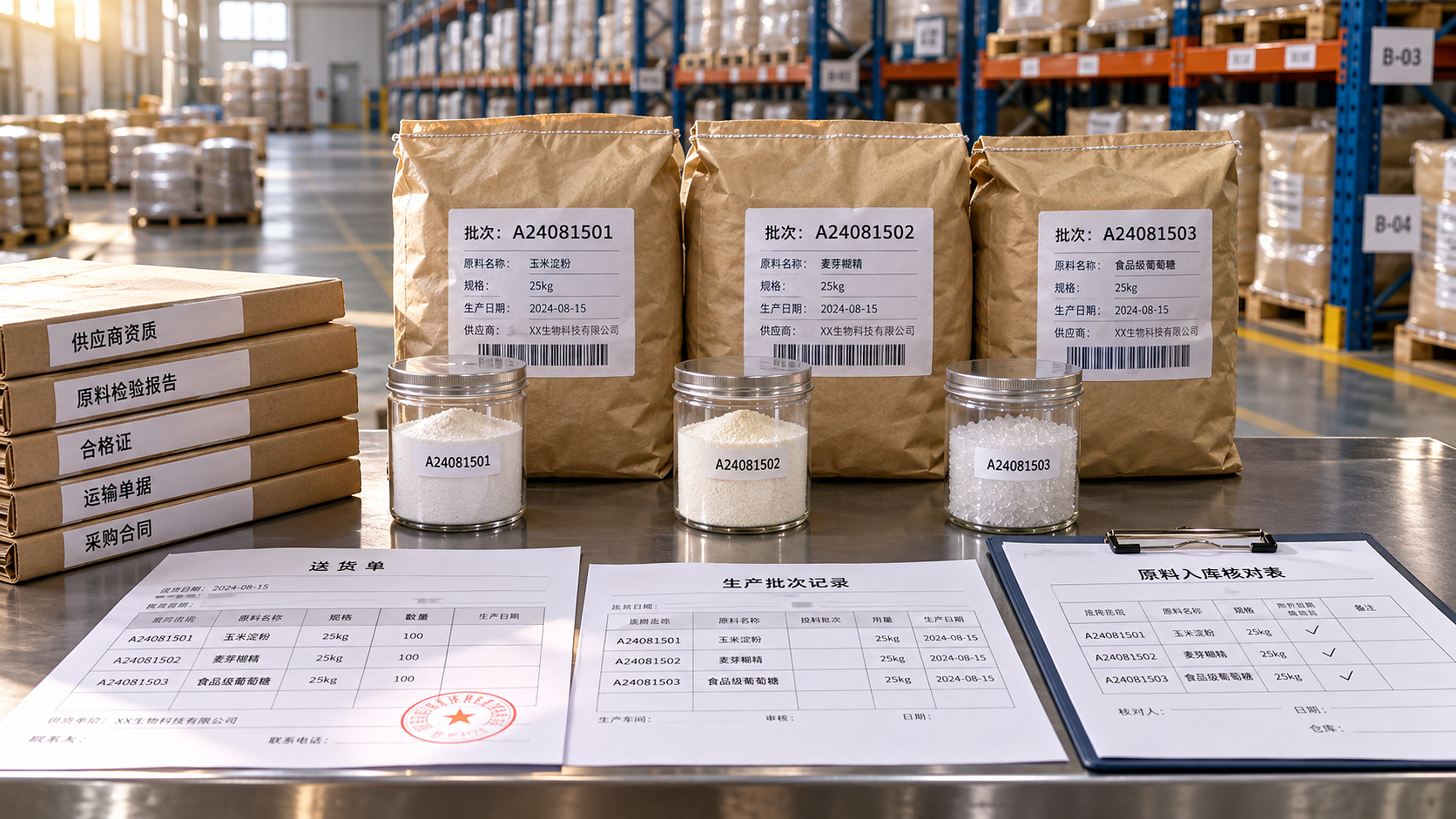
The packing list does not establish legal origin or tariff treatment, but it helps customs compare paperwork with the physical shipment. Discrepancies between declared quantity and cartons received can trigger examination, especially where goods are subject to quotas, licensing, sanitary controls, or unit-based duty. Quality teams should ensure that package labels, batch identifiers, serial numbers, and lot references can be reconciled with the packing list where traceability is required.
Evidence behind tariff classification
A customs declaration may show a Harmonized System code or a national tariff code, but the code alone does not prove that the classification is correct. The importer or exporter should maintain a classification support file that explains why the selected code fits the product’s objective characteristics at the time of import or export.
Useful classification evidence may include:
- Product specification sheets, drawings, data sheets, and technical manuals;
- Photographs showing the item, components, fittings, or packaging;
- Material composition records, laboratory reports, safety data sheets, and ingredient declarations where material content matters;
- Assembly diagrams and bills of materials for machinery, kits, and multi-component goods;
- Catalogues or product literature that accurately describes the imported version;
- Internal classification rationale, tariff rulings, or binding classification decisions where available.
Classification errors commonly arise when procurement descriptions are copied into customs data without technical review. A purchasing label may describe commercial use rather than legal identity. For example, calling an item a “protective cover” does not establish whether customs should classify it by textile composition, plastics content, its function with a machine, or another heading. The support file should identify the relevant product attributes rather than relying on a marketing name.
Changes in design, material, firmware, function, or packaging can invalidate an earlier classification conclusion. This is particularly important for components that have similar part numbers but different coatings, electrical ratings, or end uses. A change-control process should notify the customs owner when engineering or supplier quality documentation changes.
Origin records: proving where the product qualifies as originating
Country of origin is not always the country from which goods are shipped. Customs origin rules may depend on where a product was wholly obtained, where its last substantial transformation occurred, or whether it meets a specific rule under a preferential trade arrangement. A freight document showing shipment from one country is therefore not sufficient proof of origin.
For ordinary, non-preferential origin, evidence can include manufacturer declarations, production statements, manufacturing records, and documents showing the country in which the relevant transformation occurred. Where origin marking is mandatory, the marking on the product or package must also be consistent with the declared origin and supporting records.
Preferential duty claims require closer control. Depending on the agreement and jurisdiction, the claim may rely on a certificate of origin, origin declaration, statement on origin, importer’s knowledge, or another prescribed form of certification. The document itself is only one part of the proof. Customs may ask for the basis of the claim, such as bills of materials, supplier origin declarations, production costing, tariff-shift analysis, regional value content calculations, or records showing that the goods met a process rule.
A frequent weakness is treating a supplier’s country statement as permanent evidence. Supplier declarations should be version-controlled and renewed when the source of materials, manufacturing site, production process, or product configuration changes. Where the importer claims a preferential rate, the importer remains exposed if the underlying origin claim cannot be substantiated.
Customs value needs more than an invoice total
Customs valuation is often based on the transaction value, but the invoice price may need adjustment under the destination country’s rules. Customs may review whether certain costs or benefits were included, excluded, or declared separately. Supporting documents should make the commercial arrangement visible rather than leaving an unexplained number on the entry.
Keep the purchase order, sales contract, invoice, credit notes, payment evidence, Incoterms, freight and insurance invoices, and any agreement affecting price. Additional support may be required for tooling supplied by the buyer, design work provided outside the importing country, royalties related to the imported goods, selling commissions, rebates, assists, or transfer-pricing arrangements between related parties.
Related-party transactions deserve particular discipline. Being related does not automatically make a value unacceptable, but customs may require evidence that the relationship did not influence the price or that the declared value meets an accepted valuation method. Finance, procurement, tax, and customs teams should not maintain separate versions of the pricing story. A customs entry that conflicts with invoices, intercompany agreements, or year-end price adjustments can lead to reassessment.
Product-specific approvals, permits, and conformity evidence
Not every shipment needs the same regulatory documents. The determining question is whether the product is controlled by a safety, health, environmental, agricultural, security, technical, or strategic-trade rule in the importing or exporting jurisdiction. Customs may act as the border enforcement point for another regulator, so a shipment can be held even when its tariff classification and value are correct.
Depending on the product and destination, the compliance file may need one or more of the following:
- Import, export, transit, or end-use licenses for controlled goods;
- Product conformity declarations, test reports, technical files, certificates, or registrations required for market access;
- Safety data sheets and hazardous-goods transport documentation for chemicals or dangerous substances;
- Sanitary, phytosanitary, veterinary, health, inspection, fumigation, or treatment certificates;
- Material declarations or environmental compliance evidence for restricted substances, waste, batteries, packaging, timber, or other controlled materials;
- Intellectual-property authorization where branded or licensed goods are imported by a party other than the rights holder;
- Export-control screening records, classification decisions, end-user statements, and end-use documentation.
Quality and safety personnel should distinguish between a document that supports customs clearance and a document that proves product conformity after release. A declaration of conformity, for instance, may be required to place a product on the market, while customs may require a registration number, test certificate, or labeling evidence at the border. The applicable rule depends on the product category and destination. Do not assume that a certificate accepted in the manufacturing country will be accepted in the importing market.
Build one auditable shipment file instead of separate departmental records
Customs compliance failures are often document-control failures. Engineering holds specifications, procurement holds supplier declarations, logistics holds transport data, finance holds payment information, and the broker receives only a short product description and invoice. The customs entry may be filed on incomplete information even though the company possesses the missing proof elsewhere.
A practical approach is to create a shipment-level evidence package linked to a master product record. Before shipment, confirm that the product record contains the approved tariff classification, origin basis, applicable regulatory status, required licenses or certificates, and any restrictions on destination or end use. The shipment package then adds the invoice, packing list, transport document, purchase order reference, and declaration data.
Document consistency matters as much as document presence. Review the following before instructing a broker or submitting a declaration:
- Does the invoice description identify the same product shown in the technical file and customs classification record?
- Do quantities, units of measure, package counts, weights, and values reconcile across invoice, packing list, and transport document?
- Is the origin shown on commercial documents supported by supplier or production evidence?
- Does the declared tariff treatment match the available origin proof and the intended customs procedure?
- Are permits, certificates, registrations, or labeling requirements valid for the product, shipment date, importer, and destination?
- Have design changes, supplier changes, price adjustments, or routing changes been assessed for customs impact?
Where a customs broker prepares entries, the importer should provide controlled source data rather than informal instructions. A broker can transmit the declaration, but the trader is generally responsible for the accuracy of the product information, valuation inputs, origin claim, and regulatory eligibility. Retain the version sent to the broker along with the final entry and any customs response.
When documents conflict or a shipment is stopped
Do not solve a document discrepancy by changing individual forms until they appear to match. First identify which record is the authoritative source. A wrong invoice description may need correction; a wrong tariff code may require an amended declaration; a missing test report may mean the goods cannot be released until the regulatory condition is met. Altering a document without understanding the underlying issue can create a misleading audit trail.
For a hold, request the exact reason and the document or data field being questioned. Then compare the customs entry with the complete source file: product identity, quantity, value, origin, licensing status, and supporting evidence. Keep a record of communications, corrected documents, examination findings, and final release or adjustment. The same issue should feed back into product master data and shipping instructions so it does not recur on the next consignment.
Retention periods, electronic-record rules, signature requirements, and accepted document formats vary by jurisdiction. The safest operational standard is to keep readable, retrievable records that show how each declared fact was determined, preserve version history for critical declarations, and make the file available for the period required by the relevant customs authority. For controlled, safety-sensitive, or preferential-origin goods, the evidence should be reviewed before shipment rather than assembled only after customs asks for it.
Weekly Insights
Stay ahead with our curated technology reports delivered every Monday.
Recommended News
 Global SourcingOct 25, 2026How to find active suppliers in a trade intelligence platform dashboard
 Supply ChainOct 25, 2026Trade Tariffs Cause Whiplash at Port Milwaukee, Disrupting Cargo Flows
 Supply ChainOct 24, 2026How to use traceability to verify supply chain sustainability claims
 Market TrendsOct 24, 2026FedEx Report: AI Drives Asia-Pacific Chip and Digital Infrastructure Supply Chain Demand