How to verify industrial materials compliance before approving a supplier
How to Verify Industrial Materials Compliance Before Approving a Supplier
Before approving a supplier, quality and safety teams need to establish more than whether a material “has a certificate.” Industrial materials compliance is the ability to prove, with consistent and traceable evidence, that the supplied material meets the technical specification, applicable regulations, contractual requirements, and intended service conditions.
That distinction matters because many material failures begin with paperwork that looked acceptable at the sourcing stage. A steel plate may carry the correct grade designation but have incomplete heat traceability. A polymer compound may meet a general chemical declaration while being unsuitable for the temperature, food-contact, flame-retardancy, or electrical environment in which it will actually be used. A coating may satisfy a supplier’s internal test method but not the corrosion-performance requirement referenced in the buyer’s project specification.
For cross-border procurement, the review becomes even more demanding. The same material can be subject to different documentation expectations, labeling rules, restricted-substance requirements, customs controls, or market-specific standards depending on where it is manufactured, processed, and sold. Approval should therefore be treated as a controlled technical decision, not a procurement formality.
Start With the Application, Not the Supplier Certificate
The first question is deceptively simple: what exactly must the material do? Compliance cannot be verified against a vague description such as “industrial-grade stainless steel,” “high-strength polymer,” or “eco-friendly insulation.” The buying team needs an approved material specification that defines the application boundary.
For a metal component, that may include alloy grade, delivery condition, mechanical properties, dimensions, heat treatment, surface condition, weldability, corrosion environment, and required inspection level. For elastomers and plastics, it may include resin family, filler content, hardness, tensile behavior, operating temperature, chemical exposure, aging performance, color restrictions, and emissions or restricted-substance limits. A safety-critical cable compound requires different evidence from a decorative molded part, even if both are made from the same base polymer.
Quality teams should also identify the consequence of failure. If a material is used in a pressure-retaining assembly, lifting equipment, electrical enclosure, clean-room environment, food-processing line, or medical-adjacent process, generic supplier documentation is rarely enough. The higher the safety, legal, or production consequence, the more direct the verification should be.
A practical approval file usually begins with four linked documents: the engineering specification, the applicable regulatory and market requirements, the supplier’s declared material configuration, and an inspection plan. When these documents contradict each other, the issue should be resolved before purchase order release—not after goods arrive at a port or production line.
Read Certificates as Evidence, Not as Proof by Themselves
Certificates are useful, but they are often overestimated. A certificate may confirm that a manufacturer operates a management system, that a laboratory tested a sample, or that a batch was declared to a particular standard. It does not automatically prove that every delivered lot meets the buyer’s exact requirement.
The review should distinguish between three common categories of evidence:
- Management-system certification: Evidence that a supplier has an audited quality, environmental, or safety management framework. This can support confidence in process discipline, but it does not replace material testing or batch release records.
- Product or material certification: Documentation linked to a specific material, formulation, grade, or regulated product category. Its value depends on whether the certificate scope matches the supplied item and intended market.
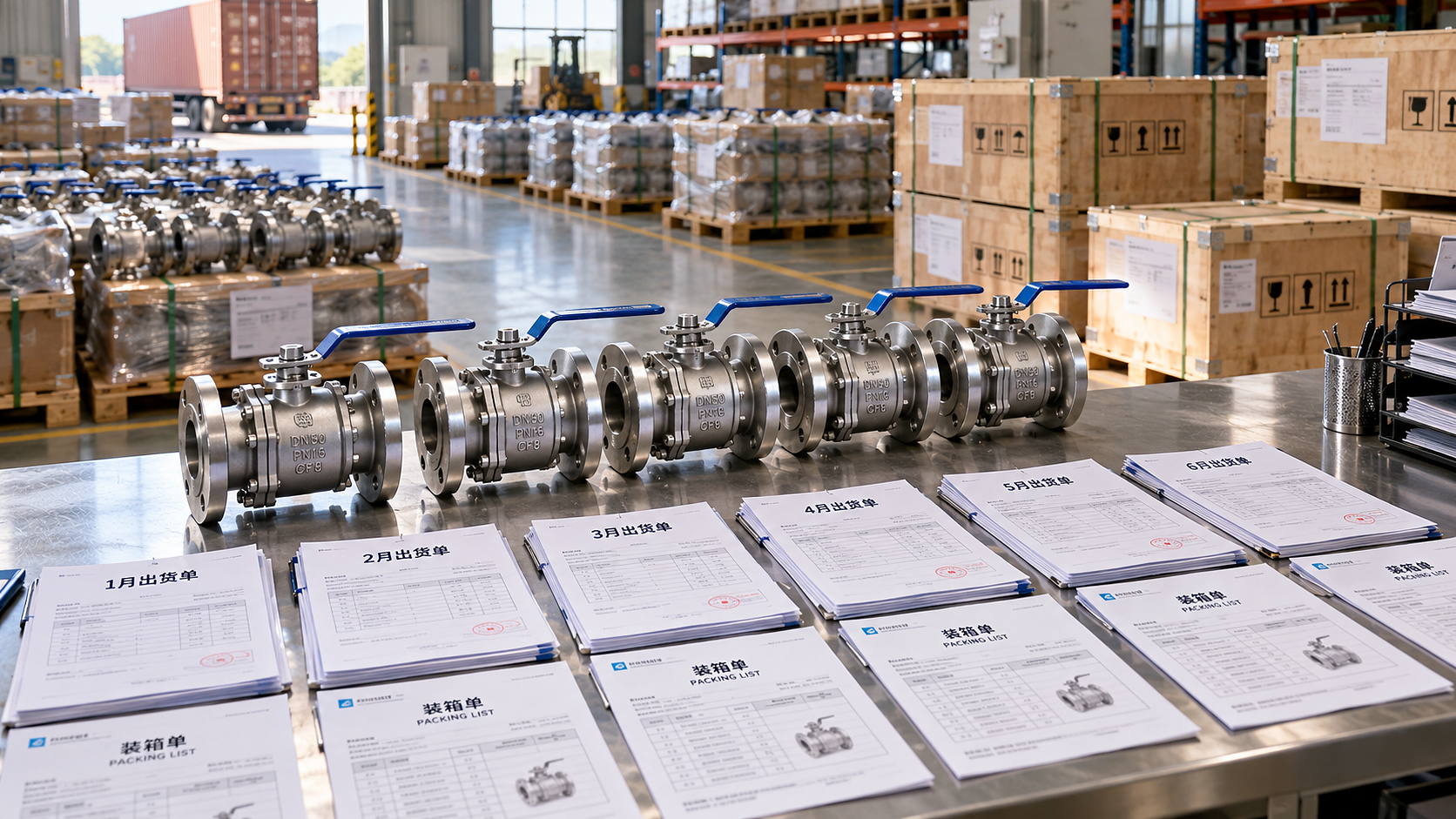
- Lot-specific quality records: Mill test certificates, certificates of analysis, inspection reports, batch release records, or test reports tied to the actual shipment. These are generally the most relevant documents for incoming-material acceptance.
A common weak point is accepting a certificate that names a company but does not identify the manufacturing site, material grade, batch, production date, test method, or issuing body. Another is relying on an old report for a product whose formulation, raw-material source, or manufacturing route has changed since the test was completed.
Check the document trail carefully. The legal manufacturer, trading company, processor, and exporter may not be the same entity. If the seller is a distributor, ask who produced the material, where it was made, whether the distributor alters it through cutting, recoating, repacking, blending, or relabeling, and which party controls the original batch records.
Build a Requirement-to-Evidence Matrix Before Supplier Approval
The cleanest way to prevent gaps is to map each requirement to the evidence needed to verify it. This avoids the familiar situation in which a supplier submits a thick document pack, yet no one can confirm whether it answers the actual technical question.
The matrix should not become a paperwork exercise. It should guide a technical conversation. If the supplier cannot explain how a reported value was obtained, what production lot it represents, or what happens when a key input changes, the document may be present but the control system is not convincing.
Verify Test Reports With the Same Care as the Material
A test result has meaning only in context. Quality personnel should review the test method, test conditions, specimen preparation, sampling location, measurement units, acceptance limits, and laboratory identity. A tensile result from a finished coupon, for example, cannot automatically validate the behavior of a different thickness, orientation, heat treatment, or production condition.
For metals, confirm whether chemical composition and mechanical properties are linked to the actual heat or lot. For coated materials, ask whether tests were performed before or after coating and whether edge conditions were assessed where relevant. For polymers, verify whether test pieces were molded from the current formulation and whether the conditioning environment reflects the intended application. In chemical products, the sampling and retention-sample process is often as important as the certificate of analysis itself.
Independent testing is sensible when a material is new, safety-critical, technically disputed, or sourced from a supply chain with limited transparency. It is also useful when the cost of a production stoppage or field failure is far greater than the cost of verification. However, third-party testing should be targeted. Testing every conceivable parameter can create delay without reducing the real risk. Focus on the properties most likely to affect safety, function, regulatory status, or downstream processing.
Traceability Is Where Many Compliance Programs Fail
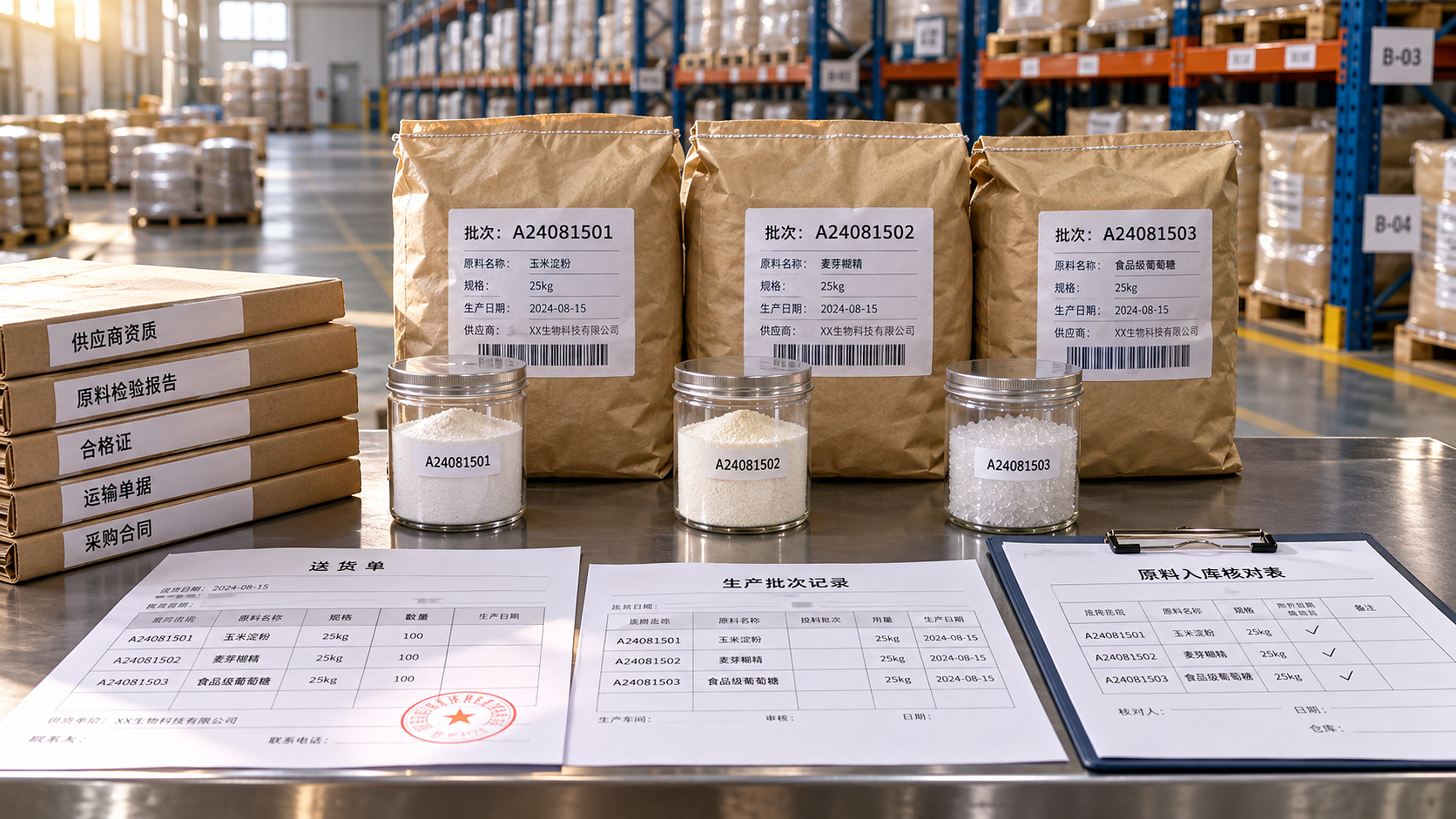
A compliant sample is not the same as a compliant shipment. The supplier must be able to connect incoming raw materials, internal production records, inspection results, packaging labels, and outbound lots. For bulk materials, this can be difficult when storage tanks, mixed inventory, slitting operations, warehousing transfers, or repacking are involved.
Ask a simple audit question: if one shipment is found to be nonconforming six months after delivery, can the supplier identify the affected production lots, customers, test results, raw-material inputs, and remaining stock? If the answer depends on spreadsheets maintained by one individual, the risk is higher than it may appear during a sales presentation.
Physical labeling deserves attention too. Labels should remain legible through normal transport and storage, and batch identifiers should match the packing list and quality documentation. Where material is cut into smaller pieces, mixed, or transferred into new containers, the original traceability link must survive that operation. This is particularly relevant for specialty alloys, resins, powders, chemicals, and materials used in controlled manufacturing environments.
Assess the Supplier’s Ability to Stay Compliant After Approval
Supplier approval is not a one-time event. Material compliance can drift when suppliers substitute raw materials, move production, change formulations, alter curing cycles, use a new subcontractor, or respond to shortages with unapproved alternatives. Some changes improve availability but quietly invalidate prior test evidence.
The supplier should have a defined change-control process. At minimum, the buyer needs advance notification for changes affecting material composition, manufacturing site, critical process parameters, test method, product designation, or regulatory declaration. The purchase agreement should state whether requalification is required and who bears responsibility for updated documentation.
An on-site audit, remote audit, or structured technical review can reveal whether quality control is real. Look beyond polished procedures. Ask how nonconforming material is segregated, who can release a batch, how calibration is controlled, whether retained samples are available, and how corrective actions are verified. A supplier that can show records from a recent deviation often provides more confidence than one that only presents perfect manuals.
Cross-Border Compliance Requires a Market-Specific Check
International supply chains add a second layer of review: the material may comply at origin but not meet the obligations of the destination market or the requirements imposed by the final customer. Environmental declarations, chemical restrictions, country-of-origin evidence, export controls, product labeling, and carbon-related reporting obligations can all affect material approval depending on the product category and trade route.
Do not assume that a supplier’s statement of compliance is globally transferable. The declaration should identify the product, relevant jurisdiction, issue date, responsible entity, and basis of assessment. If the material is incorporated into a regulated finished product, responsibilities may be shared between the material producer, component manufacturer, importer, and brand owner. Those roles should be clear before shipment.
This is where market intelligence and technical verification need to work together. Platforms such as GTIIN track changes in industrial standards, trade conditions, supply-chain exposure, and compliance expectations across regions. That broader view can help procurement teams identify where a seemingly routine material purchase may carry documentation, logistics, or regulatory risk. Still, market intelligence should support—not replace—project-specific legal and engineering review.
Use Risk-Based Approval Instead of One Rule for Every Material
Not every item warrants the same approval burden. A sensible system classifies materials by risk. Low-risk, noncritical consumables may be accepted through document review and incoming checks. Medium-risk materials may require lot-specific records, sample inspection, and periodic supplier reassessment. High-risk materials—those affecting safety, regulatory conformity, structural integrity, contamination control, or essential production performance—usually justify deeper supplier qualification, enhanced traceability, and independent confirmation where appropriate.
The important point is consistency. If a material is considered critical, that status should appear in the specification, purchase order, inspection plan, warehouse controls, and supplier change-notification requirements. Compliance breaks down when engineering treats a material as critical but purchasing buys it as an interchangeable commodity.
Before final approval, ask one last operational question: could the organization defend this approval decision if a regulator, customer auditor, insurer, or internal incident review requested the evidence? If the file contains a clear specification, credible test data, lot traceability, relevant declarations, and a documented view of supplier control capability, the answer is more likely to be yes. If the answer depends mainly on a certificate attached to an email, approval is probably premature.
Weekly Insights
Stay ahead with our curated technology reports delivered every Monday.
Recommended News
 Global SourcingOct 25, 2026How to find active suppliers in a trade intelligence platform dashboard
 Supply ChainOct 25, 2026Trade Tariffs Cause Whiplash at Port Milwaukee, Disrupting Cargo Flows
 Supply ChainOct 24, 2026How to use traceability to verify supply chain sustainability claims
 Market TrendsOct 24, 2026FedEx Report: AI Drives Asia-Pacific Chip and Digital Infrastructure Supply Chain Demand