
Industry Standards Explained: How to Verify Real Compliance
In cross-border sourcing, compliance claims mean little without traceable proof. Real confidence in industry standards comes from checking how requirements are interpreted, documented, tested, and maintained across the full supply chain.
That matters more now because supply networks are wider, regulations change faster, and supplier tiers are harder to see. A certificate may open the conversation, but it does not close the risk.
For companies managing industrial inputs, finished goods, packaging, and logistics interfaces, the real task is verification. The goal is not only to confirm compliance once, but to understand whether performance will hold under routine production pressure.
What industry standards really mean in practice
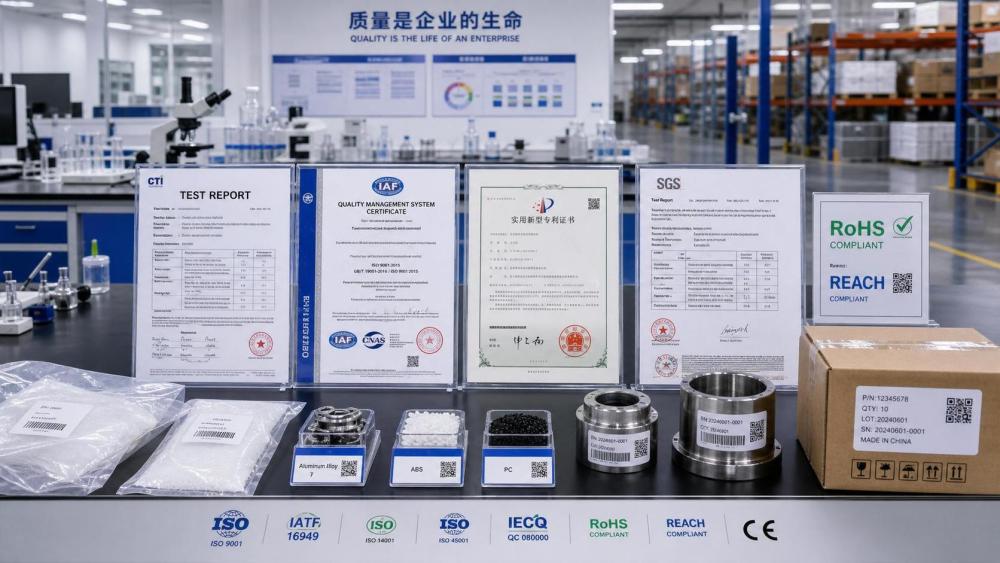
Industry standards are formalized requirements used to define acceptable quality, safety, performance, testing, labeling, or process control. Some are mandatory through regulation. Others are voluntary, yet still commercially essential.
In global trade, several layers often overlap. A product may need technical standards, factory management standards, environmental requirements, and country-specific import rules at the same time.
This is where confusion starts. Suppliers may say they meet ISO, ASTM, EN, IEC, UL, RoHS, REACH, or local export rules, but the phrase “compliant” can refer to very different scopes.
Sometimes it means the material specification matches a standard. Sometimes it means the test method was used. In other cases, it only means a previous batch passed once.
Why verification has become a strategic issue
Compliance used to be checked mainly at the document stage. That approach is no longer enough for many industrial categories, especially where safety, traceability, emissions, durability, or product liability are involved.
More buyers now face mixed sourcing models, multi-country processing, subcontracted production, and fast changes in raw material availability. Each shift can weaken alignment with industry standards without obvious warning signs.
Geopolitical pressure also plays a role. Export controls, ESG benchmarks, carbon reporting, and customs scrutiny have increased the cost of incomplete compliance evidence.
This is one reason platforms such as GTIIN focus on standards intelligence within broader supply chain analysis. Industry standards do not sit apart from trade decisions. They shape supplier selection, transit risk, audit planning, and market access.
Where false confidence usually appears
Most compliance failures are not caused by a total absence of documents. They come from evidence that looks complete at first glance but breaks down under review.
- A certificate is valid, but issued for a different facility.
- A test report exists, but the sample does not represent current production.
- The standard cited is outdated or replaced by a newer revision.
- A declaration covers one component, not the full assembled product.
- Factory procedures mention control points, but records are incomplete.
- Sub-suppliers change materials without updating approval files.
In other words, the problem is often not whether evidence exists. It is whether the evidence matches the exact product, site, process, revision, and shipment under review.
How to verify real compliance step by step
A practical review usually starts with scope. Before checking documents, define which industry standards apply to the product, the destination market, and the intended use environment.
1. Confirm the exact standard and revision
A standard number alone is not enough. Check the edition year, amendment status, and whether local regulations reference a specific version.
A supplier may cite a recognized standard, yet still miss the required revision. That gap can affect labeling rules, threshold values, or test conditions.
2. Match documents to the real product
Review part numbers, material grades, drawings, bills of materials, and packaging specifications. The compliance file should match the production item exactly, not approximately.
This is especially important for custom assemblies, coated metals, cable products, chemical blends, food-contact materials, and safety-critical components.
3. Check the strength of test evidence
A strong test report identifies the sample, the method, the laboratory, the date, and the result criteria. It also shows whether the result was pass or fail against a specific requirement.
Pay attention to sampling logic. Type testing, routine testing, and batch testing answer different questions. They should not be treated as interchangeable proof.
4. Validate certificates beyond the logo
Certification marks create fast reassurance, but they need verification. Check the issuing body, accreditation status, site address, expiry date, and scope statement.
A management certificate such as ISO 9001 does not prove product conformity by itself. It shows process structure, not necessarily material or safety performance.
5. Compare paperwork with factory reality
On-site validation remains one of the best ways to test whether compliance is living practice or staged presentation. Observe incoming inspection, calibration, traceability, segregation, rework control, and operator instructions.
If the process cannot consistently produce what the documents promise, the compliance claim is fragile even when paperwork appears polished.
Evidence types and what they actually prove
Different records support different conclusions. A simple comparison helps keep reviews grounded.
The point is not to collect more files than necessary. It is to combine evidence types so each one closes a different uncertainty.
Common scenarios across industrial categories
Industry standards are applied differently depending on the product and risk profile. The verification method should reflect that difference.
- For metals and machinery parts, focus on material grade, heat treatment, dimensional control, fatigue performance, and coating integrity.
- For electrical goods, review insulation, temperature rise, component approvals, labeling, and market-entry certification.
- For chemicals or polymers, confirm formulation control, restricted substance screening, storage conditions, and batch traceability.
- For packaging and clean handling, verify barrier performance, contamination control, and transport stability.
- For infrastructure and heavy equipment, check weld procedures, load testing, corrosion resistance, and maintenance documentation.
GTIIN’s cross-sector perspective is useful here because supplier risk rarely stays inside one category. A shipment may involve raw materials, fabricated parts, packaging controls, freight conditions, and destination compliance at once.
Signals that deserve closer attention
Some warning signs appear repeatedly in international procurement reviews. They do not always prove non-compliance, but they justify deeper checking.
- Frequent changes in manufacturing location or subcontractor use.
- Reluctance to share underlying test methods or raw data.
- Identical reports reused across different product models.
- Certification that covers a broad process, but not the shipped item.
- Large pricing gaps explained only by “equivalent standard.”
- Inconsistent answers between sales files and factory records.
Usually, real compliance leaves a consistent trail. The standard reference, technical file, test history, production controls, and shipment records should support each other without heavy interpretation.
Building a stronger verification routine
The most effective approach is repeatable rather than dramatic. A disciplined review process reduces surprises more than occasional deep audits alone.
Keep an internal matrix that links product families to applicable industry standards, evidence requirements, renewal dates, and critical failure points.
Use risk-based escalation. High-impact items may justify laboratory retesting, witness inspections, or sub-supplier mapping. Lower-risk categories may only need document refresh and batch-level checks.
It also helps to watch external signals. Regulatory updates, trade restrictions, commodity shifts, and freight disruptions can all affect whether a supplier remains aligned with industry standards over time.
A sensible next step is to review one active supplier file from end to end. Check whether the claimed standard, the evidence set, and the factory reality still match today’s product and destination requirements.
That kind of structured review turns industry standards from a static checklist into a practical decision tool for safer, more resilient global sourcing.
Weekly Insights
Stay ahead with our curated technology reports delivered every Monday.
Recommended News
 Supply ChainSep 22, 2026How heavy equipment lifecycle data can reduce unexpected downtime
 Supply ChainSep 21, 2026How export regulations affect logistics lead times and delivery risk
 Industry StandardsSep 20, 2026What evidence is needed to pass a carbon reporting audit?
 Industry StandardsSep 19, 2026When does manufacturing compliance consulting reduce audit risk?