
EU CBAM Phase Two Starts With Quarterly Emissions Filing
On July 28, 2026, the EU Carbon Border Adjustment Mechanism (CBAM) entered its second implementation phase, moving the compliance focus from broad policy awareness to recurring quarterly reporting for imports in steel, aluminum, cement, electricity, hydrogen, and fertilizers. For exporters, importers, and supply chain teams connected to these product categories, the change is worth close attention because it directly affects customs timing, emissions data preparation, certificate tracking, and cost calculations tied to deliveries into the EU market.
What Has Taken Effect From July 28
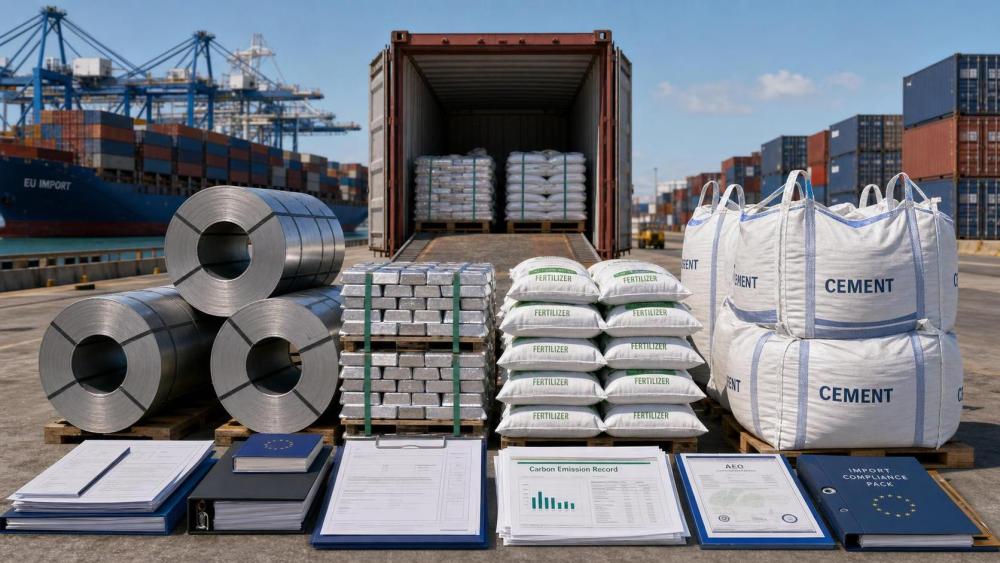
According to the provided event summary, from July 28, 2026, CBAM phase two applies to imported products in six sectors: steel, aluminum, cement, electricity, hydrogen, and fertilizers. Importers must submit, through the EU CBAM portal, the actual embedded carbon emissions of the previous quarter together with the number of CBAM certificates purchased. The filing deadline is the 15th day of the first month of each quarter. The provided information also states that non-compliant filing may lead to customs clearance delays and fines.
Where The Pressure Will Appear In Daily Trade Operations
Export shipments linked to EU customs timing
From an industry perspective, exporters serving EU-bound orders in the covered sectors may feel the impact first through delivery coordination. The reason is straightforward: if the importer side cannot complete the required CBAM filing on time, customs clearance may be delayed. What deserves closer attention is the handoff between shipment data, product documentation, and emissions-related records, because delivery planning is no longer only a logistics issue but also a reporting-readiness issue.
Costing and commercial terms around covered products
Analysis shows that companies involved in pricing, quoting, and contract execution may need to pay closer attention to how embedded emissions data and CBAM certificate information are reflected in commercial workflows. The provided facts do not define a uniform market response, but they do indicate that cost accounting will be affected. In practice, this means finance, sales, and trade teams should watch how reporting obligations influence quotation timing, internal cost reviews, and discussions with EU customers or import partners.
Document preparation across procurement and manufacturing chains
Observably, the reporting obligation may also push upstream coordination between raw material sourcing, manufacturing, and export documentation. For covered goods, the key pressure point is whether the importer can obtain usable emissions information for the previous quarter in time for filing. That makes document readiness, traceable production records, and internal data transfer more important for manufacturers and supply chain service providers involved in EU deliveries.
What Companies Should Watch Now
Quarterly filing rhythm and internal deadlines
It is more appropriate to understand this change as an operational compliance deadline rather than a distant policy signal. Companies tied to covered exports should pay attention to the quarterly reporting cycle and the requirement to file by the 15th day of the first month of each quarter. Even where internal procedures are still evolving, teams may need to review whether their current shipment, invoicing, and documentation timelines leave enough room for importer-side submission.
Completeness of emissions-related records
Analysis shows that one practical focus is the readiness of actual embedded emissions data for the previous quarter. The provided information does not set out detailed evidence formats, so this should not be treated as a settled documentation standard. Still, exporters and manufacturers may need to watch whether their existing technical files, production records, or supporting compliance materials are sufficient for importer use in the EU CBAM portal.
Certificate tracking and trade coordination
Another point requiring attention is the reporting of purchased CBAM certificates. The event summary confirms that importers must declare certificate quantities, which means counterparties may need closer coordination on reporting inputs and transaction timing. What deserves closer attention is not only whether data exists, but whether the importer and exporter are aligned on reporting periods, document completeness, and responsibility for providing supporting information.
Exposure to customs disruption and penalty risk
Observably, the most immediate business risk described in the provided facts is not an abstract policy burden but disruption in customs clearance and the possibility of fines for non-compliant filing. For companies with tight delivery windows, this creates a practical need to review compliance checkpoints before goods reach the customs stage, especially for recurring shipments into the EU.
Why This Looks More Like An Execution Signal
Analysis shows that this development is better understood as a live execution signal rather than a purely preparatory policy update. The reason is that the reporting obligation, deadline, covered sectors, and consequences for non-compliance are already framed in operational terms. At the same time, it would be premature to treat all market practices as fixed. Observably, companies still need to follow how filing expectations are interpreted in day-to-day trade, how supporting documents are handled in practice, and how affected businesses adjust their internal workflows.
How The Market May Best Read This Development
At this stage, the event is best read as a concrete compliance change with direct implications for delivery planning, cost review, and document preparation in covered EU-bound trade. It does not, on its own, establish every downstream outcome for suppliers or buyers, but it clearly raises the operational importance of emissions data readiness and quarterly reporting coordination. A measured reading is that the rule change has moved from policy discussion into practical execution, while some implementation details and market responses still require continued observation.
Basis Of This Article And What Still Needs Verification
This article is generated from the user-provided news title, event date, and event summary. For developments of this type, commonly relevant source categories may include official announcements, releases from regulatory authorities, customs or trade administration information, industry association updates, standard-setting documents, and reporting by established business or trade media. No specific official source link was provided in the input, so the exact official reference still needs to be verified on an ongoing basis. What also requires continued observation includes detailed implementation language, compliance interpretation, filing practice, changes in tender or procurement documents, industry feedback, and how affected companies execute the requirements in actual trade operations.
Weekly Insights
Stay ahead with our curated technology reports delivered every Monday.
Recommended News
 Supply ChainSep 22, 2026How heavy equipment lifecycle data can reduce unexpected downtime
 Supply ChainSep 21, 2026How export regulations affect logistics lead times and delivery risk
 Industry StandardsSep 20, 2026What evidence is needed to pass a carbon reporting audit?
 Industry StandardsSep 19, 2026When does manufacturing compliance consulting reduce audit risk?