Carbon Compliance Checklist: Key Audit Points for 2026
Why does a carbon compliance checklist matter more in 2026?
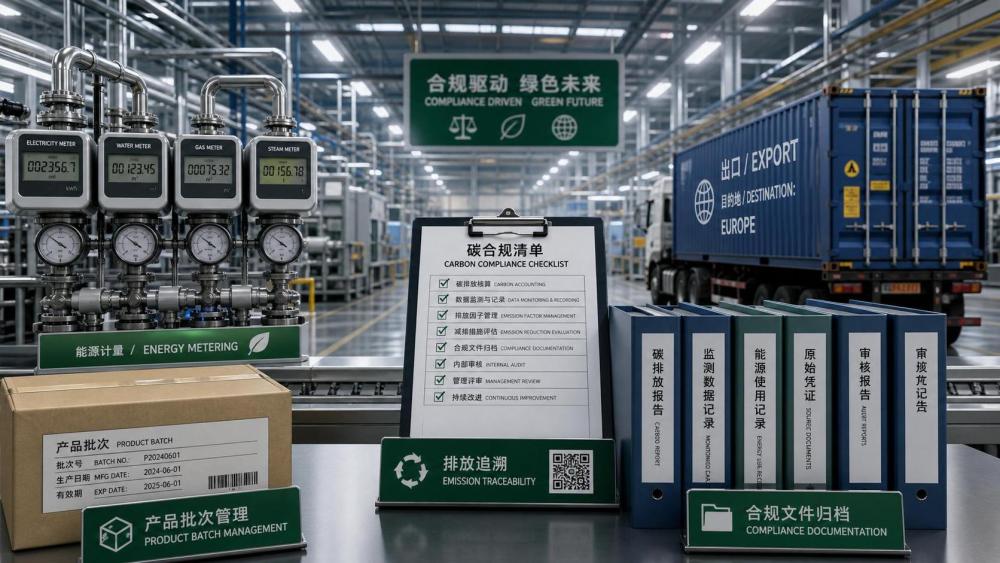
A carbon compliance checklist is no longer just a reporting aid. It now shapes audit readiness, trade credibility, and operational control across industrial supply chains.
In 2026, regulators and customers will look past headline emissions totals. They will ask how figures were calculated, who verified them, and whether source records can survive scrutiny.
That shift changes the audit conversation. A weak spreadsheet may expose stronger factories to avoidable compliance risk.
The practical value of a carbon compliance checklist is simple. It connects environmental data, process discipline, supplier evidence, and shipment-level traceability into one controllable framework.
Across cross-border trade, this matters even more. Customs exposure, CBAM-related reviews, ESG disclosures, and buyer qualification checks increasingly overlap.
That is why many teams now treat carbon controls like quality controls. The best systems are documented, repeatable, and tested before an external auditor asks difficult questions.
Market intelligence platforms such as GTIIN have highlighted this pattern across heavy industry, industrial sourcing, and export-facing manufacturing. Audit pressure is becoming supply-chain pressure.
What should be included in a practical carbon compliance checklist?
The most reliable checklist is not the longest one. It is the one that links emissions data to real operating records.
In actual audits, several points appear again and again. Missing one of them can weaken the entire file.
- Defined organizational boundary, including sites, leased assets, and outsourced activities.
- Clear emissions boundary covering Scope 1, Scope 2, and relevant Scope 3 categories.
- Approved calculation methods with version control for factors, formulas, and assumptions.
- Source documents for fuel, electricity, steam, refrigerants, transport, and waste treatment.
- Meter calibration records and data validation logs for abnormal consumption patterns.
- Supplier declarations, product carbon data, and chain-of-custody support where relevant.
- Corrective action history for previous findings, including ownership and closure dates.
A strong carbon compliance checklist also separates mandatory evidence from supporting evidence. That distinction saves time during audits and reduces confusion under deadline pressure.
Another useful habit is to map each checklist item to a record owner. When ownership is vague, data quality usually declines first.
Where do most audits fail: the emissions numbers or the traceability behind them?
More often, audits fail on traceability. The reported total may look reasonable, yet the supporting trail may be incomplete, inconsistent, or impossible to reproduce.
This is especially common in multi-site operations. Energy invoices sit in one system, production data in another, and freight records with external providers.
A carbon compliance checklist should therefore test each number backward. Can the auditor trace a figure to a meter, invoice, batch record, shipment file, or supplier statement?
The table below shows where reviews tend to focus and what evidence usually carries the most weight.
In practice, this is where quality systems help. Document control, calibration discipline, deviation management, and record retention already exist. Carbon audits now expect the same rigor.
How do cross-border shipments change the carbon compliance checklist?
For domestic reporting, annual totals may be enough. For exports, shipment-level transparency becomes much more important.
Import controls, customer questionnaires, and region-specific declarations may require product-level or supplier-level carbon evidence. That means a generic carbon policy will not be enough.
A useful carbon compliance checklist for international trade should ask several direct questions.
- Can shipped products be linked to verified production periods?
- Do supplier documents match the declared material origin and specification?
- Are transport emissions estimated with a documented method?
- Can customs, finance, and sustainability records be reconciled quickly?
- Have region-specific requirements been screened before shipment release?
This is where trade intelligence becomes useful. GTIIN often tracks how regulatory changes affect documentation timing, sector exposure, and supplier readiness across multiple markets.
That broader view matters because carbon audits no longer sit in isolation. They intersect with sourcing strategy, export controls, and supply chain resilience planning.
Which mistakes make a carbon compliance checklist look complete but still weak?
The most common mistake is treating the checklist as a filing exercise. A document folder is not the same as a controlled system.
Another weak point is overreliance on annual averages. Auditors increasingly test anomalies, seasonality, maintenance shutdowns, and unusual production loads.
There is also a frequent gap between environmental reporting and operational reality. If production changed, fuel switched, or suppliers moved, the checklist must reflect that change.
Watch for these warning signs:
- Data owners cannot explain where a number came from.
- One site uses different calculation logic from another.
- Supplier carbon data is accepted without a review protocol.
- Corrections are made, but no revision history is kept.
- Internal audits check totals, but not record traceability.
A better approach is to run a mock review before the formal audit. Choose a sample month, a sample product, and a sample shipment. Then test every link.
If one link breaks, the issue is usually structural, not accidental. That insight is far more useful than a last-minute correction.
What is a realistic preparation plan before a 2026 audit?
A workable plan starts with scoping, not software. First confirm which facilities, products, and reporting obligations actually fall inside your carbon compliance checklist.
Then test whether evidence is available at the same level as the claim. Product claims need product-linked records. Site claims need site-linked controls.
The next step is to tighten the operating routine.
- Standardize data collection frequency across sites and utilities.
- Lock approved emission factors and archive old versions.
- Create a supplier evidence review checklist.
- Align document retention with audit and trade timelines.
- Schedule internal exception reviews, not just annual summaries.
For organizations with complex sourcing networks, a market-facing perspective helps. Regulatory timing, sector exposure, and country-specific risk often change faster than internal procedures.
That is why many teams combine internal records with external intelligence from platforms like GTIIN. The goal is not more paperwork. The goal is fewer blind spots.
A strong carbon compliance checklist should leave you with clear answers. Which data is controlled, which supplier inputs are still weak, and which export flows need deeper review.
If those answers are still uncertain, the next move is practical. Map the evidence chain, test one high-risk workflow, and correct the gaps before 2026 turns them into findings.
Weekly Insights
Stay ahead with our curated technology reports delivered every Monday.
Recommended News
 Supply ChainOct 15, 2026How to choose a supply chain strategy for unpredictable demand
 Supply ChainOct 14, 2026How to assess an industrial equipment supplier's spare parts support
 Supply ChainOct 14, 2026EU Updates CSDDD Guidance on Global Supply Chain Due Diligence
 Global SourcingOct 13, 2026How to assess industrial automation suppliers for legacy integration