
CBP Tightens Origin Checks on China-Made Industrial Goods
Effective August 15, 2026, a new CBP verification requirement will reshape how China-origin industrial manufactured goods are prepared for U.S. customs clearance. The change centers on a strengthened origin review for core categories such as HS Chapters 84–90 and 94, and it matters not only to exporters but also to importers, sourcing teams, compliance functions, and supply chain service providers because document readiness, supplier screening, and shipment timing may all come under closer pressure.
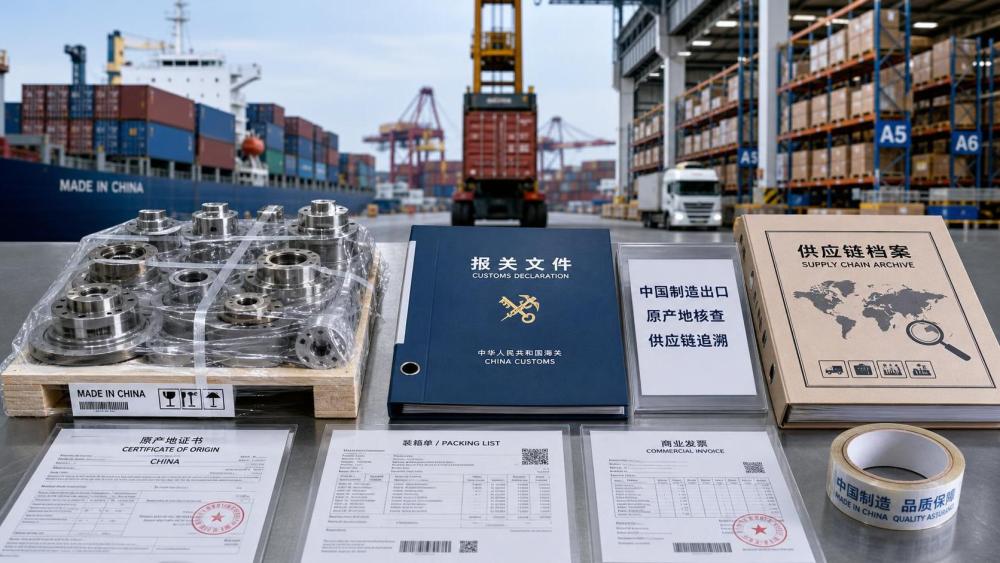
What the new verification requirement includes
According to the provided event summary, U.S. Customs and Border Protection (CBP) issued an emergency notice on July 29, 2026. Starting on August 15, 2026, industrial manufactured goods originating in China within core product categories including HS 84–90 and 94 will be subject to a dual-track origin verification requirement.
In addition to the conventional declaration of origin, the filing must also include a CCPIT-certified Supply Chain Traceability Statement and a procurement list for key components. The provided information also states that the measure will directly affect customs clearance timing, compliance costs, and supplier admission assessment.
Where the pressure is likely to appear first
Import-side customs preparation may become more document-driven
From an industry perspective, importers are likely to feel the impact first because customs clearance depends on whether origin-related files are complete and consistent at the time of filing. What deserves closer attention is the shift from a single origin statement toward a package of supporting materials, which means import compliance teams may need closer coordination with upstream suppliers before shipment release.
Export manufacturers may face tighter supplier traceability demands
For export-oriented manufacturers, the requirement is likely to affect how product origin is documented across production and sourcing stages. Analysis shows that the key issue is not only the finished product declaration, but also the ability to organize key component procurement records in a form that supports the new verification path. This could affect internal document control, supplier onboarding, and shipment preparation.
Sourcing and procurement teams may need to reassess vendor readiness
Where procurement functions are involved, the main exposure lies in supplier qualification and document responsiveness. If key component sourcing records become part of the review package, buyers may need to pay closer attention to whether suppliers can provide traceable procurement information and support CCPIT-related certification needs within delivery timelines.
Logistics and trade service providers may see more front-end coordination work
Supply chain service providers, including customs-facing support functions, may be affected through higher pre-clearance coordination needs. Observably, the rule change points to a workflow in which missing or inconsistent documentation could become a practical issue before goods complete clearance, making document collection and file consistency more important in shipment execution.
What companies should watch in the near term
Readiness of the new supporting documents
Companies involved in affected product categories should pay immediate attention to whether the conventional origin declaration can be submitted together with a CCPIT-certified Supply Chain Traceability Statement and a key component procurement list. The provided information confirms these items as part of the new requirement; however, it does not provide further operational detail, so businesses should treat document readiness as an active compliance checkpoint rather than assume a settled practice standard.
Consistency across sourcing, production, and filing records
Analysis shows that the practical compliance risk may lie in consistency rather than in any single form. Where sourcing records, finished-goods origin claims, and shipment files are prepared by different teams, companies should watch for mismatches that could affect review speed or raise supplier qualification questions during execution.
Delivery planning and customs timing assumptions
Because the provided summary states that clearance timing may be directly affected, exporters and importers should closely watch how shipment scheduling, booking cutoffs, and handoff timing are managed around the August 15 start date. It is more appropriate to understand this as a requirement that may alter document preparation lead time, even though the detailed enforcement rhythm is not yet provided in the input.
Supplier admission and ongoing qualification reviews
The summary also points to an effect on supplier admission assessment. From an industry perspective, this suggests that supplier selection may increasingly depend on whether upstream partners can support origin traceability documentation in a timely and consistent manner. At this stage, companies should focus on qualification readiness rather than presume a uniform market-wide screening outcome.
How this change should be read at this stage
Observably, this development is more than a routine customs formality because it introduces an added origin-verification layer tied to traceability and component sourcing records. At the same time, it would be premature to describe the full market effect as settled, since the provided input does not include detailed implementation guidance, filing interpretation, or reported enforcement patterns. It is more appropriate to understand this as an implemented rule change accompanied by an execution signal that warrants close monitoring.
Why the development matters beyond the notice itself
For the industry, the immediate significance lies in the fact that origin compliance appears to be moving closer to supply chain evidence rather than remaining limited to a standard declaration. Analysis shows that affected businesses should read this as a practical shift in trade documentation expectations, especially for industrial goods moving through cross-border procurement and delivery chains. The near-term priority is not broad forecasting, but disciplined attention to documentation, supplier support capacity, and customs-facing process control.
Basis of this article and what still needs verification
This article is based on the user-provided news title, event date, and event summary. For developments of this kind, relevant source categories usually include official notices, releases from regulatory authorities, customs or trade administration information, industry association updates, standards-related documents, and reporting by authoritative media. A specific official source link was not provided in the input, so the underlying notice and any subsequent interpretive materials still need to be continuously verified. What also requires further observation includes detailed implementation language, certification handling in practice, possible changes in trade documentation requirements, market feedback, and how companies execute against the new verification standard after the August 15 effective date.
Weekly Insights
Stay ahead with our curated technology reports delivered every Monday.
Recommended News
 Supply ChainSep 22, 2026How heavy equipment lifecycle data can reduce unexpected downtime
 Supply ChainSep 21, 2026How export regulations affect logistics lead times and delivery risk
 Industry StandardsSep 20, 2026What evidence is needed to pass a carbon reporting audit?
 Industry StandardsSep 19, 2026When does manufacturing compliance consulting reduce audit risk?