
CBP Sets 100% Pre-Arrival Review for Chinese Fasteners
On August 15, 2026, a new U.S. customs compliance requirement is due to take effect for industrial metal fasteners of Chinese origin. The change centers on pre-arrival review rather than routine post-arrival processing, which makes it directly relevant to exporters, distributors, OEM importers, procurement teams, and supply-chain operators handling bolts, nuts, washers, and related products. What deserves closer attention is that the rule change is tied not only to customs filing, but also to laboratory documentation, ACE submission, and the timing of cargo release.
What the CBP directive confirms
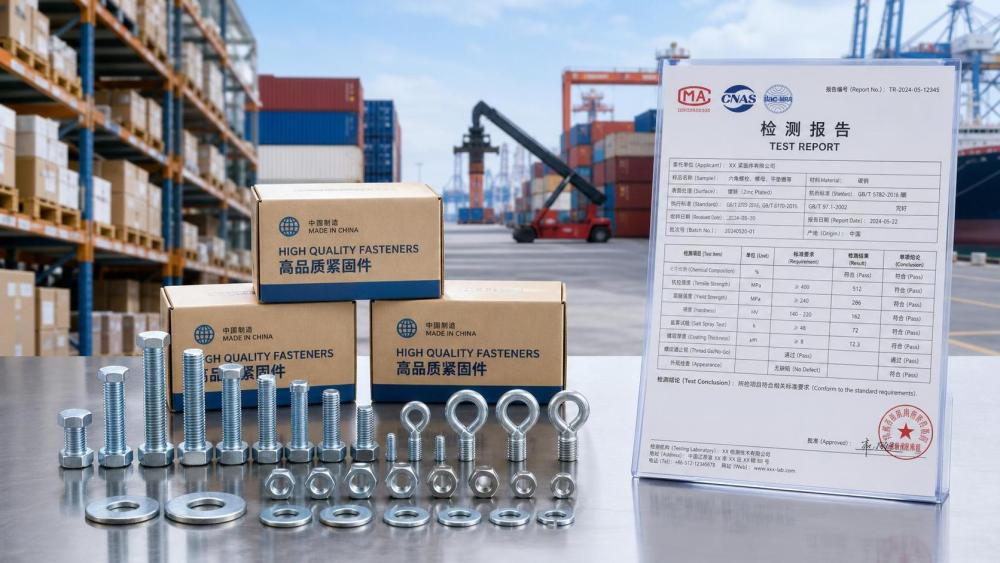
According to the information provided, U.S. Customs and Border Protection issued an emergency directive on July 20, 2026. Under that directive, from August 15, 2026, all industrial bolts, nuts, washers, and other metal fasteners originating in China must complete a pre-arrival compliance review before reaching U.S. ports.
The required review must include reports from a CBP-recognized laboratory covering material composition, surface treatment, and RoHS/REACH compliance. Those reports must also be uploaded into the ACE system before arrival. The information provided further states that the measure will directly affect customs clearance timing and inventory turnover for global distributors and OEM importers, with average port dwell time expected to extend by 7 to 12 working days.
Where the operational pressure is likely to appear
Import programs relying on fast customs release
From an industry perspective, importers and trading companies are likely to feel the effect first in shipment scheduling and entry preparation. Because the review must be completed before cargo reaches a U.S. port, the compliance file becomes part of the shipment readiness process rather than a follow-up step after arrival. The practical issue here is not only whether goods meet the stated requirements, but whether supporting reports are complete and uploaded in time.
Distributors and OEM buyers managing inventory flow
For distributors and OEM importers, the reported 7 to 12 working day extension in average port dwell time points to pressure on inventory turnover and replenishment planning. Observably, businesses that depend on regular inbound movement of standard fastener categories may need to pay closer attention to document readiness, shipment sequencing, and lead-time assumptions in purchase and delivery planning.
Manufacturers and exporters coordinating test documentation
Chinese manufacturers and export-facing suppliers may be affected through upstream documentation and product release coordination. Analysis shows that the relevant burden is not limited to manufacturing itself; it also reaches material composition records, surface-treatment declarations, and RoHS/REACH-related supporting evidence where these must align with laboratory pre-review requirements and ACE submission timing.
Testing and compliance service providers in the transaction chain
Testing-related service participants may also see a more central role in transaction execution because the rule, as described, requires reports from CBP-recognized laboratories. What deserves closer attention is whether companies already have a working process for obtaining compliant reports early enough to avoid shipment delay, especially when customs timing and delivery commitments are linked to a single documentation path.
What companies should watch now
Pre-arrival files need to be treated as shipment prerequisites
Analysis shows that companies involved in U.S.-bound fastener trade should treat the laboratory report set and ACE upload as a shipment prerequisite under the new requirement. Where internal processes still place testing or compliance review late in the order cycle, that sequencing may no longer match the stated rule.
Technical documents and compliance records may need closer alignment
Businesses should also pay attention to whether material composition information, surface-treatment records, and RoHS/REACH compliance materials are organized in a form that supports pre-arrival review. The current information does not provide detailed execution standards, so it is more appropriate to view this as a documentation readiness issue that still requires confirmation in practice.
Procurement and delivery commitments may need adjustment
Observably, any contract, purchase plan, or supply arrangement tied to fixed inbound timing may need review in light of the expected extension in port dwell time. This does not by itself confirm how every shipment will be handled, but it does indicate that delivery assumptions based on prior clearance timing may no longer be reliable without added compliance lead time.
Further official wording and market execution still matter
The information provided establishes the core requirement, but not every operational detail. For that reason, companies should continue monitoring official wording, execution practice, document expectations, and any changes in customer-side procurement or tender documentation that may respond to the new pre-arrival review requirement.
Why this looks like an execution signal, not just a policy headline
Analysis shows that this development is more appropriately understood as an implementation-stage trade compliance signal rather than a general policy discussion. The requirement has a stated effective date, defined product scope in the summary provided, specific pre-arrival report elements, and a named submission channel through ACE. At the same time, it remains necessary to observe how consistently the requirement is applied in practice, what document-level interpretation emerges, and how market participants adjust their filing and delivery routines.
How the market is likely to read this development
From an industry perspective, the immediate significance of this measure lies in the shift of compliance work to an earlier point in the logistics chain. It is not simply a matter of customs scrutiny at the port; it changes when documentation must be complete and when import readiness is established. It is therefore more appropriate to understand this update as a rule already moving into execution, while some practical details of implementation and market response still need continued observation.
Basis of this article and points still requiring verification
This article is based on the user-provided news title, event date, and event summary. For developments of this kind, commonly relevant source types include official notices, releases from regulatory authorities, customs or trade administration updates, industry association communications, standards-related documents, and reporting by established trade or industry media.
No specific official source link was provided in the input, so the exact official publication path still needs to be verified on an ongoing basis. Observably, the points that warrant continued follow-up include detailed enforcement language, certification and testing interpretation, ACE filing expectations, changes in procurement or tender documents, market feedback, and how affected companies implement the requirement in actual shipments.
Weekly Insights
Stay ahead with our curated technology reports delivered every Monday.
Recommended News
 Global SourcingOct 25, 2026How to find active suppliers in a trade intelligence platform dashboard
 Supply ChainOct 25, 2026Trade Tariffs Cause Whiplash at Port Milwaukee, Disrupting Cargo Flows
 Supply ChainOct 24, 2026How to use traceability to verify supply chain sustainability claims
 Market TrendsOct 24, 2026FedEx Report: AI Drives Asia-Pacific Chip and Digital Infrastructure Supply Chain Demand